
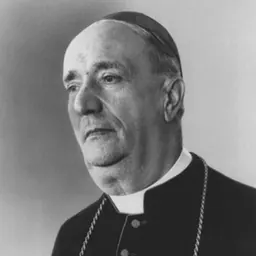
Mahmoud Taleghani
Iranian Shia cleric and political activist
About Mahmoud Taleghani
Lived 1911 – 1979 (aged 68). Mahmoud Taleghani was an Iranian theologian, politician and akhoond.
Mahmoud Alaei Taleghani (5 March 1911 – 9 September 1979) was an Iranian Shia cleric, revolutionary and activist who was one of the leaders of the Iranian Revolution, which overthrew Pahlavi-ruled Iran and established the modern-day Islamic Republic of Iran.
A founding member of the Freedom Movement of Iran, he has been described as a representative of the tendency of many "Shia clerics to blend Shia with Marxist ideals in order to compete with leftist movements for youthful supporters" during the 1960s and 1970s. His greatest influence has been said to have been in his teaching of Quranic exegesis, as many later revolutionaries were his students. He was Tehran's first Friday Prayer Imam after the Iranian Revolution, succeeding Hassan Emami.
Biography and education Taleghani was born to a religious family in the village of Geliyard of Taleqan County in Alborz Province on 5 March 1911. His father Abu'l-Hasan Taleghani, who had published a magazine called Balagh in the context of the Kashf-e hijab protests at the time of Reza Shah, taught him Islamic sciences. Taleghani continued his studies in Qom, studying the same subject at the Razaviya and Feyziyeh schools. He obtained his Ijtihad Certification from his teachers, Abu l-Hasan al-Isfahani, Abdul-Karim Ha'eri Yazdi and Mirza Muhammad Shari'at-Sanglaji there.
Political activities
Before the Iranian Revolution In 1938, he went to Tehran to preach and lecture on Islam and was arrested and imprisoned the next year for opposing the regime of Reza Shah. From 1948 onward, he held classes at Hedayat Mosque in Tehran. He traveled abroad to Jordan and Egypt in 1951 and 1952, to the Peoples Muslim Congress in Karachi, and twice to Jerusalem as the head of an Iranian delegation to the annual Islamic Congress of Quds. He supported Mohammed Mosaddeq's nationalization of the oil industry. Following the 1953 Iranian coup d'état that overthrew Mossaedegh and restored the Shah he was arrested and – according to the Islamic Republic's IRIB website – "accused of hiding Navvab Safavi, the founder and leader of the Fadayan-e Islam" Islamist assassination group.
Politically active from his student days, Taleghani was a veteran in the struggle against the Pahlavi regime. He was imprisoned on several occasions over the decades, "as a young preacher, as a mid-ranking cleric, and as a senior religious leader just before the revolution," and served a total of a dozen years in prison. In prison he met many leftist political prisoners and was fond of talking about his interactions with leftists. The influence of the left on his thinking was reflected in his book Islam and Ownership (Islam va Malekiyat) which argued in support of collective ownership "as if it were an article of faith in Islam." In 1971, he exiled to Zabol, a city in Sistan and Baluchestan Province and then to Baft, a city of Kerman Province. Between 1964 and 1978 he spent nearly a decade in jail. Altogether he spent nearly 15 years behind bars.
Opinions
Taleghani argued that colonization was a primary reason of totalitarianism and dictatorship in different countries. While not an ultimate aim per se, nationalism was seen as an instrument of anti-colonialist practices. Taleghani promoted resistance against Israel, and frequently visited the region.
On 20 April 1979, it was broadcast on television interview by Taleghani that "The leadership of Ayatollah Khomeini is not only accepted by me but the world has accepted it. He is the source of belief, sincerity, determination and honesty. I have always approved of his struggles, his words and his projects".
According to Taleghani, the redaction of Quran occurred under the caliphate of the first Caliph Ali. Taleghani also emphasized the continuous form of the Quran, and the strict relation between the verses of the Quran.
His tafsir, or Quranic commentary, was innovative in language and clearly designed to appeal to a wide audience, with the use of narrations and juridical reports. Taleghani insisted that believers have to contemplate the meaning of the verses of the Quran. He also sought to translate and explain the Nahj al-Balagha against the grain of contemporary social analyses and phenomena.
Death
Taleghani died on 9 September 1979. His mysterious death and lifetime achievements were the occasion of huge crowds and much emotion before and during his funeral,
He has been described as a "chain smoker" and having a "gaunt face with a serious demeanor."
Ayatollah Ruhollah Khomeini described him "Abu Dhar al-Ghifari in the time" in the message on the occasion of his death: "He was for Islam, Abuzar of the time. His expressive tongue was as trenchant and pounding as the sword of Malik al-Ashtar."
Works A shining ray from Quran, it was written while he was imprisoned by Muhammad Reza Pahlavi. Introduction - explanation on Tanbih Al-Omah va Tanzih Al-Mellah Islam and Ownership Translation of the first volume of Imam Ali Ibn Abi Talib's Book A light of Nahj-ul-Balaq Authority and Judicial Decree Freedom and Despotism Unity Lesson A Lesson from Quran Days and Lectures Sermons of Friday Prayers
Don’t just read it —
keep it.
Full-length biographies made to live with: read them, listen on the way to work, watch them tonight.
- E-book
- Audio
- Video
Instant download · yours to keep · every purchase keeps this site free
Important facts
People in Mahmoud Taleghani's life
Named in this biography and alive at the same time
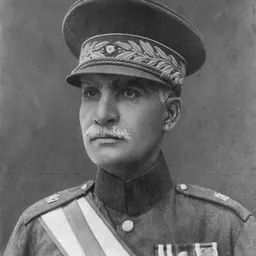
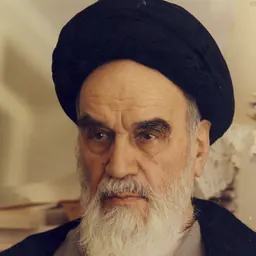


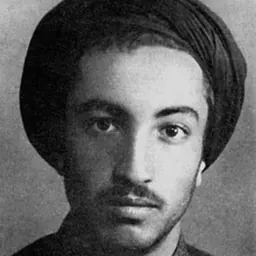
Related people
Same field, nearest in time




Contemporaries
People whose lives overlapped Mahmoud Taleghani's






Frequently asked questions
Who was Mahmoud Taleghani?
Iranian Shia cleric and political activist
When was Mahmoud Taleghani born?
Mahmoud Taleghani was born on 7 March 1911 in Tehran.
When did Mahmoud Taleghani die?
Mahmoud Taleghani died on 9 September 1979 in Tehran.
What was Mahmoud Taleghani's occupation?
Mahmoud Taleghani was a theologian, politician and akhoond.
What nationality was Mahmoud Taleghani?
Mahmoud Taleghani was Iranian.
Sources & further reading
· Wikipedia: Mahmoud Taleghani
Cite this page
APA: Biography.guide. (2026). Mahmoud Taleghani. https://biography.guide/mahmoud-taleghani/
MLA: "Mahmoud Taleghani." Biography.guide, https://biography.guide/mahmoud-taleghani/.
Chicago: "Mahmoud Taleghani." Biography.guide. https://biography.guide/mahmoud-taleghani/.
Data last updated: 2026-09-20 · Spot an error? Report a correction.
Page generated 2026-09-27 05:20 UTC