
About Zygmunt Krasiński
Lived 1812 – 1859 (aged 47). Zygmunt Krasiński was a French and Russian poet, writer, playwright and philosopher.
Count Napoleon Stanisław Adam Feliks Zygmunt Krasiński (; 19 February 1812 – 23 February 1859) was a Polish poet traditionally ranked after Adam Mickiewicz and Juliusz Słowacki as one of Poland's Three Bards – the Romantic poets who influenced national consciousness in the period of Partitions of Poland.
Krasiński was the most famous member of the noble Krasiński family. He was born in Paris to Count Wincenty Krasiński and Princess Maria Urszula Radziwiłł, a member of the aristocratic Radziwiłł family, and became the close companion of his father after his mother's early death from tuberculosis. He was educated by tutors prior to attending the Warsaw Lyceum, where he graduated in 1827. He then started to study law and administration at the Royal University of Warsaw, but was expelled from the university in 1829.
In 1829 Krasiński left Poland to study in Geneva. He met Mickiewicz, who dazzled the young writer and played an important part in shaping his literary techniques. In Rome, Krasiński received news about the November Uprising and broke off his trip with the intention of returning to Poland to fight, but in the end, did not participate. In 1833 he travelled from Saint Petersburg to Italy, where he would stay until April 1834. This period saw the creation of probably his most famous work, the tragic drama (The Undivine Comedy). By 1850 his health had worsened, but that did not stop his constant travels around Europe. Through letters and audiences with European figures, including Napoleon III of France, he sought to gain support for the Polish cause. To avoid political repercussions, he published his works anonymously, which led to him being known as the Anonymous Poet of Poland.
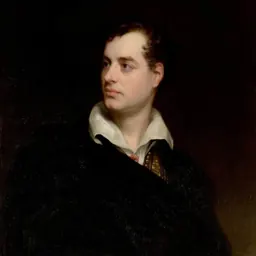
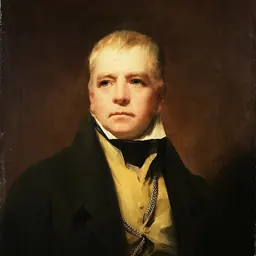
Krasiński's early works were influenced by Walter Scott and Lord Byron and extolled medieval chivalry. In 1845 he published (Psalms of the Future). He is best known for The Undivine Comedy as well as for the large body of well-received letters. His writings explore conservatism, Christianity, the necessity of sacrifice and suffering to moral progress, and providentialism. The Undivine Comedy and another major work, Irydion (1834), explore the concept of class struggle, contemplating social revolution, and predicting the destruction of the nobility. His later writings showed his opposition to romantic militant ventures. He wrote letters, poetry, and "treatises in the philosophy of history", such as Psalms of the Future and (Predawn). The Undivine Comedy is perhaps the most important Polish drama of the Romantic period.
Life Childhood Napoleon Stanisław Adam Feliks Zygmunt Krasiński was born in Paris on 19 February 1812 to Count Wincenty Krasiński, a Polish aristocrat and military commander, and Countess Maria Urszula Radziwiłł, a member of the House of Radziwill, a Polish-Lithuanian noble family. Over the years, their "intimate and difficult" relationship would be very influential on Zygmunt, whom Victor Erlich described as "weak and hypersensitive", compared to his "affectionate but domineering" father.
In September 1826 Zygmunt entered the Warsaw Lyceum (a secondary school which Chopin had attended in 1823–1826), graduating in autumn 1827.
From late May to mid-June 1829 Krasiński, accompanying his father, took his first journey abroad, visiting Vienna, capital of the Austrian Empire. His Geneva stay helped shape his personality.
Works
Themes Key themes in his writings include conservatism, Messianist Christianity, the necessity of sacrifice and suffering to moral progress, and providentialism. According to theatre critic Agata Adamiecka-Sitek, this aspect of the piece is still a sensitive topic in Poland, as the piece is "both canonical and profoundly embarrassing for Polish culture, on par perhaps with The Merchant of Venice in the western theatre canon". thumb Krasiński's wife Eliza and their childrenHe differed from his major peers, Mickiewicz and Słowacki, in his vision of the future. Accepting the likelihood of democratic social revolution, he was much less sanguine about it than they; and so were his works, when they touched on the future. All Three Bards agreed the future would see major, likely violent changes. For Krasiński, the future held little hope for a better, new world, though his later works suggested the possibility of salvation – and of restoration of Polish independence – through a return to conservative Christian values. and extolled medieval chivalry. This gloomy atmosphere is visible in Krasiński's best-known work, the drama Nie-boska komedia (The Undivine Comedy), which he wrote around 1835, when he was in his early twenties. In the 19th century, a greater Polish Romantic poet, Adam Mickiewicz, discussed The Undivine Comedy in his Collège de France lectures, calling it "the highest achievement of the Slavic theater". A century later, another Polish poet and lecturer on the history of Polish literature, Nobel laureate Czesław Miłosz, called The Undivine Comedy "truly pioneering" and "undoubtedly a masterpiece not only of Polish but... of world literature", The American academic Harold B. Segel noted that the play "has steadily gained prestige in the twentieth century and is widely regarded in Poland as one of the greatest dramatic works to emerge from the Romantic period", and that it had been staged outside Poland and was likely the most internationally known Polish romantic drama. and Segel wrote that Irydion "attracts no great attention today". Polish literature scholars Maria Janion and Kazimierz Wyka wrote that the body of his letters is, next to his dramas, his other major literary achievement; similar praise was offered by literature critic who argued that those letters are one of the crowning achievements of Polish Romanticism.
Most, if not all, of his works, were published anonymously or under pseudonyms, to protect his family – particularly his father, a politician and administrator in Russian-controlled Congress Poland – from retribution by the Russian Empire, as his works were often outspoken and contained thinly veiled references to the political situation of contemporary Europe (in particular, of the partitions of Poland). Due to his decision to publish anonymously, to the end of his life he was able to travel freely between his family manor in Russian-controlled lands and centers of Polish emigré life in Western Europe (the Great Emigration), while others, including Mickiewicz and Słowacki, were forced to remain in exile in the West, banned from returning to Polish lands by the occupying powers. This led to his being known as the Anonymous Poet of Poland (the title of English writer Monica Mary Gardner's 1919 monograph, The Anonymous Poet of Poland: Zygmunt Krasinski). Miłosz wrote that Krasiński, popular in the mid-19th century, remains an important figure in the history of Polish literature but is not on a par with Mickiewicz and Słowacki. Polish historian of literature, , observes the contradiction regarding Krasiński's dramas and poems, the former which gained popularity with the critics, but not the public, while for the later, a reverse was true. He subsequently notes that over time, assessment of his dramas (and letters) overshadowed that of his poetry, which proved to be much less enduring. Segel likewise agreed that both Krasiński's poetry, as early as during the turn-of-the-century Young Poland period, came to be criticized as "vehicles for [an] embarrassing messianism" and as "amateur and shallow Romantic philosophizing". Krasiński's popularity further waned under the People's Republic of Poland, when his conservative religious themes met with disapproval by the communist authorities; new editions of his works were not published in the 1940s and 1950s.
Today most of Krasiński's Romantic tales and poetry are still considered relatively weak. On the other hand, he has come to be recognized as "a superb prose stylist and easily the outstanding epistolary artist of Polish romanticism", and his Undivine Comedy remains one of the most important dramas, if not the most important Polish drama, of the Romantic period.
Don’t just read it —
keep it.
Full-length biographies made to live with: read them, listen on the way to work, watch them tonight.
- E-book
- Audio
- Video
Instant download · yours to keep · every purchase keeps this site free
Important facts
Family & relationships
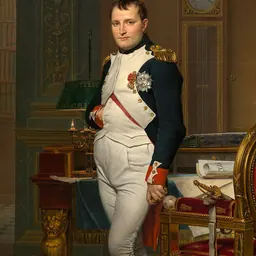
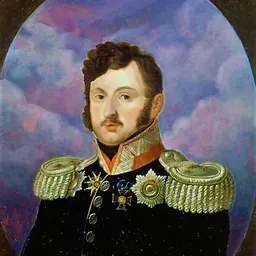
People in Zygmunt Krasiński's life
Named in this biography and alive at the same time


Related people
Same field, nearest in time
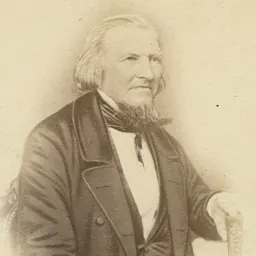
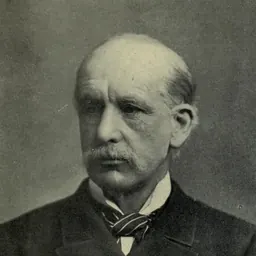
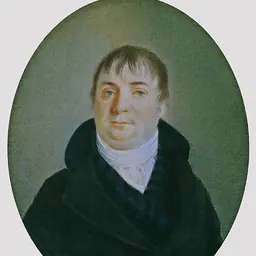
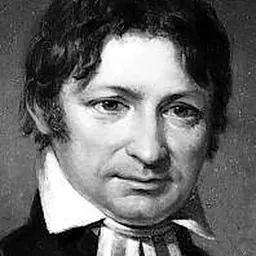
Contemporaries
People whose lives overlapped Zygmunt Krasiński's




Frequently asked questions
Who was Zygmunt Krasiński?
Polish poet (1812–1859)
When was Zygmunt Krasiński born?
Zygmunt Krasiński was born on 19 February 1812 in Paris.
When did Zygmunt Krasiński die?
Zygmunt Krasiński died on 23 February 1859 in Paris.
What was Zygmunt Krasiński's occupation?
Zygmunt Krasiński was a poet, writer, playwright and philosopher.
What nationality was Zygmunt Krasiński?
Zygmunt Krasiński was French and Russian.
Sources & further reading
· Wikipedia: Zygmunt Krasiński
Cite this page
APA: Biography.guide. (2026). Zygmunt Krasiński. https://biography.guide/zygmunt-krasinski/
MLA: "Zygmunt Krasiński." Biography.guide, https://biography.guide/zygmunt-krasinski/.
Chicago: "Zygmunt Krasiński." Biography.guide. https://biography.guide/zygmunt-krasinski/.
Data last updated: 2026-09-20 · Spot an error? Report a correction.
Page generated 2026-09-27 05:28 UTC