
About Zinovii Grzhebin
Lived 1877 – 1929 (aged 51–52). Zinovii Grzhebin was a Russian painter, publisher, visual artist, caricaturist, graphic artist and newspaper proprietor.
Zinovii Isaevich Grzhebin (; French transliteration: Grjebine) was a Russian publisher and caricature illustrator. He represented more than 20% of the publishing market in Russia in the early 1910s and made a significant impact on development of the Russian book publishing industry.
Biography
Early years and education
Zinovii was born in Chuguev, in the Kharkov Governorate of the Russian Empire (now Ukraine). As the son of a soldier who had served 25 years in the Imperial Russian Army, he was less constrained by the anti-semitic measures regulating Russian society at the time and was permitted to stay in either St. Petersburg and Moscow. He graduated from Kharkov art school in 1899, then studied at Simon Hollochi school in Munich, later in Paris at the studio of Anton Ažbe.
Beginning of the career His close friend Korney Chukovsky recalled, that in 1905 Grzhebin returned to Russia as poor as a church mouse and with no social connections, but with an incredible energy and desire to work. He had an idea to create a Russian version of Simplicissimus, a political satire magazine with antimonarchical incline.
Zhupel
In late 1905, Grzhebin established a satirical magazine Zhupel . Mstislav Dobuzhinsky said, that Grzhebin performed "a real miracle" as a manager, successfully uniting artists and writers from the opposite circles of Russian literature world in one enterprise.
Zhupel had only three issues: two in December 1905 and one in January 1906. Because of the very harsh caricatures and satire about the government,
Other projects From 1907 to 1912, Grzhebin headed the Pantheon publishing house, which focused on translated classic literature, but in many ways anticipated and formed the future Shipovnik. In 1914, Grzhebin created the Otechestvo magazine, opposed to Maxim Gorky's "Letopis'". In 1916, he collaborated with Gorky at the Parus publishing house, then in 1917—1918, Grzhebin headed the editors office of the newspaper Novaya zhizn".
Family
With his wife Maria Constantinovna Doriomedova (1880–1967), born in Nerchinsky Zavod in Siberia, Grzhebin had five children: Lya, Irina, Hélène, Alexis, and Tovy. Tovy was a physicist also economist. Hélène Grjebine wrote her story of emigration. Irina Grjebine, who trained as a dancer under Olga Preobrajenska and Lya Grjebine, was also a dancer.
Emigration
The Russian Revolution completely changed the situation on the book market: the equipment was destroyed, the typographic personnel was mostly called up into the Red Army, no paper of suitable quality was left in the whole country. Even though Zinovii Grzhebin sympathized the revolution, he found no place for his life's work in the Russian SFSR.
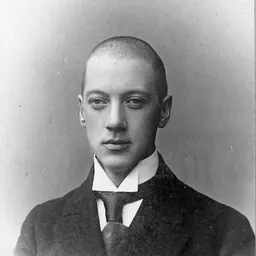
Vsemirnaya Literature Grzhebin was closely associated with Maxim Gorky. He started working with Gorky in 1905, publishing the novels given to him by the author. He created the Grzhebin Publishing company in 1919, until 1921, when he was given permission to emigrate. He travelled in the same train as Gorky following the latter's unsuccessful bid to save the life of Nikolay Gumilev, shot for his monarchist views. He settled in Berlin at the end of 1921, where he published books under contract to the Soviet government, despite allegations of cheating. In Berlin, he published more than 220 books. However, when a series called Letopis revoluistii included works by Fyodor Dan, Julius Martov, Viktor Chernov and Nikolai Sukhanov, the Bolsehviks were unhappy as they regards these fellow socialists as counter-revolutionaries. A trial ensued in which Grzhebin's right to be paid for the books that he published according to the contract signed with the Soviet government was recognised.
Grzhebin was employed by Vsemirnaya Literature ('World Literature'), a semi-official literary publishing house established by Maxim Gorky and Anatoly Lunacharsky, Peoples' Commissar for Education on 4 September 1918. Grzhebin owned paintings by Isaac Levitan, Albert Nikolayevitch Benois, Kustodiev, and Boris Grigoriev which were hung on the walls of the offices. He lost all his fortune that was taken back by the Soviet government. He died prematurely on 4 February 1929 in Vanves, a suburb of Paris.
Don’t just read it —
keep it.
Full-length biographies made to live with: read them, listen on the way to work, watch them tonight.
- E-book
- Audio
- Video
Instant download · yours to keep · every purchase keeps this site free
Important facts
People in Zinovii Grzhebin's life
Named in this biography and alive at the same time
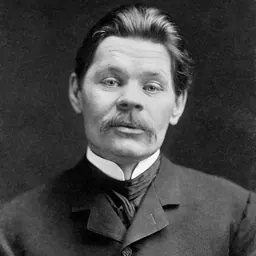
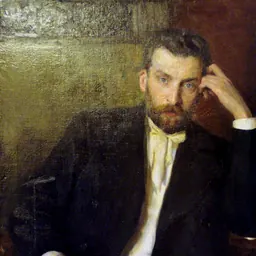


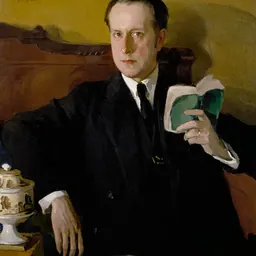
Related people
Same field, nearest in time

Contemporaries
People whose lives overlapped Zinovii Grzhebin's



Frequently asked questions
Who was Zinovii Grzhebin?
Russian painter and publisher (1877-1929)
When was Zinovii Grzhebin born?
Zinovii Grzhebin was born in 1877 in Chuhuiv.
When did Zinovii Grzhebin die?
Zinovii Grzhebin died on 4 February 1929 in Vanves.
What was Zinovii Grzhebin's occupation?
Zinovii Grzhebin was a painter, publisher, visual artist, caricaturist, graphic artist and newspaper proprietor.
What nationality was Zinovii Grzhebin?
Zinovii Grzhebin was Russian.
Sources & further reading
Cite this page
APA: Biography.guide. (2026). Zinovii Grzhebin. https://biography.guide/zinovii-grzhebin/
MLA: "Zinovii Grzhebin." Biography.guide, https://biography.guide/zinovii-grzhebin/.
Chicago: "Zinovii Grzhebin." Biography.guide. https://biography.guide/zinovii-grzhebin/.
Data last updated: 2026-09-20 · Spot an error? Report a correction.
Page generated 2026-09-27 05:28 UTC