
About Anton Ažbe
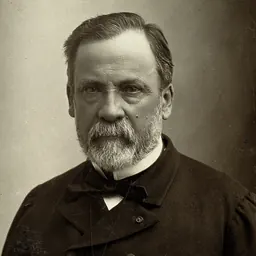
Lived 1862 – 1905 (aged 43). Anton Ažbe was an Austrian painter and art educator.
Anton Ažbe (30 May 1862 – 5 or 6 August 1905) was a Slovene realist painter and teacher of painting. Ažbe, crippled since birth and orphaned at the age of eight, learned painting as an apprentice to Janez Wolf and at the Academies in Vienna and Munich. At the age of 30, Ažbe founded his own school of painting in Munich that became a popular attraction for Eastern European students. Ažbe trained the "big four" Slovenian impressionists (Rihard Jakopič, Ivan Grohar, Matej Sternen, Matija Jama), a whole generation of Russian painters (Ivan Bilibin, Mstislav Dobuzhinsky, Igor Grabar, Wassily Kandinsky, Dmitry Kardovsky and Kuzma Petrov-Vodkin, to name a few), Serbian painters Nadežda Petrović, Beta Vukanović, Ljubomir Ivanović, Borivoje Stevanović, Kosta Miličević, and Milan Milovanović, the Hungarian painter Sándor Ziffer or a Czech painter Ludvik Kuba.
Ažbe's training methods were adopted by Beta and Rista Vukanović when they took over Kiril Kutlik's atelier and school
Ažbe's own undisputed artistic legacy is limited to twenty-six graphic works, including classroom studies, most of them at the National Gallery of Slovenia. His long-planned masterpieces never materialized and, according to Peter Selz, he "never came into his own as an artist". His enigmatic personality blended together alcoholism, chain smoking, bitter loneliness, minimalistic simple living in private, and eccentric behaviour in public. A public scarecrow and a bohemian socialite, Ažbe protected his personal secrets till the end, a mystery even to his students and fellow teachers. The public transformed the circumstances of his untimely death from cancer into an urban legend. Their mother lapsed into severe mental distress (there is unreliable evidence that she later committed suicide) and the boys were placed into foster care. Little is known about Ažbe's experience with Wolf, apart from the facts that in 1880, Ažbe assisted Wolf with the frescoes of the Zagorje ob Savi church and, in 1882, with the facade of the Franciscan Church of the Annunciation in Ljubljana. There, he made a superb impression on his teachers, Gabriel Hackl and Ludwig von Löfftz, and earned a free scholarship. For this purpose, said Ažbe, Wolf entrusted Ažbe with the "secret" of his art. It is not clear how much of the "Wolf's myth" is real; the "great Slovene painter" did not emerge, and Ažbe complained that all Slovene students, apart from faithful Matej Sternen, were leaving the school too early, preferring absolute freedom to the benefits of professional training. The seven clients rented a study room and paid Ažbe for fixing their homework. Two months later, an inflow of new clients allowed Ažbe to rent his own premises, thus starting the Ažbe School.
The school was never short of students, with a normal complement reaching 80. Some, notably Alexej von Jawlensky, Matej Sternen, and Marianne von Werefkin, attended the school for nearly a decade. Ažbe remained the sole instructor, except for a brief period in 1899–1900 when he hired Igor Grabar as an assistant. Long-established competitors, the Munich Academy and the Imperial Academy of Arts in Saint Petersburg, recognized the Ažbe School and recommended it as a preparatory, or "refreshment", course. Matej Sternen noted that the feeling of near death was obvious to all witnesses. reproduced the legend in Links, wo das Herz ist (1952): "Nobody ever saw his paintings. Nobody knew if he ever painted at all. Nobody knew his past. One chilly December night, intoxicated with cognac, he fell asleep in the snow. He was found dead in the morning. Nobody knew where he had come from." A similar story was retold by Mikhail Shemyakin.
Personality
The Harem, the last known work by Ažbe. His opus magnum Odalisque has been lost (its existence attested by a single photograph made in 1902 ).
Modern understanding of Ažbe's personality is based on the interpretation of biased and conflicting statements made by his alumni. According to Sternen, he was consumed by a mysterious personality split that drove him into binge drinking and slovenly appearance.
The oddly shaped and expensively (if not tastelessly) dressed schoolmaster, slowly walking with a cane and always smoking, became a target of tabloids and cartoonists. Ažbe's own German was not perfect either; he, particularly, abused the word nähmlich ("namely", "that is...") He normally spoke German in Munich but used Slovenian in a Slavic company. and lending them cash. An obituary noted that "he was a man of almost proverbial modesty... one of the most original and best-known personalities of Munich."
Ažbe as a creator
Loyal students Igor Grabar and Dmitry Kardovsky noted portraits by Ažbe for his "superb drawing" marred by dry, if not dull, paint technique. The largest and most complex of these, The Village Choir, has been irreversibly damaged by a botched restoration. Photographs and memoirs testify to the existence of his other works, now lost or hidden in private collections. Baranovsky and Khlebnikova noted that by the end of the twentieth century, Ažbe the creator has become a myth, just like Ažbe the person became a legend after his death. Both studies, in particular Weiss', were rejected by Tomaž Brejc who reasoned that any parallels between Ažbe and Cézanne are moot because Ažbe never mastered Cézanne's technique and there is no evidence that he ever attempted it.
Ažbe as a teacher
Ažbe, himself a master of human anatomy (an 1886 class study pictured), enforced figure drawing studies that were bitterly resented by Wassily Kandinsky.
Supporters (Igor Grabar) and opponents (Mstislav Dobuzhinsky) of Ažbe training system agree that it relied, at least in the beginners' classes, on two paramount ideas: the Main Line and the Ball Principle (German: Kugelprinzip). Ažbe discouraged beginners from focusing on minor details, instead of forcing them to build the image around one bold "Main Line". He enforced drawing in black charcoal that enabled quick and radical corrections of the students' work. although for many students it spelled their end as painters: overwhelmed by the "Main Line", they did not dare to step over it and "beef it up" with relevant details.
The Ball Principle, in its most practical application, portrait, stipulated that a human head is simply a sphere; reproducing lighting of a human head follows the same rules as reproducing a plaster ball. Igor Grabar, who approved this approach, recalled that in the process he memorized all human muscles and bones by heart to the point where he easily reproduced them in plaster with closed eyes.
Kandinsky, in his mature years, stayed aside from portraiture or nude figures, and his few rare examples were "featureless, weightless and transparent, a mere cipher without substance" – an opposite of Ažbe's own intentions. Yet, Kandinsky also appreciated Ažbe's view that no theory and no set of rules should subdue the artist's will, and quoted Ažbe: "You must know your own anatomy but in front of an easel you must forget it".
Painting in colour was a distant target that required prerequisite mastery of line, shape and anatomy. All memoirists noted Ažbe's aversion to mixing paints on a palette; instead, he recommended painting with raw paints and wide brushes. A wide brush covered with layers of different paints could, according to Ažbe, paint a human forehead in a single powerful stroke, a skill that required years of rigorous, sometimes exhausting, training. While Igor Grabar praised this style and elevated it to a level of a whole system developing in parallel to impressionism, Dobuzhinsky (who never mastered the power stroke) called it "an artful magicians' trick... colourful but greasy painting devoid of its essence, the 'tone'."
Notable alumni
In chronological order, by year of admission:
Rihard Jakopič (1892–?) Ludvík Kuba (1895–1904) Ivan Grohar (1896–?) Igor Grabar (1896–1901) Alexej von Jawlensky (1896–1905) Dmitry Kardovsky (1896–1900) Marianne von Werefkin (1896–1905) Matija Jama (1897–) Wassily Kandinsky (1897–1899) Yelena Makovskaya (1897–1899) Nikolai Root (1897) Pavel Shmarov (1897–1898) Matej Sternen (1897–1905) Nadežda Petrović (1898–1901) Beta Vukanović Ljubomir Ivanović Borivoje Stevanović Kosta Miličević Milan Milovanović Ivan Bilibin (1899) Mikhail Shemyakin (1900–1902) Mstislav Dobuzhinsky (1899–1901) Oleksandr Murashko (1901) Kuzma Petrov-Vodkin (1901) David Burliuk and Vladimir Burliuk (1903) Karl Friedrich Lippmann (1903–1906) Eugeniusz Żak (1903–1904) Hakob Kojoyan (1903–1905) Leonhard Frank (1904) Oskar Herman (1904) Josip Račić (1904) Konstantin Dydyshko (1905) Abraham Manevich (1905)
After the death of Anton Ažbe, the school trained a group of Estonian painters: Johannes Greenberg, Anton Starkopf, and Ado Vabbe.
Don’t just read it —
keep it.
Full-length biographies made to live with: read them, listen on the way to work, watch them tonight.
- E-book
- Audio
- Video
Instant download · yours to keep · every purchase keeps this site free
Important facts
People in Anton Ažbe's life
Named in this biography and alive at the same time

Related people
Same field, nearest in time

Contemporaries
People whose lives overlapped Anton Ažbe's




Frequently asked questions
Who was Anton Ažbe?
Slovenian artist (1862-1905)
When was Anton Ažbe born?
Anton Ažbe was born on 30 May 1862 in Carniola.
When did Anton Ažbe die?
Anton Ažbe died on 6 August 1905 in Munich.
What was Anton Ažbe's occupation?
Anton Ažbe was a painter and art educator.
What nationality was Anton Ažbe?
Anton Ažbe was Austrian.
Sources & further reading
Cite this page
APA: Biography.guide. (2026). Anton Ažbe. https://biography.guide/anton-azbe/
MLA: "Anton Ažbe." Biography.guide, https://biography.guide/anton-azbe/.
Chicago: "Anton Ažbe." Biography.guide. https://biography.guide/anton-azbe/.
Data last updated: 2026-09-20 · Spot an error? Report a correction.
Page generated 2026-09-27 05:26 UTC