
About Zianon Paźniak
Born 1944. Zianon Paźniak is a Belarusian and Russian writer, poet, politician, art historian, archaeologist and opinion journalist.
Zianon Stanisłavavič Pazniak (born 24 April 1944) is a Belarusian nationalist politician, archaeologist, and pro-democracy activist. He was a founding figure of the Belarusian Popular Front (BPF) and served as the chairman of its parliamentary fraction in the Supreme Council of Belarus from 1990 to 1995. He rose to prominence in politics in 1988 after revealing the NKVD's mass executions during the Great Purge in Kurapaty, which galvanized the Belarusian independence movement and anti-Soviet sentiment. He was a candidate in the 1994 election, the first presidential election of Belarus following its independence, in which Pazniak placed fourth. Since then, he has remained a vocal critic of President Alexander Lukashenko and Russian influence in Belarus, and after the BPF's split in 1999 became Chairman of the Conservative Christian Party – BPF.
Before entering politics, Pazniak graduated from the Belarusian State Academy of Arts and worked on preserving Minsk's historical architecture in the Trinity Suburb and Nyamiha (or Nemiga). Eventually, he became an archaeologist at the History Institute of the Belarusian Science Academy. During his time there, in 1988, he made public his research on the NKVD's executions in the forest of Kurapaty alongside colleague Yauhen Shmygalev, which he called a genocide. This led to independence sentiments, and so he founded the BPF in response and became a part of the Supreme Soviet. As a parliamentarian, he led efforts to restore Belarusian national symbols and declare independence from the USSR. He was a prominent critic of the 1995 Belarusian referendum, which brought forth the proposal to grant the Russian language an equal status alongside the Belarusian language and reintroduced Soviet-era symbols, so he started a hunger strike. After the start of Minsk Spring in 1996, Pazniak stated he was being hunted by security forces, but returned for Chernobyl Way where he stated he had to escape from special forces trying to capture him. Following this, he fled Belarus and claimed political asylum in the United States.
Since his time in exile, he continued to lead the BPF before it splintered due to internal factions in 1999. He then founded the Conservative Christian Party – BPF. He has continued to advocate for Belarusian sovereignty and democracy, and has been a prominent critic of what he states is Russian imperialism. He has criticized both the current Belarusian government and many members of the Belarusian opposition for being "agents" of Russia. He has also led a boycott of every presidential election since 1996 with his party, which he states is because by participating, it only legitimizes Lukashenko. However, due to this, he has been controversial, with some stating that he has only hurt the opposition since the 2000s. Critics accuse him of isolating himself ideologically by refusing to cooperate with broader coalitions, which they state weakens the opposition's unity against Lukashenko's regime. His repeated calls for election boycotts and denouncing many members of the opposition have made some analysts argue that he has only fragmented dissent.
Early life and education
Zianon Stanislavavich Pazniak was born on 24 April 1944 in the village of Subotniki, in what was then the Baranavichy Region in the Byelorussian SSR. At the time of Pazniak's birth, the area was under German occupation during the midst of World War II. He was born into a Catholic family, and natively spoke the Belarusian language. His mother, Hanna Jaŭchimaŭna Pazniak, was a native of Subotniki and lived there almost her entire lifetime. Through his mother, he was the grandson of Jan Pazniak, who was a publicist and politician active in the Belarusian Christian educational movement and the Christian Democratic Union during its founding. Later on Pazniak said that his life was not different with the loss of his father, as his mother insisted on imitating what she thought Stanisłaŭ would do when raising him. For his secondary schooling, he attended the local grammar school in his hometown of Subotniki. When he was in the 10th grade, he was forced to join the Komsomol.
In 1969, a year after graduating, he entered the graduate school of the Institute of Ethnography and History of Art and Folklore of the Academy of Sciences of the BSSR. He became notable during the year he entered for his publishing of the article "Caring for the Future" in the newspaper Pravda, which focused on the river Nyamiha (or Nemiga) in Minsk. In opposition to Pyotr Masherov's plan to destroy it, he attempted to collect signatures to send to Masherov against it, but eventually went to the newspaper, where it was approved by Mikhail Zimyanin for publication. After a wave of Soviet political-administrative repressions in 1974, he lost his job at the Arts Institute on the basis of staff cuts. He published the article in the newspaper Litaratura i Mastactwa (Literature and Art) under the title "Kurapaty - the road to death", where it was specifically published because the newspaper was relatively small, so it would be missed by Soviet censorship. He stated that the events at Kurapaty were a symbol of "Stalinist genocide" to make a method of changing demographics. This quickly evoked a response in Belarusian society that was anti-Soviet due to the executions and also ignited independence sentiments. In-depth excavations of the tract were conducted starting on 6 July, which Pazniak participated in, which eventually concluded that more than 100 thousand people were buried at Kurapaty. The BPF was modeled after popular fronts in the Baltics. Soon after this, thousands of people in Minsk marched to Kurapaty in what came to be known as Dziady-88, spurred by the committee's revelations. Though the rally ended with arrests and tear gas, Pazniak managed to read the Front's declaration before being detained by Soviet police. The founding congress of the BPF took place in Vilnius from 24 June to 25 June 1989, as it was not permitted in Minsk, which was attended by about 400 delegates. BPF was the first party in the modern history of Belarus following the dissolution of the Soviet Union. It quickly became popular as there was no other opposition movement, which also led to Alexander Lukashenko briefly supporting the movement and also giving a speech at a rally alongside Pazniak in Mogilev. He initially met resistance, as the authorities refused to register him as a candidate and the Central Election Commission invalidated BPF nominations; however the BPF members were re-registered under external pressure. One of his only first actions during his time in the Supreme Soviet was leading the push to return Belarusian national symbols as state symbols. He also advocated for a special status for Belarusians in Białystok, and stated there was "anti-Belarusian terror" in Poland.
In 1992, he attempted to get a referendum approved, which got approved in April with 442 thousand signatures being sent to the CEC. Members of the BPF argued the proposals violated the Constitution.
During the First Chechen War in 1994, the BPF under Pazniak accused Russia of imperial aggression against Chechnya, and held a rally in support of Chechnya. In early 1995, BPF deputies issued a statement condemning the war as an "imperialist campaign violating human rights", which was driven by corporate interests and a crime against humanity and demanded a withdrawal of Russian troops and Chechen self-determination. He rejected any entente with Russia, which led many to accuse him of being too nationalistic. The minority Russian speakers feared Belarusianization, which made Lukashenko seem like the best of alternatives. He continued his opposition of Belarus joining CSTO and was against any form of union with Russia. He received majority support in the major cities of Maladzyechna and Lida. He received little support in the Gomel region with 6.33% of the vote and in the Mogilev region with 4.68%. He claimed that he had actually advanced to the second round - not Kebich - with 22% of the vote, and asserted that both Lukashenko and Kebich were Russian agents who prevented him from gaining power.
Exile and international advocacy Chernobyl Way and start of exile Following the start of Minsk Spring protests against the creation of a Union State, Pazniak fled into hiding with Siarhei Navumchyk on 25 March 1996. He informed his wife in a letter that he was being "hunted by security forces" and had to go underground. He stated they were going to be charged criminally for organizing Minsk Spring, and that agents stood outside the BPF headquarters and received summons. Afterwards, he went to the United States in July and requesting political asylum. He also thought that he would not stay in the United States long, predicting the Lukashenko regime would "only last a year or so". They stated that this occurred in the newspapers Pahonia and Svaboda, which was a criminal case under Article 71 of the Criminal Code. He stated that afterwards, BPF intended to abolish the presidency and create a parliamentary republic. Pazniak was accused of disrupting the electoral campaign when he announced his candidacy but later withdrew, citing provocations. He argued that the split was inevitable under a dictatorship due to reliance on foreign grants and limited national support from the bourgeois. In 2000, he initiated the party's long-term strategy by boycotting the 2000 Belarusian parliamentary election. He continued to post articles, however, including appearances in Narodnaya Volya in September which portrayed Soviet Belarus as a time of violence, Russification, and the destruction of cultures.
The CEC initially recorded 103,879 collected signatures, but only 73,917 were accepted. His registration was eventually denied because they found that he did not submit the necessary signatures for the threshold of 100,000: although he had collected over 100,000 signatures, it that amount was never submitted. Pazniak criticized Wieck for attempting to secure government cooperation with the OSCE and for allegedly prioritizing German interests, arguing that this effectively helped legitimize Lukashenko's continued rule. He stated that they should not have participated in every election. During an interview at the time, he stated that Belarusians must pay attention to Ukraine because it was a natural ally. It soon went viral as a protest during the time. More than a decade later, Pazniak stated he found the concept amusing but criticized the poem for being primarily written in Russian and for its excessive profanity. Other opposition figures commented on the parody: Adam Hlobus called it "hackwork," arguing it would have been taken more seriously had it been written in Belarusian, and criticized the writer for anonymity.
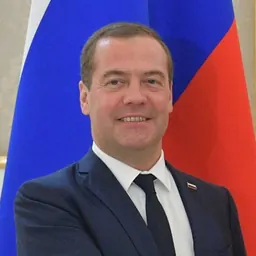
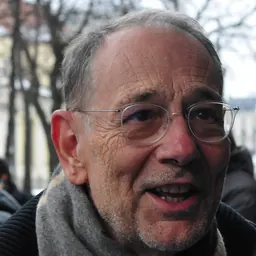
Late 2000s In 2008, he was a founding signatory of the Prague Declaration on European Conscience and Communism, which condemned the crimes of communist regimes. He also condemned the meeting between Lukashenko and Russian President Dmitry Medvedev in Sochi. Upon the European Union attempting engagement with the government again in 2008 and the government joining the Eastern Partnership, Pazniak strongly criticized the union. He stated it was self-serving and abandoning democratic ideals for the union to engage with Lukashenko, especially with the union extending an invitation to Lukashenko to attend a summit in Prague on behalf of Javier Solana. He stated that not boycotting would help the regime carry out falsifications. The 2010 election was followed by massive protests on 19 December, during which more than 600 people were arrested. Among those arrested were prominent opposition figures and presidential candidates including Uladzimir Niakliayeu.
Later on during the mid-2010s, Pazniak remained active through cultural activities. In November 2015, two of Pazniak's books were identified as allegedly containing signs of extremism and were subsequently classified as extremist material. The General Prosecutor's Office concluded that the books included passages allegedly inciting hostility or undermining state order. In the next presidential election, the 2015 Belarusian presidential election, Pazniak continued his boycotting strategy while the split-off BPF party endorsed Tatsyana Karatkevich. On 19 June 2017, he was unanimously re-elected as Chairman of the Conservative Christian Party – BPF at its XI Congress, which was held in Minsk and attended by 101 delegates.
2020s and protests
In 2018, Pazniak received the Belarusian Democratic Republic 100th Jubilee Medal from the Rada of the Belarusian Democratic Republic in Exile. Prior to the 2020 Belarusian presidential election, Pazniak asserted that Viktar Babaryka and Valery Tsepkalo were Russian-backed candidates, despite presenting themselves as alternatives to Lukashenko. He also stated that Statkevich was a provocateur of the 2010 clashes, and offered slight praise for Sviatlana Tsikhanouskaya for disrupting the political stagnation, but he maintained his call for a boycott. He stated only real change would come from the working class protesting. He called it "inadequate," criticizing Tsikhanouskaya for positioning herself as the protest leader and arguing that the ultimatum was a provocation that would only lead to harsher crackdowns.
Pazniak later claimed that Russia was planning a coup d'état in Belarus in 2020. He alleged that Putin intended to support the protestors and push for "free elections" to install a pro-Russian candidate, such as Viktar Babaryka, as the head of state.
In the summer of 2020, Pazniak founded the association Free Belarus, which states its purpose is to "advocate for the protection, development and representation of the Belarusian nation, the Republic of Belarus and Belarusians around the world". Upon founding it, he appealed to the International Court of Justice to recognize Belarus as an occupied country under Russian control, and proposed that the Rada of the Belarusian Democratic Republic (BNR Rada) could act as an initiator in the appeal to the ICJ. In 2023, he announced plans to create a Belarusian Security Council in exile alongside representatives of the Kastuś Kalinoŭski Regiment. The body is intended to coordinate defense and security matters and complement existing opposition structures.
Views Domestic policy Sanctions Pazniak has argued that the debate framing "sanctions versus negotiations" is misleading. He has argued that economic sanctions against Belarus will not succeed in toppling Lukashenko; instead, they risk deepening Belarus's economic dependence on Russia and isolating the country from the West. He has portrayed the Uniate Church as a "martyr church" whose revival is central to a Belarusian national identity. He specifically condemned the government's policy of banning masks in schools, refusing to implement social distancing, and dismissing the pandemic as a mere "panic".
Foreign policy Russia Pazniak has been characterized as vehemently anti-Russian, with some critics labeling him as Russophobic. He has stated that Russia has never done anything good for Belarus, and that any slightly pro-Russian candidate for president will be worse for Belarus. In 1993, before the Belarusian presidential elections, ultra-nationalist right-wing leader of the Liberal Democratic Party of Russia, Vladimir Zhirinovsky, won 23% of the seats in the State Duma.
Pazniak has been highly critical of the Russian opposition to Putin, stating after Alexei Navalny's death that Navalny was an "imperialist who hated a free Belarus" and would have surpassed Putin in that regard if given the chance. He stated Navalny's real influence on Russian politics was zero. He states Germany views Belarus as a source of cheap labor and talent, and states that Germany uses its influence within the European Union to shape Eastern European geopolitics. He called the union a giant bureaucratic monster. He has also criticized the European Union's response to past presidential elections, arguing that their response used vague, bureaucratic language that ultimately legitimized the results and "deepened Belarus's subjugation". He called him a "lapidary genius" and the "best president in American history," citing Trump's support for traditional values and opposition to "hated leftists". He stated he was very pleased that he began to "save America" because he wanted talked about eliminating talks about gender in the Department of Education. In his private blog, he wrote that President Biden's presidency was causing burnout due to "liberal social and progressive discrimination," and he praised Trump for addressing illegal immigration at the Mexican border.
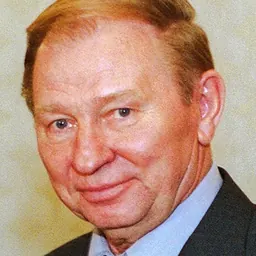
Ukraine Pazniak has been pro-Ukrainian. During the early 2000s with the Orange Revolution after the 2004 election there, he at the time supported the Ukrainian opposition against the pro-Russian president, Leonid Kuchma. In January 2023, during the Battle of Bakhmut, he visited the Belarusian fighters of the Kastuś Kalinoŭski Regiment on the front line. Pazniak had previously assisted the regiment by helping to arrange equipment, including a minibus and drones. There he also discussed the future of Belarus. However, he said it was important for Ukraine to have a democratic and neutral Belarus for regional security. Scholars have argued, therefore, that his legacy is tied to the revival of national symbolism, language, and identity and that he has been a symbol of resistance in Belarus. For example, after Pazniak released an expose in 2009, accusing well-known figures in the opposition of collaborating with Belarusian special services, BPF chairman Alaksiej Janukievich called him paranoid.
Bohdan noted that Pazniak is often portrayed as a principled politician rather than a pragmatic one, with many critics denouncing his "us vs. them" polarization for failing to offer a unified vision for Belarus's future. He also has a stepdaughter, Nadzieja, who trained as a reporter with "TV Belarus" in 2006, intending to become a news announcer.
Honours and awards In 2024 he was awarded the Order of the Pahonia, which is the highest award of the exiled Rada of the Belarusian Democratic Republic. He was also previously awarded the jubilee medal called the Belarusian Democratic Republic 100th Jubilee Medal.
In Vasil Bykaŭ's work called "Integration", he depicted a character named Spazniak as Pazniak, who in the narrative was a committed nationalist who shoots himself in a symbolic gesture of martyrdom.
Don’t just read it —
keep it.
Full-length biographies made to live with: read them, listen on the way to work, watch them tonight.
- E-book
- Audio
- Video
Instant download · yours to keep · every purchase keeps this site free
Important facts
People in Zianon Paźniak's life
Named in this biography and alive at the same time



Related people
Same field, nearest in time


Contemporaries
People whose lives overlapped Zianon Paźniak's



Frequently asked questions
Who is Zianon Paźniak?
Belarusian politician
When was Zianon Paźniak born?
Zianon Paźniak was born on 24 April 1944 in Subotniki.
What is Zianon Paźniak's occupation?
Zianon Paźniak is a writer, poet, politician, art historian, archaeologist and opinion journalist.
What nationality is Zianon Paźniak?
Zianon Paźniak is Belarusian and Russian.
Sources & further reading
Cite this page
APA: Biography.guide. (2026). Zianon Paźniak. https://biography.guide/zianon-pazniak/
MLA: "Zianon Paźniak." Biography.guide, https://biography.guide/zianon-pazniak/.
Chicago: "Zianon Paźniak." Biography.guide. https://biography.guide/zianon-pazniak/.
Data last updated: 2026-09-20 · Spot an error? Report a correction.
Page generated 2026-09-27 05:21 UTC