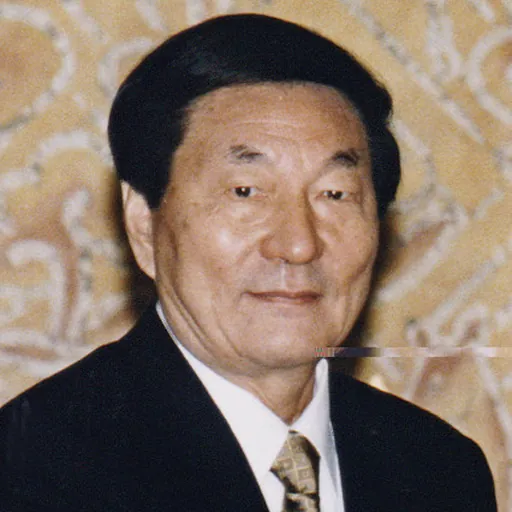
Zhu Rongji
5th Premier of the People's Republic of China from 1998 to 2003
About Zhu Rongji
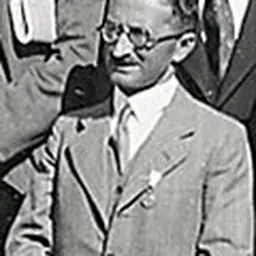
Lived 1928 – 2026 (aged 97). Zhu Rongji was a Chinese politician, engineer, businessperson, statesperson and head of government.
Zhu Rongji (; IPA: ; 23 October 1928 – 12 August 2026) was a Chinese politician who served as the premier of China from 1998 to 2003 under CCP general secretary Jiang Zemin. He was a member of the Politburo Standing Committee of the Chinese Communist Party (CCP) from 1992 to 2002.
Born in Changsha, Hunan, Zhu joined the CCP in 1949 and graduated from Tsinghua University in electrical engineering before joining the State Planning Commission. During the 1957 Hundred Flowers Campaign, he criticized official economic planning; he was consequently purged in the Anti-Rightist Campaign, expelled from the party, and demoted to teach maths and science at a cadre school. During the Cultural Revolution, he was an English teacher at a May Seventh Cadre School in Xiangyang from 1970 to 1975. Rehabilitated under Deng Xiaoping in 1978, Zhu rose through the State Economic Commission before serving as Mayor of Shanghai (1988–1991) and Shanghai CCP Secretary (1989–1991), where he earned a reputation as a pragmatic economic reformer.
Zhu served as a vice premier from 1991 to 1998, becoming first-ranked vice premier in 1993, and concurrently as governor of the People’s Bank of China from 1993 to 1995. He played a leading role in the 1994 tax-sharing reform and measures to stabilize the overheated economy. As premier, Zhu oversaw China’s response to the Asian financial crisis, the restructuring of state-owned enterprises, and China’s accession to the World Trade Organization in 2001.
As the architect of China's late-1990s economic transition, Zhu was recognized as a pragmatic technocrat, though his policies were criticized for heavy worker layoffs and the rise of local land finance. He retired from public life in 2003 and died in Beijing in 2026 at the age of 97.
Early life and career Family Zhu Rongji's ancestral home was Fengyang County, Anhui, and his family had lived for generations at Tangpo in Ansha Township, Changsha County, Hunan, where they were a locally prominent clan. The Zhu family strictly adhered to the clan naming conventions laid down by the Ming founder Zhu Yuanzhang (the Hongwu Emperor) in the Huang-Ming Zuxun (lit. "Ancestral Injunctions of the August Ming"). For the lineage of his eighteenth son, Zhu Pian (朱楩), Prince of Min, the Ming founder personally bestowed a twenty-character generational name poem to serve as ancestral-temple designations, reading: "徽音膺彥譽, 定幹企禋雍, 崇理原諮訪, 寬鎔喜賁從" (Hui-Yin-Ying-Yan-Yu, Ding-Gan-Qi-Yin-Yong, Chong-Li-Yuan-Zi-Fang, Kuan-Rong-Xi-Bi-Cong). Under this clan-law provision, successive generations of the Prince of Min's descendants were required to take, in order, the characters of the poem as their generational markers.
According to the generational ranking in the Zhu genealogy, Zhu Rongji's grandfather was named Zhu Fangxu (朱訪緒, of the "Fang" generation), his father was named Zhu Kuanshu (朱寬澍, of the "Kuan" generation), and Zhu Rongji's own given name bears the character "Rong" (鎔). Zhu Rongji was born in Changsha County, Hunan, on 23 October 1928 to a family of intellectuals. His father died before he was born, and his mother died when he was nine. Zhu was subsequently raised by his uncle, Zhu Xuefang, who continued to support Zhu's education.
Education
Zhu was educated locally, and after graduating from high school he enrolled at the prestigious Tsinghua University in Beijing in 1947. At Tsinghua he became a student leader and took part in activities organized by the CCP. He joined the CCP in 1949, the same year that Mao Zedong proclaimed the PRC, and he graduated from Tsinghua University with a bachelor's degree in electrical engineering in 1951.
People's Republic of China Zhu then began his career as a civil servant in the Northeast China Ministry of Industries, where he was appointed the deputy head of its production planning office. In 1951, he became the chairman of the Tsinghua Student Union. From 1952 to 1958 he worked in the State Planning Commission, where he was group head, deputy director, and deputy section chief. In 1957, during the Hundred Flowers Campaign, In the late 1950s, his family was also persecuted for their pre-revolutionary status as wealthy landowners, and their family mansion was destroyed. From 1976 to 1979, Zhu worked as an engineer in the Ministry of Petroleum Industry, and served as the director of the Chinese Academy of Social Sciences' Industrial Economic Bureau. As he became increasingly able to meet and make connections with foreign academics and world leaders, he was able to promote a close academic relationship between Tsinghua and M.I.T. Later in his career, he gained a reputation as a mentor to subordinates, a habit that observers interpreted as a product of his position as an educator at Tsinghua.
In 1988, after mayor Jiang Zemin became Party Secretary of Shanghai, Zhu was promoted to work as the mayor of Shanghai, which was then China's largest, most industrially developed, and wealthiest city. During Zhu's term as mayor of Shanghai, he oversaw large, rapid improvements in telecommunications, urban construction, and transportation, especially in Pudong, a large and high-profile special economic zone.
Early in Zhu's mayoralty, he delivered the speech, "Let Enterprises Swim by Themselves in the Markets" in which he encouraged enterprises and people to "go through the markets", stating that "everyone can form links through the markets".
In 1990, Zhu led a delegation of PRC mayors to meet with local and national political and business leaders from the United States, attempting to maintain and improve political and business relationships. It was the first high-profile group from the PRC to visit the United States since the suppression of the 1989 protests. Some of the officials Zhu met on the visit included Richard Nixon, Henry Kissinger, Bob Dole, and Nancy Pelosi. During the visit Zhu gave unscripted speeches in Chinese and English, and was praised by U.S. journalists, politicians, and business leaders for his frankness, openness, energy, and technical background.
Although he demonstrated a desire and ability to enact large, thorough legal and economic reforms, and political reforms aimed at making the PRC government more efficient and transparent, Zhu made it clear that he did not support dramatic political change. At a press conference during his 1990 trip to the U.S., Zhu stated, "You have your system of democracy, and we have our system of democracy. But that does not mean we have nothing in common."
Vice Premiership
Overview In 1991, largely due to his success in managing the development of Shanghai, His first issues after arriving in Beijing were to restructure the debts owed by state-owned enterprises, and to simplify and streamline the process by which farmers sold their grain to the government. Zhu was able to enact relatively far-reaching reforms largely via the broad support of Deng Xiaoping, who noted that Zhu "has his own views, dares to make decisions, and knows economics." In comparing Zhu to his peers when considering his appointment, Deng said, "The current leadership do not know economics... Zhu Rongji is the only one who understands economics."
When a global recession occurred in 1992, the PRC was challenged with excessive investment in fixed assets, excessive monetary supply, and chaotic financial markets. As the director of the central bank and the vice-premier and head of the State Council Economic and Trade Office, Zhu resolved these issues by limiting monetary supply, eliminating duplicate low-tech industrial projects, devaluing the PRC currency, cutting interest rates, reforming the tax system, That Zhu's reforms had quickly gained wide support within the central government was made clear at Li's confirmation process during the Party's 1992 convention: although Li's appointment was already agreed upon by China's top leadership, Zhu received a relatively large and unusual protest vote by many of the Party delegates. Throughout Zhu's term as both vice-premier and premier, Li was successful in blocking Zhu from introducing regulation or government oversight over the PRC's power companies,
Zhu once used the term "patriotic organizations" in a speech in the mid-1990s to describe the triads, citing their history as secret societies in resisting foreign invaders and playing a key role in Chinese history.
Contributions to socialist market economy Zhu was an advocate for markets while also viewing the state's role in setting the strategic direction of markets as indispensable. Zhu frequently argued in favor of indirect economic instruments, for example at the June 1993 Dalian Conference, although he also viewed central government directives as a viable tool.
Zhu's first task was to regain central control over the country's burgeoning yet dangerously decentralized tax revenues. Before reforming the PRC's tax system he went in person to each province of the nation to sell a new "tax sharing" idea modeled on the U.S. federal tax system. Under this new policy, revenue from provinces would go first to Beijing, and then portions would be returned to the provinces. Following the introduction of this tax system, the central government's cut of total revenue increased by over 20% in a single year, balancing the central budget and putting Beijing's resources on track to reliably increase over time. In order to manage the PRC's financial affairs he appointed himself governor of the People's Bank of China with jurisdiction over monetary policy and financial regulations, bringing the highly decentralized banking system more closely under Beijing's control.
Zhu's next task was to deal with the PRC's four colossal state-owned banks, which had accumulated billions of dollars in nonperforming loans due to profligate local lending to unprofitable state-owned enterprises (SOEs). He quarantined these bad loans in newly created "asset-management companies", and recapitalized the banks through government bonds in a restructuring strategy. After his promotion to premier in 1998, Zhu saved the biggest SOEs and allowed thousands of other small and medium-sized firms and factories to go under, assuming that new growth in the private sector could alleviate any surge of unemployment. This strategy resulted in millions of workers losing their "iron rice bowl" guarantees of cradle-to-grave employment, health care benefits, and pensions. Zhu challenged managers to base salaries on performance and market competitiveness and made profitability and productivity determining factors in managerial and executive promotions within surviving SOEs.
Zhu abolished Foreign Exchange Certificates in 1994, which the PRC had used as a parallel currency system for foreigners.
Zhu also had an important role in reducing inflation, He successfully achieved this goal by reducing the inflation rate from 24.3% in 1994 to −0.8% in 1998.
Zhu was chosen to become the PRC's fifth premier in March 1998, largely due to his success in managing large macroeconomic projects.
Early in his term he began a programme of privatization that lasted throughout his period in office, during which the PRC's private sector experienced rapid growth. He responded to the 1997 Asian financial crisis by dramatically reducing the size of the state bureaucracy, During the crisis he refused to devalue the Chinese yuan, and angrily defended his decision when some international leaders suggest that he do so. Following the crisis, Zhu advocated improving international financial markets in order to prevent harmful market speculation. The economic policy role of the State Development and Planning Commission decreased. Zhu introduced limited reforms in PRC's housing system, allowing residents to own their own apartments for the first time at subsidized rates.
Anti-corruption initiatives
Zhu earned a reputation as a strong, strict administrator, intolerant of corruption, nepotism, or incompetence. In Beijing he was sometimes known by the nicknames "Madman Zhu" and "Boss Zhu" for his hard, transparent work ethic and his tendency to disregard the bureaucratic status quo. At one time he was reported to have read 16,000 letters a year, sent to him by aggrieved citizens, in order to get a better understanding of the circumstances of ordinary Chinese people.
Zhu, along with his successor Wen, attempted to set limits on the power of local officials to levy miscellaneous service charges and fees in order to protect farmers from indiscriminate taxation by corrupt officials.
Cross-strait relations
In a joint news conference with U.S. president Bill Clinton, Zhu Rongji elucidated the PRC position on three questions relating to Cross-Strait relations: i) the influence of United States Armed Forces on cross-strait relations; ii) whether there is a timetable for Chinese unification; iii) is he willing to visit Taiwan? Zhu answered that, regarding the People's Republic of China's policy toward Chinese unification, he would not comment further and pointed to previous statements by CCP general secretary Jiang. He claimed that China had upheld the one country, two systems principle and preserved a high degree of autonomy in Hong Kong and compared Taiwan to Hong Kong, noting that China allows Taiwan to retain its own army, and was prepared to let the leader of Taiwan become the deputy leader of China in the event of unification.
Zhu's position on Taiwan changed over the course of his time as premier. During the 2000 ROC presidential election in Taiwan, Zhu warned Taiwanese voters not to vote for the DPP, which favors distancing Taiwan from the PRC, stating, "those who are pro-Taiwan independence will not have a good ending." His attitude towards Taiwan changed after the election. Three years later, in his farewell speech to the National People's Congress in 2003, Zhu encouraged PRC politicians to use softer language in discussing the issue of mainland China–Taiwan relations, saying that mainland China and Taiwan should improve economic, transportation, and cultural ties in order to improve their relationship. During the speech Zhu accidentally referred to PRC and Taiwan as "two countries" before quickly correcting himself and referring to them as "two sides". The incident was reported in Taiwanese media as a "gaffe".
Foreign affairs
Zhu started the China Development Forum in 2000. At its inception, the forum was a relatively intimate meeting between PRC leaders and foreign experts. but he retained ties with Tsinghua University, where he continued to make numerous visits during ceremonies and special events. In 2014, he wrote a rare public letter for the 30th anniversary of Tsinghua School of Economics and Management, but was not able to attend due to poor health. He appeared at the funeral of Huang Ju on 5 June 2007.
After leaving office, Zhu both wrote and became the subject of numerous books. Zhu's first book, Zhu Rongji Meets the Press, a collection of speeches and interviews with foreign and Chinese journalists and officials, was released in 2009 Kissinger wrote that the translation of his books into English represented a significant contribution to Sino-U.S. relations and promoted international understanding of Chinese culture and politics. One Western biography of Zhu encouraged leaders in other developing countries to study and emulate his reforms, and compared his influence on practical economic theory to that of Keynes.
After retiring, Zhu invested much of his time and energy into public philanthropy. In 2013 and 2014 alone, he donated 40 million RMB (c.$6.5 million U.S.) to charity. The donated money reportedly came from the royalties from his books, and was given to a charitable foundation promoting education in poor rural areas. The amount of money given was considered unusual among retired Chinese politicians, leading to speculation about the PRC's political culture. The donations prompted some commenters to compare his character to that of the PRC's first premier, Zhou Enlai. He also did not appear in the 100th anniversary of the CCP on 1 July 2021. He was absent as were the former CCP general secretary Jiang and former CCP Politburo member Luo Gan.
In March 2022, according to a report published by The Wall Street Journal, Zhu voiced his opposition to current CCP General Secretary Xi Jinping seeking an unprecedented third consecutive term, as it would break the established party system of leadership succession.
Personal life and death
Zhu is regarded as having been a good public speaker and was notable during his career for his proficient command of English. He often made public speeches without the aid of a script, and when he did so his speeches were said to be entertaining and dramatic.
His wife, Lao An, once served as the vice-chairman on the board of directors of China International Engineering and Consulting. She and Zhu attended two schools together, first at the Hunan First Provincial Middle School, then at Tsinghua University. They have two children, a son and a daughter. He was once the president and chief executive officer of one of the PRC's most successful investment banks, China International Capital Corp. Their daughter, Zhu Yanlai, was born in 1956. , she is the assistant chief executive for the Bank of China (Hong Kong), and held a seat on the National Committee of the Chinese People's Political Consultative Conference.
On 12 August 2026, Zhu died in Beijing at the age of 97. In state media his obituary described him as an "outstanding member of the Communist Party of China, a long-tested and loyal Communist fighter, an outstanding proletarian revolutionary and statesman, and an exceptional leader of the Party and state".
Zhu's remains were cremated. His funeral was held at Babaoshan Revolutionary Cemetery in Beijing. According to Xinhua, all seven members of the CCP Politburo Standing Committee (including CCP General Secretary Xi Jinping and Premier Li Qiang) as well as Vice President Han Zheng paid their final respects. Former CCP General Secretary Hu Jintao also sent a wreath, and flags were flown at half-mast.
Legacy In 2001, Zhu Rongji met with Japanese Prime Minister Junichiro Koizumi and South Korean President Kim Dae-jung. Zhu's premiership, especially related to free-market reforms, was controversial. Before his retirement, Zhu publicly acknowledged that he had not been able to complete many of his desired reforms before his term ended. In 2003, he gave a 90-minute address to several thousand delegates in the Great Hall of the People, outlining the "outstanding difficulties and problems" which he expected his successor as premier, Wen Jiabao, would have to face. After Zhu retired, Wen attempted to continue many of the reforms that Zhu had conceived and designed, creating and increasing the powers of independent regulatory commissions and restructuring the bureaucracy on the basis of merit. Some of Zhu's reforms were reversed under the leadership of Hu Jintao, and other reforms he hoped would be addressed by the incoming administration were not implemented. Notably, state-owned enterprises were allowed to regrow and keep a critical place in the PRC economy, and large areas of the banking sector remained unregulated. Hu may have reversed the PRC government's previous position and promoted state-owned enterprises in an effort to promote social stability.
Among the international leaders he met and negotiated with as premier, he gained a reputation for intelligence, energy, impatience for incompetence, shrewdness, and as a person who must be respected, even among those who disliked him. Journalists noted his proficient command of English and his "disarming" sense of humor.
Don’t just read it —
keep it.
Full-length biographies made to live with: read them, listen on the way to work, watch them tonight.
- E-book
- Audio
- Video
Instant download · yours to keep · every purchase keeps this site free
Important facts
Family & relationships
People in Zhu Rongji's life
Named in this biography and alive at the same time

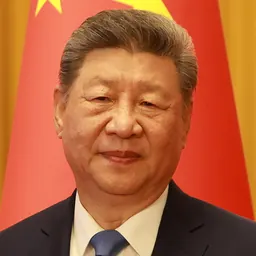
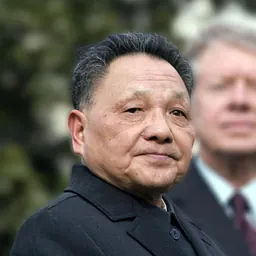



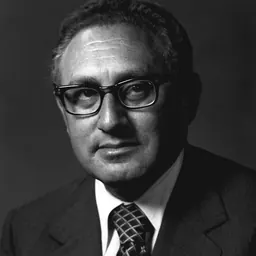

Related people
Same field, nearest in time





Contemporaries
People whose lives overlapped Zhu Rongji's



Frequently asked questions
Who was Zhu Rongji?
5th Premier of the People's Republic of China from 1998 to 2003 (1928–2026)
When was Zhu Rongji born?
Zhu Rongji was born on 23 October 1928 in Changsha.
When did Zhu Rongji die?
Zhu Rongji died on 12 August 2026 in Beijing.
What was Zhu Rongji's occupation?
Zhu Rongji was a politician, engineer, businessperson, statesperson and head of government.
What nationality was Zhu Rongji?
Zhu Rongji was Chinese.
Sources & further reading
Cite this page
APA: Biography.guide. (2026). Zhu Rongji. https://biography.guide/zhu-rongji/
MLA: "Zhu Rongji." Biography.guide, https://biography.guide/zhu-rongji/.
Chicago: "Zhu Rongji." Biography.guide. https://biography.guide/zhu-rongji/.
Data last updated: 2026-09-20 · Spot an error? Report a correction.
Portrait: Wikimedia Commons · author & licence
Page generated 2026-09-27 04:57 UTC