
Zephaniah Kingsley
Plantation owner, slave trader, merchant
About Zephaniah Kingsley
Lived 1765 – 1843 (aged 77). Zephaniah Kingsley was an American, British and Danish politician, slave trader, slave driver, plantation owner and history of slavery.
Zephaniah Kingsley Jr. (December 4, 1765 – September 14, 1843) was an English-born planter, merchant and slave trader who moved as a child with his family to the Province of South Carolina and enjoyed a successful mercantile career. He built four plantations in the Spanish colony of Florida near what is now Jacksonville, Florida. He served on the Florida Territorial Council after Florida was acquired by the United States in 1821. Kingsley Plantation, which he owned and where he lived for 25 years, has been preserved as part of the Timucuan Ecological and Historic Preserve, run by the United States National Park Service. Finding his large and complicated family progressively more insecure in Florida, he moved them to a vanished plantation, Mayorasgo de Koka, in what was then Haiti but soon became part of the Dominican Republic.
In his will, Kingsley called himself a planter, but he was in his younger years first and foremost a slave merchant, a "very respectful business", in his words. He was also pro-slavery, but by the standards of the day, he was a liberal slave owner. He has been called "a man ahead of his time." He was a relatively lenient slaveholder who respected slave families and allowed his enslaved a freedom not routine: the opportunity to hire themselves out when their work was completed, and eventually purchase their freedom for 50% of their market value.
Kingsley's main business in Spanish Florida was providing a ready supply of well-trained slaves, who were smuggled by or to planters of Georgia and South Carolina. This, plus his "interracial" family, resulted in Kingsley's being deeply invested in the Spanish system of slavery and society. As in the French colonies, certain rights were provided to a class of free people of color, and children of female slaves were allowed to inherit property from their white fathers. "In the Spanish Floridas free people of color...enjoyed tremendously elevated status when compared to virtually any other person of African descent in North America."
Kingsley changed nationalities based on which would most help his slave trading enterprises. and in 1803 to Spain (Spanish Florida), At his death his nationality was Haitian, acquired in 1836.
Early life and education
Kingsley was born in Bristol, England, the second of eight children, to Zephaniah Kingsley Sr., a Quaker from London, and Isabella Johnstone of Scotland. At the age of 15 he was sent to London for his education, although details are lacking; Like other British Loyalists, Kingsley Sr. was forced to leave South Carolina with his family, and his properties and business were confiscated by the new government. observing that "color ought not to be the base of degradation." When he was in command of a slaving ship, his crew of sailors were all Black men, most of them enslaved. His farm at Laurel Grove, staffed by Africans without white people present,
As free Blacks became progressively more unwelcome in Florida, and Kingsley was unable to prevent this, for their security he moved his family to the new Black country, Haiti.
Kingsley and Christianity Although born a Quaker, Kingsley made many negative comments on the Christian religion. In his will, he asked that his body be buried "in the nearest, or most convenient place, without any religious ceremony whatsoever, and that it may be excused from the usual indiscreet formalities and parade of washing, dressing, &c., or exposure in any way, but removed just as it died to the common burying ground."
Kingsley opposed allowing the enslaved to participate in Christian religious worship. "All the late insurrections of slaves, he claimed, are to be traced to influential preachers of the gospel."
According to Kingsley, "I encouraged dancing, merriment, and dress, for which Saturday afternoon and Sunday were dedicated, and after allowance their time was usually employed in hoeing their corn and getting a supply of fish for the week." and was one of the wealthiest men in the Territory.)
Kingsley arrived with 10 slaves and began to cultivate the property immediately. Kingsley trained the slaves at Laurel Grove in agricultural vocations to prepare them for future sale; he provided slave buyers from Georgia with skilled artisans, which allowed him to charge 50 percent more than the usual market price per slave. At Laurel Grove, there was a blacksmith shop and a carpenter's shop. Many of Kingsley's slaves were sold to Georgians and other planters in the Southeast; they took their purchases with them, illegally, back to the U.S., where importation of slaves was forbidden as of 1808. Kingsley is indicated with two other men as Floridians who accumulated great wealth from the Florida slave trade between 1808 and 1821.
In 1806, Kingsley, called "one of Florida's most flamboyant slaveholders", took a trip to Cuba, where he purchased Anna Madgigine Jai (born as Anta Majigeen Ndiaye), a 13-year-old Wolof girl from what is now Senegal. He married her, he said (there is no documentation), in an African ceremony in Havana soon after purchasing her. It certainly was not a Catholic marriage, and it was not legally recognized by Spanish Florida or the United States during their lives.
Kingsley returned with Anna to Laurel Grove and gradually depended on her to run the plantation in his absence.
A recent archeological study "has failed to substantiate claims of a sophisticated slaving business involving illegal importation, training, and smuggling of slaves at Fort George Island during the Kingsley era." Some slaves had personal gardens which they were allowed to cultivate, and from which they sold vegetables.
Thirty-two cabins were constructed for and by the slaves, made from tabby, which made them durable, insulated, and inexpensive, although labor-intensive. The cabins were located about a quarter of a mile (400 m) from the main house. Slaves were allowed to padlock their cabins and build porches that faced away from the main house. Both of these features were unusual for slave quarters in the antebellum South.
Kingsley was a lenient slave owner:
"A patriarchal feeling of affection is due to every slave from his owner, who should consider the slave as a member of his family," wrote Kingsley. Americans settled in the central portion of north Florida and built productive plantations worked by slaves. The Americans imposed the binary "racial" caste system that they had developed throughout the Southeastern U.S. This system contrasted with the standing practice in which Kingsley was invested, which, based on Spanish law as implemented in Florida, supported three social tiers: whites, free people of color, and slaves. The Spanish government recognized "interracial" marriages and allowed mixed-race children to inherit property.
Territorial Governor William P. Duval recommended to President Monroe in 1822 that Kingsley be appointed to the new Council, but Monroe did not appoint him until the following year, when he was described as an "enlightened and valuable citizen of Florida" in the first book on the new Territory. He was also recommended by Joseph Marion Hernandez, Florida's nonvoting delegate to Congress before the territory was admitted as a state.
On June 2, now a member of the Territorial Council, Kingsley was appointed to a three-person committee "to consider the duties of masters of slaves and the duties of slaves and free persons of color, and the regulations necessary for their government". Although his pamphlet was published four times, all at his own expense, reception to it was mixed. While some Southerners used it to defend the institution of slavery, others believed that Kingsley's support of a free class of blacks was a prelude to abolition of slavery.
Kingsley's praise of Haiti's new system—which outlawed slavery—combined with his defense of slavery, is notable to historian Mark Fleszar. He says that the paradox in Kingsley's thinking indicated a "disordered worldview".
Death and property disputes After visiting his family in Haiti in 1843, Kingsley boarded a ship going to New York City to conduct business there. His death on the ship of pulmonary disease at 78 years old was recorded after arrival in New York City, where Kingsley was buried in a Quaker cemetery, although in his will he asked to be buried "without any Religious ceremony whatsoever."
He left much of his land to his wives and children, a bequest which was immediately contested on racial grounds by his white in-laws. Kingsley's niece, Anna McNeill (Whistler's Mother; she married George Whistler, and their son James Whistler became a noted artist) was among the family members who tried to have all of Kingsley's family of African descent excluded from his heirs. Ma'am Anna House, and the barn survived the years relatively intact. Most of the slave quarters did as well. The National Park Service established the Timucuan Ecological and Historic Preserve in 1988 and acquired of land surrounding the Kingsley Plantation buildings in 1991.
Writings of Zephaniah Kingsley Kingsley's writings, called "eloquent" by a modern scholar, were mainly on the topic of slavery: its inevitability; how it should be governed; and how free Blacks, in his view, made a country more secure. They have been collected, edited, and thoroughly annotated by Daniel W. Stowell in Balancing Evils Judiciously: The Proslavery Writings of Zephaniah Kingsley (University Press of Florida, 2000), a volume called "deeply researched" and "gracefully presented" in a review.
The National Park Service has collected a number of pieces by or about Kingsley.
Archival material The State Library and Archives of Florida has set up a Kingsley portal to access its collection of Kingsley-related documents and photographs, centered on his will and his Spanish land grants. It notes: "The few other records concerning Kingsley that survive are scattered across many archives and private collections including the Duval County Courthouse, the East Florida Papers and other related collections at the P.K. Yonge Library of Florida History (University of Florida), the St. Augustine Historical Society Research Library, and St. Johns County Courthouse (St. Augustine, Florida)." A number of documents have been transcribed and posted on the Timucuan Ecological and Historic Preserve web site.
A number of documents are held in the Duval County Courthouse. In the George A. Smathers Libraries, University of Florida, Gainesville, Florida, is a collection of materials and documents on Kingley collected by Philip S. May. The material is dated 1812 to 1946; most is between 1812 and 1843.
Unpublished letters from 1801 to 1812 to James Hamilton (1763–1829) are found among Hamilton's papers in the Duke University Library. The theme of the novel is the taint of "racial" mixture, and features a "mixed race" female protagonist apparently based on Anna Kingsley. A ruined mansion was based on Kingsley's Fort George house.
Kingsley Avenue is in Orange Park, Florida, modern name for what had been his Laurel Grove plantation.
Don’t just read it —
keep it.
Full-length biographies made to live with: read them, listen on the way to work, watch them tonight.
- E-book
- Audio
- Video
Instant download · yours to keep · every purchase keeps this site free
Important facts
People in Zephaniah Kingsley's life
Named in this biography and alive at the same time
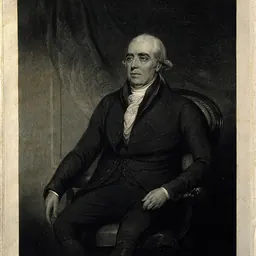

Related people
Same field, nearest in time


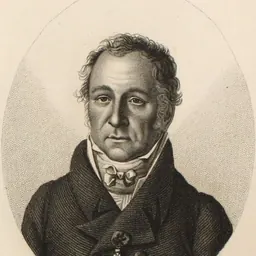
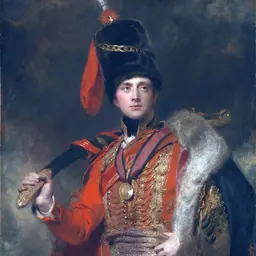

Contemporaries
People whose lives overlapped Zephaniah Kingsley's




Frequently asked questions
Who was Zephaniah Kingsley?
plantation owner, slave trader, merchant
When was Zephaniah Kingsley born?
Zephaniah Kingsley was born on 4 December 1765 in Bristol.
When did Zephaniah Kingsley die?
Zephaniah Kingsley died on 14 September 1843 in New York City.
What was Zephaniah Kingsley's occupation?
Zephaniah Kingsley was a politician, slave trader, slave driver, plantation owner and history of slavery.
What nationality was Zephaniah Kingsley?
Zephaniah Kingsley was American, British and Danish.
Sources & further reading
· Wikipedia: Zephaniah Kingsley
Cite this page
APA: Biography.guide. (2026). Zephaniah Kingsley. https://biography.guide/zephaniah-kingsley/
MLA: "Zephaniah Kingsley." Biography.guide, https://biography.guide/zephaniah-kingsley/.
Chicago: "Zephaniah Kingsley." Biography.guide. https://biography.guide/zephaniah-kingsley/.
Data last updated: 2026-09-22 · Spot an error? Report a correction.
Page generated 2026-09-27 05:03 UTC