
Anna Kingsley
Former slave who became a major slave owner in both Florida and Haiti
About Anna Kingsley
Lived 1793 – 1870 (aged 76–77). Anna Kingsley was a plantation owner, slave and wife.
Anna Madgigine Jai Kingsley, born Anta Madjiguène Ndiaye (18 June 1793 – April or May 1870), also known as Anna Kingsley, Anta Majigeen Njaay or Anna Madgigine Jai, was a West African woman from present-day Senegal, who was enslaved and sold in Cuba, probably via the slave pens on Gorée Island. In Cuba she was purchased, as wife, by plantation owner and slave trader Zephaniah Kingsley. After his death, she became a planter and slave owner in her own right, as a free Black woman in early 19th-century Florida.
Her early history is not known in detail. She was born among the Wolof people in 1793; her father was a leader, and she is sometimes referred to as a princess, though she never claimed such descent. When she was 13 years old, she was captured and sent to Cuba, where she was purchased by, impregnated by, and married, in a native ceremony, to Zephaniah Kingsley, a slave trader and plantation owner. They had four children together. Kingsley freed Anna Jai in 1811, when she turned 18, and gave her responsibilities for his plantations in East Florida, then under Spanish colonial rule. For 25 years, Kingsley's unusual family lived on Fort George Island (part of modern-day Jacksonville). Anna Jai managed a large and successful planting operation. After gaining freedom, she was given a Spanish land grant for and owned 12 slaves. After defending their property against invading Americans, she was awarded a land grant of by the Spanish government.
After the United States took control of Florida and American discriminatory laws threatened the multi-racial Kingsley family, most of them moved to Haiti. Kingsley died soon after, and Anna returned to Florida to dispute her husband's white relatives who were contesting Kingsley's will; they sought to exclude Anna and her children from their inheritance. The court honored a treaty between the United States and Spain, and Anna was successful in the court case, despite a political climate hostile toward people of African descent. She settled in the Arlington neighborhood of Jacksonville, where she died in 1870 at 77 years old. The National Park Service protects Kingsley Plantation, where Anna and Kingsley lived on Fort George Island, as part of the Timucuan Ecological and Historic Preserve.
Early years
Daniel L. Schafer, the biographer of Anna Kingsley, has based his account of her early life on conjecture based on his research into the history of the area. She was born Anta Majigueen Ndiaye in 1793 in present-day Senegal, in a portion of West Africa that was disrupted by a fierce war between the majority Wolof people and the minority Fula. Slave raids were frequent occurrences during incessant violence that left many small villages deserted, as people were abducted to be sold into slavery or they fled in fear for their lives.
She was described later as "a very unusual 'native'—tall, dignified, with well formed features, and a commanding presence."
Marriage to Zephaniah Kingsley The traditional story of the next chapter of her life is that she was transported through the infamous middle passage to Havana, Cuba. There, as he himself testified, she was purchased, newly arrived (bozal), by planter and slave merchant Zephaniah Kingsley. According to her, Kingsley needed to establish that she had been enslaved, for his manumission to be valid.
Whether he purchased and married Anta in Africa or Havana, she shared Kingsley's cabin on the ship transporting slaves from Gorée to Havana.
Laurel Grove After a brief stop in St. Augustine, Zephaniah Kingsley's ship made its way up the St. Johns River, stopping in an inlet now named Doctors Lake. Attached to the lake was a dock, the main entrance to Kingsley's plantation, which he had named Laurel Grove. Kingsley had become a citizen of Spanish Florida in 1803, likely because it allowed him to continue his international slave trading, at a time when Great Britain and the United States were moving to prohibit it (which they did in 1807). He had been granted the plantation three years before by the Spanish colonial government in exchange for his having brought 74 slaves to the territory.
Many years later, Kingsley wrote that he and Anta, now called Anna, had been married in a traditional African ceremony "in a foreign land", which historians have taken to mean Cuba, though there is no evidence of it besides Kingsley's statement. It was not a Christian marriage. By the time she arrived at Laurel Grove, she was pregnant. Laurel Grove was a prosperous plantation that grew oranges, sea island cotton, peas, and potatoes. Over a hundred slaves worked there, who were from several African ethnic groups; they lived in two groups of houses. Anna, however, lived with Kingsley in his large house. At Laurel Grove, as at many other southeastern plantations, Kingsley used the task system to manage work. Slaves were given a quota to fill; when they were finished, they were allowed to pursue their own tasks. Some tended personal gardens, while others produced crafts, both of which they were able to sell. Whether due to cultivation techniques or the task system, Laurel Grove was quite successful. One year the plantation made $10,000 , which was an extraordinary income at the time, particularly for sparsely populated Florida.
As Kingsley was involved in shipping as well as the slave trade, he was frequently away from the plantation. Laurel Grove had a manager, also a former slave who had been freed. Kingsley trusted Anna to represent him at the plantation.
Much later, Kingsley described his wife as "a fine, tall figure, black as jet, but very handsome. She was very capable, and could carry on all the affairs of the plantation in my absence as well as I could myself. She was affectionate and faithful, and I could trust her." In his will, he said "she has always been respected as my wife and as such I acknowledge her, nor do I think that her truth, honor, integrity, moral conduct or good sense will lose in comparison with anyone."
In 1813 as a free woman, Anna Kingsley petitioned the Spanish government for land. She was awarded in Mandarin, Florida, across the river from Laurel Grove. She purchased goods and livestock to get her farm started, as well as 12 enslaved workers. Slavery within African societies, generally as a result of capture during warfare, was a custom with which Anna would probably have been familiar, including the fact that female slaves often married their masters in order to obtain freedom.
Kingsley was kidnapped the same year and held until he endorsed the Patriot Rebellion, an unsuccessful insurgency by Americans to annex Florida to the United States. Americans and American-supplied Creek Indians raided towns and plantations in (north) Florida, sending any blacks they captured into slavery, regardless of their legal status. The Patriots took Laurel Grove and 41 of its slaves, using the facilities as their headquarters while they carried out similar raids in the area. Kingsley fled after being released, his whereabouts unknown. To evade the Americans, Anna approached the Spanish and negotiated her escape, bringing along her children and a dozen slaves. She burned Kingsley's plantation to the ground while the Spanish watched. Anna asked the Spanish to return her to her own homestead, and she burned it, too, preventing its use by the Patriots. For her actions, after the war the Spanish government granted Anna .
Fort George Island
Maam Anna's apartments, now restored by the National Park Service, were above the kitchens. The main house is in the background. In 1814 Zephaniah Kingsley purchased another plantation, located on Fort George Island, near the mouth of the St. Johns River. The owner's house had been looted and vandalized, and every other structure on the property was destroyed. While the slave quarters and various other buildings were being rebuilt, Anna moved in, taking over managing the plantation while Kingsley was away on business.
Haiti and return to Florida After Spain ceded control of Florida to the U.S. in 1822, the new state government progressively enacted stricter ordinances separating the "races," as was common among other states in the US South. Southern states increased restrictions on free Blacks after the Nat Turner's Rebellion of 1831. The mixed-race Kingsley family was directly and negatively affected by these "illiberal and inequitable laws", as Kingsley stated in his will. Anna and their youngest son followed Kingsley to Haiti in 1838. In all, 60 slaves, family members, and freed employees moved with Kingsley to Haiti to farm a plantation called Mayorasgo de Koka. Because slavery was prohibited in Haiti, Kingsley converted his slaves to indentured servants, who could earn their freedom with another nine years of labor. Kingsley portrayed life in Haiti as idyllic. In 1843, when Anna was 50 years old, Kingsley died on his way to New York, where he was buried.
Descendants Anna Kingsley has descendants that identify as white, Black, and/or Latino (of any race) and live primarily in the United States and the Dominican Republic. Her black-identified descendants in Jacksonville, Florida, formed part of the Black Upper Class for more than a century after her death: her great-granddaughter Mary Kingsley Sammis was the wife of Abraham Lincoln Lewis, Florida's first black millionaire, and Sammis and Lewis' descendants include the noted academic Johnnetta Betsch Cole, the conservationist MaVynee Betsch and the jazz musician John Betsch.
Works about Anna Kingsley Music The Original Song: Anta Majigeen Njaay- written and performed by Jennifer Chase with Les Frères Guissé (1998) recorded at Studio 2000, Dakar Senegal. video trailer of Majigeen interview with playwright, director, choreographer, actor_-===Theater=== Majigeen, a musical drama by Jennifer Chase, a musical first produced in 2005.
Anna is the subject of a short documentary in the 2018 collection Uncovering Jax.
Books Freedom Bound, by Rosalie Turner (2006), is a historical novel about Anna. Anna's daughter Mary is the protagonist of the 2008 children's book The Treasure of Amelia Island, by M. C. Finotti.
Teaching material
Don’t just read it —
keep it.
Full-length biographies made to live with: read them, listen on the way to work, watch them tonight.
- E-book
- Audio
- Video
Instant download · yours to keep · every purchase keeps this site free
Important facts
People in Anna Kingsley's life
Named in this biography and alive at the same time

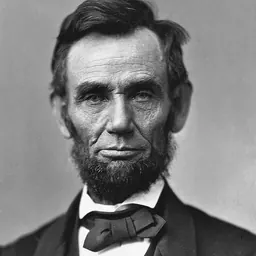

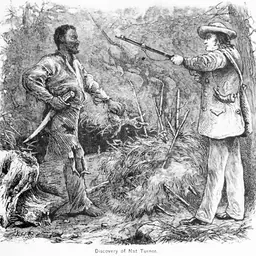
Related people
Same field, nearest in time


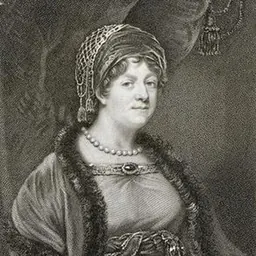
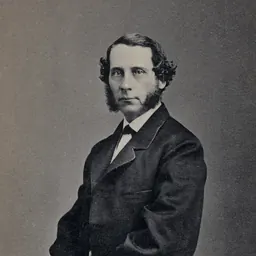


Contemporaries
People whose lives overlapped Anna Kingsley's




Frequently asked questions
Who was Anna Kingsley?
former slave who became a major slave owner in both Florida and Haiti
When was Anna Kingsley born?
Anna Kingsley was born on 18 July 1793 in West Africa, Dakar.
When did Anna Kingsley die?
Anna Kingsley died in 1870 in Jacksonville, Florida.
What was Anna Kingsley's occupation?
Anna Kingsley was a plantation owner, slave and wife.
What nationality was Anna Kingsley?
Anna Kingsley's recorded nationality: Kingdom of Jolof.
Sources & further reading
· DBpedia: Anna Madgigine Jai Kingsley
Cite this page
APA: Biography.guide. (2026). Anna Kingsley. https://biography.guide/anna-kingsley/
MLA: "Anna Kingsley." Biography.guide, https://biography.guide/anna-kingsley/.
Chicago: "Anna Kingsley." Biography.guide. https://biography.guide/anna-kingsley/.
Data last updated: 2026-09-22 · Spot an error? Report a correction.
Page generated 2026-09-27 05:22 UTC