
Mary Kingsley
British ethnographer, scientific writer and explorer
About Mary Kingsley
Lived 1862 – 1900 (aged 37). Mary Kingsley was a British explorer, nurse, anthropologist, botanical collector, writer and suffragist.
Mary Henrietta Kingsley (13 October 1862 – 3 June 1900) was an English explorer, travel writer, and ethnographic observer known for her journeys through West Africa and for her influential writings on African societies and colonial policy. Between 1893 and 1895 she travelled widely in regions of present-day Sierra Leone, Angola, Gabon, and Cameroon, often journeying alone in areas rarely visited by Europeans. During these expeditions she collected zoological specimens for the British Museum and documented local religious practices, social customs, and political systems.
Kingsley published two widely-read books, Travels in West Africa (1897) and West African Studies (1899), which combined travel narrative with ethnographic observation and commentary on British imperial policy. Her writings made her one of the most prominent European commentators on West Africa at the end of the 19th century.
Early life Kingsley was born in Islington, London on 13 October 1862, the daughter and oldest child of physician, traveller and writer George Kingsley and Mary Bailey. The family moved to Highgate less than a year after her birth, the same home where her brother Charles George R. ("Charley") Kingsley was born in 1866; in 1879 they moved to Bexleyheath in Kent and in 1886 to Cambridge.
Kingsley's beliefs about cultural and economic imperialism are complex and widely debated by scholars today. Though, on the one hand, she regarded African people and cultures as those who needed protection and preservation, she also believed in the necessity of indirect rule and the adoption of European culture and technology by indigenous populations, insisting that there was some work in West Africa that had to be completed by white men. Yet in Studies in West Africa she writes: "Although a Darwinian to the core, I doubt if evolution in a neat and tidy perpendicular line, with Fetish at the bottom and Christianity at the top, represents the true state of affairs." Other, more acceptable, beliefs were variously perceived and used in Western European society – by traders, colonists, women's rights activists and others – and, articulated as they were in great style, helped shape popular perception of "the African" and "his" land.
Writing and publications Kingsley wrote two books based on her travels in West Africa: Travels in West Africa (1897) and West African Studies (1899). Travels in West Africa was an immediate commercial success and brought her wide public attention, while both works established her reputation among scholars and commentators interested in African societies and colonial policy.
Some newspapers declined to review her work. The Times, under its pro-imperialist editor Flora Shaw, refused to publish a review of Travels in West Africa. Scholars have sometimes attributed this reception to Kingsley's criticism of aspects of missionary activity and colonial policy. However, Kingsley supported the activities of European traders in West Africa and advocated systems of indirect rule, positions that complicate simple interpretations of her views as anti-imperialist.
Travels in West Africa was widely noted for its humour, detailed observation, and lively narrative style. Although often presented as an adventure narrative, Kingsley describes her purpose in more scholarly terms, "My motive for going to West Africa was study; this study was that of native ideas and practices in religion and law." She explains that the project was also intended to complete research begun by her father, whose work had been left unfinished at his death. Kingsley later wrote that her father’s work had seemed to promise "a career of great brilliancy and distinction – a promise which, unfortunately, was never entirely fulfilled".
Reflecting on her approach to writing about the people she encountered, Kingsley emphasises the importance of portraying individuals sympathetically. "It is merely that I have the power of bringing out in my fellow-creatures, white or black, their virtues, in a way honourable to them and fortunate for me."
Kingsley's books combine travel narrative with ethnographic observation and commentary on West African societies, religion, and colonial administration. Through these works she became one of the most widely read European writers on West Africa at the end of the 19th century.
Death
After the outbreak of the Second Boer War, Kingsley travelled to Cape Town on the SS Moor in March 1900 Various reform associations were formed in her honour and helped facilitate governmental change. The Liverpool School of Tropical Medicine founded an honorary medal in her name. In Sierra Leone, the Mary Kingsley Auditorium at the Institute of African Studies, Fourah Bay College (University of Sierra Leone), was named after her. A BBC radio documentary broadcast on 31 October 1933, presented by Clifford Collinson, commemorates her voyages.
Published works Books Travels in West Africa, Congo Français, Corisco and Cameroons, London: Macmillan & Co., 1897 West African Studies, London: Macmillan & Co., 1899 The Story of West Africa, London: Horace Marshall & Son, 1899 (The Story of the Empire Series) Articles Travels on the western coast of equatorial Africa. Scottish Geographical Magazine. 12 (3): 113–124. 1896.
Gallery
Don’t just read it —
keep it.
Full-length biographies made to live with: read them, listen on the way to work, watch them tonight.
- E-book
- Audio
- Video
Instant download · yours to keep · every purchase keeps this site free
Important facts
People in Mary Kingsley's life
Named in this biography and alive at the same time
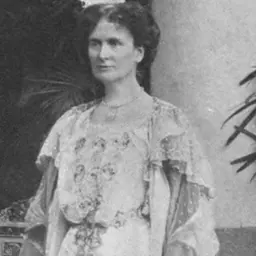


Related people
Same field, nearest in time

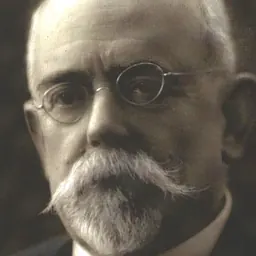


Contemporaries
People whose lives overlapped Mary Kingsley's
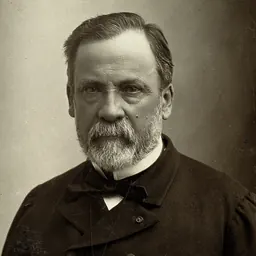



Frequently asked questions
Who was Mary Kingsley?
British ethnographer, scientific writer and explorer (1862–1900)
When was Mary Kingsley born?
Mary Kingsley was born on 13 October 1862 in Islington.
When did Mary Kingsley die?
Mary Kingsley died on 3 June 1900 in Cape Town.
What was Mary Kingsley's occupation?
Mary Kingsley was an explorer, nurse, anthropologist, botanical collector, writer and suffragist.
What nationality was Mary Kingsley?
Mary Kingsley was British.
Sources & further reading
Cite this page
APA: Biography.guide. (2026). Mary Kingsley. https://biography.guide/mary-kingsley/
MLA: "Mary Kingsley." Biography.guide, https://biography.guide/mary-kingsley/.
Chicago: "Mary Kingsley." Biography.guide. https://biography.guide/mary-kingsley/.
Data last updated: 2026-09-20 · Spot an error? Report a correction.
Page generated 2026-09-27 05:27 UTC