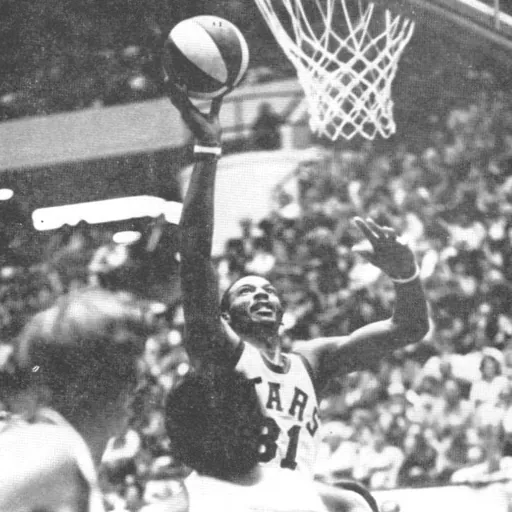
About Zelmo Beaty
Lived 1939 – 2013 (aged 73). Zelmo Beaty was an American basketball player and basketball coach.
Zelmo "Big Z" Beaty ( ; winning back-to-back Prairie View Interscholastic League 1A state championships in 1957 and 1958.
Beaty credited his high school basketball coach John Payton with Beaty's future success playing basketball in college and professionally. Before Payton's involvement in his life, Beaty played sports generally, without an athletic focus. Payton believed Beaty could be a basketball player and focused Beaty on basketball; giving Beaty more direction as a basketball coach than any other coach Beaty had.
College Beaty attended Prairie View A&M University, a small National Association of Intercollegiate Athletics (NAIA) school outside of Houston. Prairie View is the oldest historically black college and university in Texas. Beaty played on the Prairie View Panthers basketball team from 1958 to 1962, in the Southwestern Conference. Prairie View was the Southwestern Conference champion in both 1960–61 and 1961–62, and Beaty was All-Southwestern Conference as a sophomore, junior, and senior. In March 1960, at the end of his sophomore season, Beaty was among 14 players selected by the NAIA for an Olympic basketball tryout team.
Over his college career, Beaty averaged 25 points and 20 rebounds per game, and was a two-time first team NAIA All-American selection (1960, 1962). In 1960, United Press International (UPI) named Beaty a third-team small college All-American. As a junior (1960–61) and senior (1961–62), UPI named Beaty to its first-team small college All-America basketball teams. He was named a first-team Little All-American by the Associated Press (AP) in 1962, after having been named a second-team Little All-American by the AP in 1961.
Beaty led Prairie View to a national small college championship in 1962, his senior season. He averaged 24.6 points and 21.6 rebounds per game that season, with a .601 field goal percentage. The Panthers had a 27–3 record; with Beaty missing three games due to injury.
Prairie View barely won its first-round game over the Ashland College Eagles; with Beaty scoring 33 points. Beaty tied the game with 32 seconds remaining in the second half; and then scored six straight points to start the overtime in leading the Panthers to a 73–64 win. The Panthers won their next three games in the tournament before defeating the Titans, 62–53, for the NAIA title. Beaty had 28 points and 29 rebounds in the championship game against Westminster.
Professional career
NBA
St. Louis/Atlanta Hawks Beaty was selected with the third pick of the 1962 NBA draft by the St. Louis Hawks. Beaty was named to the inaugural NBA All-Rookie Team in 1963, along with Dave DeBusschere, Terry Dischinger, John Havlicek and Chet Walker. The Hawks played the Los Angeles Lakers in the 1963 Western Division playoff finals, losing in seven games. Beaty played in all seven games, averaging 29 minutes, 11.7 points, and 7.3 rebounds per game. He had 21 points and 15 rebounds in the Hawks first win of the series (Game 3), and 16 points and 13 rebounds in the Hawks Game 6 win.
After his rookie season, Beaty averaged a double-double with the Hawks over the next six seasons (1963 to 1969).
In the 1965–66 season, Beaty averaged 20.7 points and 13.6 rebounds per game in 80 regular season games. He was sixth in the NBA in rebounding average and 10th in scoring average that season. Beaty was selected to play for the West in his first All-Star Game. He had 18 rebounds and 10 points in 24 minutes during the 1966 All-Star Game. In the Hawks first round sweep of the Baltimore Bullets in the 1966 Western Division semifinals, Beaty averaged 13.3 points and 12 rebounds per game. The Hawks lost in seven game to the Lakers in the 1966 Western Division finals. During that series, Beaty led the Hawks in minutes per game (43), points per game (21.4), and rebounds per game (13.6).
Beaty suffered a knee injury during the 10th game of the 1966–67 season in early November that required knee surgery. He did not play between November 8, 1966 and January 12, 1967; but did return to finish the season on January 12. He played in a career-low 48 regular season games, while still averaging 17.8 points and 10.7 rebounds per game. He then played nearly 40 minutes per game in all six games of the Hawks Western Conference playoff finals series loss to the San Francisco Warriors; averaging 17.3 points and 11.2 rebounds per game. Beaty led the Hawks in their Game 6 loss in minutes played (45), points (28), and rebounds (16).
Beaty played in all 82 regular season games for the Hawks during the 1967–68 season. He averaged 37.4 minutes, 21.1 points (team-leading and 12th in the NBA), and 11.7 rebounds (11th in the NBA) per game. On December 3, 1967, Beaty scored an NBA career high 42 points in a 123–109 win over the Seattle SuperSonics. He was selected to play in the 1968 NBA All-Star Game, and had 10 rebounds in that game. The Hawks lost in the 1968 Western Division semifinals to the Warriors in six games, but Beaty averaged 39.8 minutes, 21.5 points, and 13.5 rebounds per game.
Beaty played in 72 games during the 1968–69 season. He averaged 35.8 minutes, 21.5 points, and 11.1 rebounds per game in the regular season. In a late January 1969 game against the Los Angeles Lakers, Beaty scored 36 points playing against Wilt Chamberlain. During the 1969 NBA Playoffs, the first Hawks postseason in Atlanta, Beaty averaged 22.5 points (his highest NBA playoffs average) and 12.9 rebounds in 11 games. In a pattern familiar for the 1960s Hawks, they were eliminated in the Western Division finals by the Los Angeles Lakers, the round before the NBA Finals. In the five-game series loss to the Lakers, Beaty led the Hawks playing 45 minutes per game and scoring 24.2 points per game, while also averaging 13.2 rebounds and three assists per game.
During his Hawks tenure, Beaty made two NBA All-Star Game appearances in 1966 and 1968, and helped the Hawks reach the playoffs every season of his tenure. Beaty played 501 regular season games in his seven seasons with the Hawks. He averaged 33.4 minutes, 17.1 points, and 10.9 rebounds per game. In 63 playoff games with the Hawks, Beaty averaged 37.2 minutes, 17 points, and 11 rebounds per game. Beaty served as the union player representative with the Hawks.
Los Angeles Lakers In late September 1974, nearly four years and eight months after the February 1970 trade with the Warriors, the Hawks signed Beaty to a contract and then traded him to the Lakers the same day. NBA commissioner J. Walter Kennedy still required the Warriors to send Lee to the Hawks, since they had signed Beaty. Beaty returned to the NBA for his final season, 1974–75, playing in 69 games as a reserve center for the Los Angeles Lakers.
ABA
Utah Stars Beaty's contract with the Hawks ended on September 30, 1969. He received a lucrative four-year contract offer to play for the Los Angeles Stars of the American Basketball Association, doubling his salary with the Hawks, and signed with the Stars on October 7. At the time, Beaty stated that the Stars' offer provided him greater financial security than he had with the Hawks. Under the option clause in his contract with the Hawks, if Beaty did not sign with the Hawks and the Hawks wanted to retain him, he either had to play for the Hawks one more season (1969–70) without a new contract, or sit out an entire season to be free of the Hawks. Upon signing with the Stars, Beaty said he would choose to forego playing altogether in the 1969–70 season rather than playing for the Hawks, so as not to risk injury before joining the Stars in 1970–71.
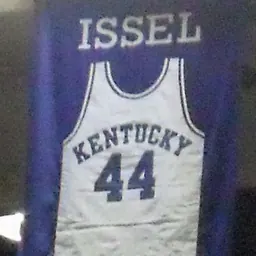
The Stars moved from Los Angeles to Salt Lake City, Utah before the 1970–71 season. In his first season in the ABA (1970–1971), Beaty led the league in two-point field goal percentage (.555) and offensive rebounds per game (5.4), was third in the league in rebounds per game (15.7), and averaged 22.9 points per game (10th in the ABA). and was second in ABA Most Valuable Player voting that season to Mel Daniels. Beaty and Dan Issel tied for second-team center All-ABA in 1971, with Daniels the first-team center.
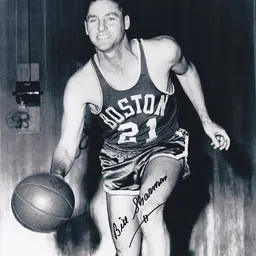
Coached by Bill Sharman and also featuring ABA star Willie Wise, the Stars were dominant in the regular season and finished with the second best record in the league at 57–27. Utah's success continued in the playoffs, sweeping the Texas Chaparrals in the first round (4–0), before defeating the Indiana Pacers and Daniels (4–3) to advance to the 1971 ABA Finals. The Stars defeated Dan Issel and the Kentucky Colonels in seven games to win the 1971 ABA Finals. In the finals against the Colonels, Beaty averaged 28.4 points and 16 rebounds per game, including recording totals of 36 points and 16 rebounds in the Game 7 win to end the series. After the game, Beaty was awarded the ABA Playoffs Most Valuable Player Award for his role in the championship victory.
The following year (1971–72), Beaty averaged a career high (for both his NBA and ABA careers) of 23.6 points per game while playing all 84 games of the regular season. Beaty was selected to play in 1972 ABA All-Star Game. He was third in MVP voting that season, and was again second-team All-ABA. However, that postseason the Stars would be eliminated during a hard-fought seven-game series in the Western Division Finals by the Pacers, who Utah had beaten the year before to advance to the finals. Beaty averaged 38.1 minutes, 20.4 points, 14.1 rebounds, and 2.7 assists per game in that series. Beaty had the same surgery on his right knee while playing for the Hawks years earlier, and the same St. Louis physician (Dr. Stan London) performed both procedures. but his arthritic knees kept him from practicing with the Stars during his final two seasons in Utah. Beaty still averaged 32.4 minutes, 16.4 points, and 9.8 rebounds per game during the regular season. It was the first time in nine years, however, that he had not averaged a double-double. The Stars dropped the suit after Beaty rejoined the team and paid the Stars a $7,000 fine. In February 1974, Beaty brought his own lawsuit against the Stars, alleging numerous breaches of contract and seeking damages of over $1 million. Beaty played in only 13 of the Stars 18 playoff games in 1974 because of a serious infection. He averaged 36.3 minutes, 14.8 points, and 10.8 rebounds per game in the playoffs. Beaty was able to return to play in the third game of that series, a 103–100 overtime loss; playing 46 minutes, with 22 points and 16 rebounds. He had 18 points and eight rebounds in Game 4, the Stars only win in the series.
In total, Beaty played four seasons with the Stars, being named to the All-ABA second-team twice and making the ABA All-Star Game three times (1971 to 1973), before returning to the NBA as a member of the Los Angeles Lakers. He was the Squires third head coach that season, replacing the 4–19 Bill Musselman who became coach after the 1–6 Al Bianchi was fired. General manager Jack Ankerson was a two-game interim coach for the Squires before Beatty's appointment. The Squires ceased operations after that season.
Legacy and honors In 2016, Beaty was inducted into Naismith Basketball Hall of Fame. In 1968, Beaty was inducted into the NAIA Hall of Fame. Beaty was selected as a member of both the NAIA’s 50th and 75th Anniversary Teams. In 2017, he was inducted into the Small College Basketball Hall of Fame. In 2015, he was inducted into the Texas Sports Hall of Fame.
Over his 12 seasons in the NBA and ABA, Beaty scored 15,207 points and had 9,665 rebounds, averaging 17.1 points per game and 10.9 rebounds per game. He ranks 38th all-time in ABA/NBA history in rebounds per game (8th in ABA history and 41st in NBA history); and ranks 53rd all-time in ABA/NBA history in total rebounds (through 2025–26).
The March 16, 2022, game between Maryland Eastern Shore and Coastal Carolina at The Basketball Classic has been designated the Zelmo Beaty Game.
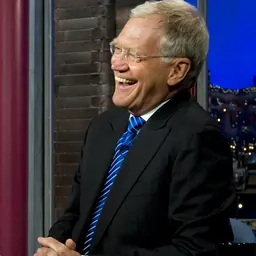
Host Josh Levin ends every episode of the Slate sports podcast Hang Up and Listen by saying, "Remember Zelmo Beaty". This is a reference to an appearance by Shaquille O'Neal on the Late Show with David Letterman in which the host asked O'Neal about several centers from earlier eras and O'Neal did not know about Beaty even though Beaty made significant contributions to the game on and off the court.
Personal life and death After retiring from professional basketball, Beaty worked in financial planning. He previously had worked at a bank in Southern California during the year between playing for the Hawks and Stars. He also worked as a substitute physical education teacher in Seattle elementary schools.
Beaty died from cancer on August 27, 2013, at his home in Bellevue, Washington. He was 73 years old. He had been married to his wife Ann for over 50 years, and had two children. They met while both were in college at Prairie View, and married in February 1963.
NBA/ABA career statistics
†Denotes seasons in which Beaty won an ABA championship*Led the league
Regular season
Playoffs
Head coaching career
Don’t just read it —
keep it.
Full-length biographies made to live with: read them, listen on the way to work, watch them tonight.
- E-book
- Audio
- Video
Instant download · yours to keep · every purchase keeps this site free
Important facts
People in Zelmo Beaty's life
Named in this biography and alive at the same time




Related people
Same field, nearest in time


Contemporaries
People whose lives overlapped Zelmo Beaty's




Frequently asked questions
Who was Zelmo Beaty?
American basketball player (1939–2013)
When was Zelmo Beaty born?
Zelmo Beaty was born on 25 October 1939 in Hillister.
When did Zelmo Beaty die?
Zelmo Beaty died on 7 September 2013 in Bellevue.
What was Zelmo Beaty's occupation?
Zelmo Beaty was a basketball player and basketball coach.
What nationality was Zelmo Beaty?
Zelmo Beaty was American.
Sources & further reading
Cite this page
APA: Biography.guide. (2026). Zelmo Beaty. https://biography.guide/zelmo-beaty/
MLA: "Zelmo Beaty." Biography.guide, https://biography.guide/zelmo-beaty/.
Chicago: "Zelmo Beaty." Biography.guide. https://biography.guide/zelmo-beaty/.
Data last updated: 2026-09-20 · Spot an error? Report a correction.
Portrait: Wikimedia Commons · author & licence
Page generated 2026-09-27 04:57 UTC