
About Zamin Ali
Lived 1893 – 1955 (aged 61). Zamin Ali was a poet.
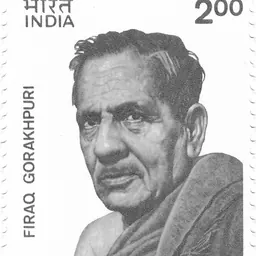
Syed Mohammad Zamin Ali Naqvi (1893–1955) popularly known as Zamin Ali was an Indian poet, author and educator. He has been referred to as "Baba-e-Urdu" or father of Urdu by Firaq Gorakhpuri and others.
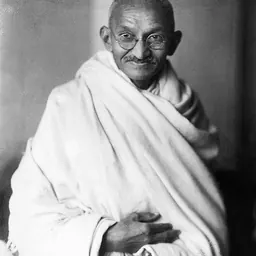
As an educator, he established the first Urdu department in un-divided India in 1924 at Allahabad University, systematized Urdu education from the primary to the PhD levels across India through the creation of curricula and textbooks, ensured Marsiyas were recognized as an art-form besides their religious content, and was an important contributor to Hindustani Academy's effort to establish Hindustani as a dual-script language based on Mahatma Gandhi's vision.
As a poet, with the pen-name "Zamin", he belonged to the Lucknow school of poetry and is a leading exemplar of Urdu poetry of his times. His poetic works include Ghazaliyat-e-Zamin, Kalaam-e-Zamin, and Majmua-e-Qasaid-o-Salaam. Ghazaliyat-e-Zamin was re-published by Rekhta Publishers and released by Javed Akhtar at the Jashn-e-Rekhta festival in 2024.
His early education was at St. John's College, Agra from where he received his High School (10th grade) and, in 1910, his Intermediate (12th grade) degree. He then received his B.A from Ewing Christian College, Allahabad in 1916 followed by an M.A. in Persian from Muir College, Allahabad in 1922.
He joined the faculty of Ewing Christian College in 1922 to teach Persian and was appointed lecturer in the Persian department of Allahabad University in 1924.
To pursue a literary career and his love for Urdu language and literature, he decided to live in Allahabad (now Prayagraj) and stayed away from his zamindari properties.
Founding the first Urdu Department in Undivided India In 1922, Zamin Ali, as a new faculty member in the Persian department at Allahabad University, proposed that there be separate departments for Urdu as well as Hindi given their cultural importance. At that time, no Urdu department existed at any University in undivided India and Urdu was often parts of departments such as Oriental Studies or Persian.
Zamin Ali's proposal was accepted by the Vice Chancellor, Sir Ganganath Jha leading to establishing the Department of Urdu in 1924. He was appointed the head of the department, a position that he held until his death in 1955. He was appointed a reader in 1932 and professor in 1945
Zamin Ali created MA and PhD programs in Urdu. His notable students with literary fame include Syed Ejaz Hussain, Nawab Hussain, Syed Waqar Azeem, Rafiq Husain, Gyan Chand Jain, Masihuzzaman and Fatima Akhtar. that was the flagship annual magazine of the Urdu department and was also the editor of the Urdu section of the Allahabad University's annual magazine. written in both the Nagari and Urdu.
At its first meeting in Lucknow on 30 March 1927, the Academy setup Urdu and Hindi survey committees to assess the state of each language's literature. Zamin headed the Urdu survey committee and produced the report, Urdu Zaban-o-Adab. This book summarizes Urdu linguistics and is considered more comprehensive than Sir George Greison's 'Linguistic Survey of India'.
Mahatma Gandhi visited Allahabad University on 17 November 1928 and praised the work being done by Zamin and the Academy. that was the flagship publication of the Hindustani Academy from its establishment in 1931 until he gave up his position in 1945.
His contributions to Urdu education were recognized by the Indian Government by issuing a postal stamp in his honor on 25 June 1980. Twenty million stamps, denominated at 30 paisa, showing a picture of Zamin Ali were printed. The first day cover illustration is a view of the Muir Central College Building of Allahabad University.
His contributions to Urdu were also recognized by the British Government by awarding him the civilian version of the M.B.E medal (Member of the Most Excellent Order of the British Empire) in 1946.
Zamin served as chairman or member of various boards of education including the United Provinces Board of High School & Intermediate Education and the Rajputana Board of Education that covered Rajputana and Central India as well as current day Madhya Pradesh and Rajasthan. He also served on Urdu studies boards at several Universities including Agra University and Allahabad University.
He took leadership in ensuring that Marsiya and Qasida were considered art forms and extracts of works by Mir Anees and Dabeer were included in textbooks.
As a result of Zamin's efforts, Urdu went from being a language used by authors and the general population to Urdu literature and language being systematized and formally taught. Urdu departments formed at 55 Indian Universities and Urdu started being taught in thousands of schools across India.
Contributions to Urdu Poetry
Zamin's poetry followed the traditions of Lucknow School of Poetry in the lineage of Munir Shikohabadi, Nasikh and Naisa. festival in New Delhi on 14 Dec 2024. According to Javed Akhtar, Zamin's poetry is an authentic exemplar of the poetry of his times of the highest order. It addresses sensitive topics with grace and creates layers of meaning through use of both Persian closures as well as day to day language.
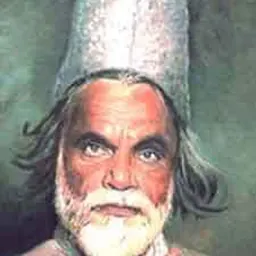
In addition to being a good poet himself, Zamin organized and chaired major mushairas of his time. He held a monthly Mushaira at Kashan-e-Adab, his home, in Allahabad. Well-known poets would stay at the Mahman Khana (Guest house) at Kashan-e-Adab for 10–12 days in Zamin's hospitality to participate. These included Hafeez Jalandhari, Roosh Siddiqi, Saail Dehlvi, Kaifi Azmi, Hadi Machlishahri, Safi Lakhnavi, Bekhud Mohani, Mahshar Lakhnavi, Jigar Moradabadi, Firaq Gorakhpuri, and Josh Malihabadi.
Mushairas run by Zamin were open to all to promote Urdu language and literature. The Mehman Khana run by Zamin was open to all Urdu scholars. This included several students at Allahabad University whose lodging, food and medical expenses were borne by Zamin. It also included people coming to Allahabad for medical treatment. Zamin encouraged them recite their patriotic poetry that was banned by the British government at this Mushaira.
With the assistance of Firaq Gorakhpuri, Zamin organized an All India Mushaira to celebrate the Golden jubilee of Allahabad University in 1937 in which poets from all over India participated.
Acclaim for Zamin Zamin Ali received a number of positive comments on his life's work from national leaders, as well as poets.
Selected poetry by Zamin
Topic: Urdu Source: pp 32–34 of Ghazaliyat-e-Zamin
He wrote the nazm Faryaad-e-Urdu at a time when English was becoming increasingly dominant. Here are a few selected couplets that appear in the introduction written by Fatima Hasan. Several of these were read by Ali Fazal at the Jashn-e-Rekhta festival on 15 December 2024 .
Topic: Zindagi Source: Page 49 of Ghazaliyat-e-Zamin
Topic: Eschewing communal strife Source:Page 7 of Ghazaliyat-e-Zamin
Topic: On Mahatama Gandhi's death Source:Page 35 of Ghazaliyat-e-Zamin
Topic: Ishq Source:Page 86 of Ghazaliyat-e-Zamin
Source:Page 56 of Ghazaliyat-e-Zamin
Source:Page 77 of Ghazaliyat-e-Zamin
Source:Page 106 of Ghazaliyat-e-Zamin
Topic: Motivational Source:Page 155 of Ghazaliyat-e-Zamin
Selected Ghazals celebrating Zamin
Aziz on Zamin Source: Prof. Zamin Ali The Educator
Bismil Allahabadi on Zamin Source: Ghazaliyat-e-Zamin
Don’t just read it —
keep it.
Full-length biographies made to live with: read them, listen on the way to work, watch them tonight.
- E-book
- Audio
- Video
Instant download · yours to keep · every purchase keeps this site free
Important facts
People in Zamin Ali's life
Named in this biography and alive at the same time




Related people
Same field, nearest in time
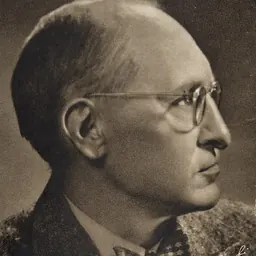
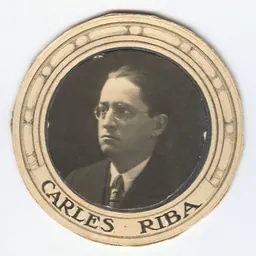
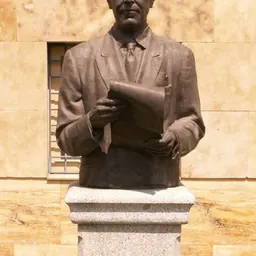

Contemporaries
People whose lives overlapped Zamin Ali's
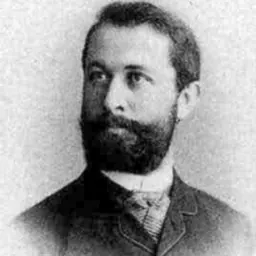
Frequently asked questions
Who was Zamin Ali?
India Urdu poet (1893–1955)
When was Zamin Ali born?
Zamin Ali was born on 25 June 1893.
When did Zamin Ali die?
Zamin Ali died on 25 April 1955.
What was Zamin Ali's occupation?
Zamin Ali was a poet.
Sources & further reading
Cite this page
APA: Biography.guide. (2026). Zamin Ali. https://biography.guide/zamin-ali/
MLA: "Zamin Ali." Biography.guide, https://biography.guide/zamin-ali/.
Chicago: "Zamin Ali." Biography.guide. https://biography.guide/zamin-ali/.
Data last updated: 2026-09-20 · Spot an error? Report a correction.
Page generated 2026-09-27 05:21 UTC