
About Zalathiel Vargas
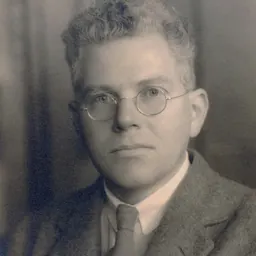
Born 1941. Zalathiel Vargas is a Mexican painter.
Zalathiel Vargas (born 1941) is a Mexican artist best known for his work in underground comix and illustrations. His work follows a number of the characteristics of comix including explicit sexuality and psychedelic imagery, but is distinguished by influence from Mexican “photo-novels” and strong social and political messages. His work has been exhibited in Mexico and abroad in venues such as the Palacio de Bellas Artes and the Museo de Arte Moderno as well as a retrospective at the Museo Universitario del Chopo of the Universidad Nacional Autónoma de México.
Life Zalathiel Vargas was born in Mexico City in 1941. His father was a carpenter. He grew up in the historic center of Mexico City. During his middle school years, he worked in a print shop. On the leftover paper he drew images from the surrounding La Merced neighborhood.
He originally wanted to be a physicist and mathematician but at age fourteen he enrolled in a painting course with the Escuela Nacional de Artes Plásticas as a hobby. As soon as he began creating, he was hooked and graduated from the school in 1963.
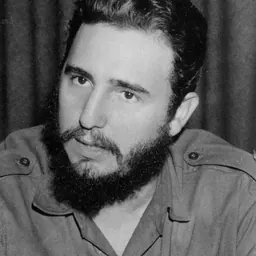
In his youth, he was a militant with the Mexican Communist Party. At the Academy of San Carlos he and other artists hung a huge portrait of Fidel Castro on the building but authorities made them take it down. He visited Cuba in 1961 and met Che Guevara. Hayter advised Vargas to travel during his stay in Paris and Vargas biked around Europe and as far as Jerusalem.
In 1964 he had his first individual exhibition of drawings and engravings at the Academy of San Carlos, and since them has participated in most of the collective exhibits organized by the related Escuela Nacional de Artes Plásticas. He is also a founding member of the Contemporary Art Forum.
Artistry During his career, Vargas has done oil paintings, drawing, sculpture, illustration, photography and comic, even experimenting with new techniques with airbrush and computers. The latter innovation earned him recognition from Apple Computer in France. Vargas’ work is based on a Mexican graphic novel called a “fotonovela” or photo-novel. However, it departs from the common narratives and conventions of Mexican graphic novels through ethereal, sexual, psychedelic and even subversive environment, using vivid colors. He used the non-sequential aspect of alternative comics to give readers a form of control over the story, producing his works on large cutout panels joined at a central axis and set in a frame. His human figures are often distorted and grotesque is elements of dismemberment. Other elements include aggressive machinery, the supernatural, fantastic animals, science fiction and black humor. Writer Carlos Monsiváis noted that in his work “… faces, bodies, noses, eyes, arms disperse and join in the brightness of the work, surrounded by phosphorescence.” His work also shows influence from graffiti, street art and even the work of Giovanni Battista Braccelli, a 17th-century painter.
Vargas was one of a number of artists in the latter 20th century who saw comics as a medium with great potential for disseminating political messages to a wide audience, although conventional comic publishers had no interest in such an enterprise. Vargas’ social and political goals was not to make his work “Americanized” or make “foreign” as he considered comics such as Superman as “colonialism.” Instead, his goals have been to focus on the oppression of modern Mexican society and issues of alienation and dehumanization in the age of mass communication, technology and digitalization. This began with his experiences during the 1968 student uprising/Tlatelolco massacre which occurred when he was an assistant at the Academy of San Carlos, and made his work rebellious. Since then, his main ideological position is that people should fight against government oppression and the dehumanizing forces of mass culture. While he manages to do this using humor and irony, his work has been criticized for continuing objectifying depictions of women like traditional Mexican fotonovelas and using female characters only in supporting roles.
Don’t just read it —
keep it.
Full-length biographies made to live with: read them, listen on the way to work, watch them tonight.
- E-book
- Audio
- Video
Instant download · yours to keep · every purchase keeps this site free
Important facts
People in Zalathiel Vargas's life
Named in this biography and alive at the same time

Related people
Same field, nearest in time





Contemporaries
People whose lives overlapped Zalathiel Vargas's




Frequently asked questions
Who is Zalathiel Vargas?
Mexican artist
When was Zalathiel Vargas born?
Zalathiel Vargas was born in 1941.
What is Zalathiel Vargas's occupation?
Zalathiel Vargas is a painter.
What nationality is Zalathiel Vargas?
Zalathiel Vargas is Mexican.
Sources & further reading
Cite this page
APA: Biography.guide. (2026). Zalathiel Vargas. https://biography.guide/zalathiel-vargas/
MLA: "Zalathiel Vargas." Biography.guide, https://biography.guide/zalathiel-vargas/.
Chicago: "Zalathiel Vargas." Biography.guide. https://biography.guide/zalathiel-vargas/.
Data last updated: 2026-09-20 · Spot an error? Report a correction.
Page generated 2026-09-27 05:05 UTC