
About Yuri Knorozov
Lived 1922 – 1999 (aged 76). Yuri Knorozov was a Russian anthropologist, linguist, archaeologist, historian, egyptologist and mesoamericanist.
Yuri Valentinovich Knorozov (; 19 November 192230 March 1999) was a Soviet and Russian linguist, epigraphist, and ethnologist. He is best known for the key role he played in the decipherment of the Maya script, the writing system of the Maya civilization of pre-Columbian Mesoamerica.
Early life Knorozov was born in Kharkov on 19 November 1922. His parents were Russian intellectuals who had moved from Saint Petersburg to Kharkov in 1911 for work purposes. His father had built a house for the family in the village of Yuzhny (later known as Pivdenne), but his mother decided it would be better to give birth in Kharkov, where there were doctors and hospitals. His paternal grandmother, (1858–1926), was a stage actress of national repute in Armenia.
Growing up in Yuzhny, Knorozov developed a close affinity with cats, which was to last his whole life. At school, he was a difficult and somewhat eccentric student, who made indifferent progress in a number of subjects and was almost expelled for poor and willful behavior. Aged five, he sustained a heavy injury to his head that nearly left him blind. at Moscow State University's department of History. He initially specialised in Egyptology. Knorozov is said to have taken this book back with him to Moscow at the end of the war, where its examination would form the basis for his later pioneering research into the Maya script.
Although many details of Knorozov's life during the war remained unclear, his student Galina Yershova could not find any evidence that he traveled outside of Moscow Oblast in 1943–1945. Knorozov himself, in an interview conducted a year before his death, denied the Berlin legend.
While still an undergraduate at MSU, Knorozov found work at the N.N. Miklukho-Maklai Institute of Ethnology and Anthropology (or IEA), part of the prestigious Academy of Sciences of the USSR. Knorozov's later research findings would be published by the IEA under its imprint.
As part of his ethnographic curriculum Knorozov spent several months as a member of a field expedition to the Central Asian Soviet republics of the Uzbek and Turkmen SSRs (what had formerly been the Khorezm PSR, and would much later become the independent nations of Uzbekistan and Turkmenistan following the 1991 breakup of the Soviet Union). On this expedition his ostensible focus was to study the effects of Russian expansionary activities and modern developments upon nomadic ethnic groups, of what was a far-flung frontier world of the Soviet state.
At this point the focus of his research had not yet been drawn on the Maya script. This would change in 1947, when at the instigation of his professor, Knorozov wrote his dissertation on the "de Landa alphabet", a record produced by the 16th century Spanish Bishop Diego de Landa in which he claimed to have transliterated the Spanish alphabet into corresponding Maya hieroglyphs. De Landa, who during his posting to Yucatán had overseen the destruction of all the codices from the Maya civilization he could find, reproduced his alphabet in a work (Relación de las Cosas de Yucatán) intended to justify his actions once he had been placed on trial when recalled to Spain. The original document had disappeared, and this work was unknown until 1860s when an abridged copy was discovered in the archives of the Spanish Royal Academy by the French scholar, Charles Étienne Brasseur de Bourbourg.
Since de Landa's "alphabet" seemed to be contradictory and unclear (e.g., multiple variations were given for some of the letters, and some of the symbols were not known in the surviving inscriptions), previous attempts to use this as a key for deciphering the Maya writing system had not been successful. By this time, this was largely known and accepted for several of these, such as Egyptian hieroglyphs (the decipherment of which was famously commenced by Jean-François Champollion in 1822 using the tri-lingual Rosetta Stone artefact); however, the prevailing view was that Mayan did not have such features. Knorozov's studies in comparative linguistics drew him to the conclusion that the Mayan script should be no different from the others, and that purely logographic or ideographic scripts did not exist.
During the 1960s, other Mayanists and researchers began to expand upon Knorozov's ideas. Their further field-work and examination of the extant inscriptions began to indicate that actual Maya history was recorded in the stelae inscriptions, and not just calendric and astronomical information. The Russian-born but American-resident scholar Tatiana Proskouriakoff was foremost in this work, eventually convincing Thompson and other doubters that historical events were recorded in the script.
Other early supporters of the phonetic approach championed by Knorozov included Michael D. Coe and David Kelley, and whilst initially they were in a clear minority, more and more supporters came to this view as further evidence and research progressed.
Subsequent decades saw many further advances, making a significant portion of surviving inscriptions legible. Most accounts of Mayan linguistics credit Knorozov's breakthroughs in deciphering the Mayan language. In retrospect, Prof. Coe writes that "Yuri Knorozov, a man who was far removed from the Western scientific establishment and who, prior to the late 1980s, never saw a Mayan ruin nor touch[ed] a real Mayan inscription, had nevertheless, against all odds, made possible the modern decipherment of Maya hieroglyphic writing." In 2018, a monument was erected to Knorozov in Mérida, Yucatán.
List of publications What follows is an incomplete listing of Knorozov's papers, conference reports and other publications, divided by subject area and type. Note that several of those listed are re-editions and/or translations of earlier papers. The editor stripped Asya of coauthorship. Asya is featured on his monument in Mérida.
Cited sources
Don’t just read it —
keep it.
Full-length biographies made to live with: read them, listen on the way to work, watch them tonight.
- E-book
- Audio
- Video
Instant download · yours to keep · every purchase keeps this site free
Important facts
People in Yuri Knorozov's life
Named in this biography and alive at the same time

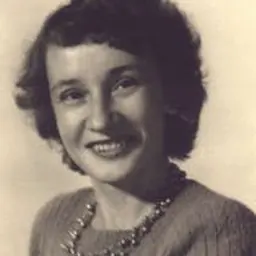

Related people
Same field, nearest in time
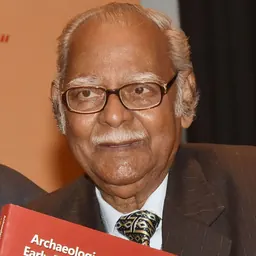

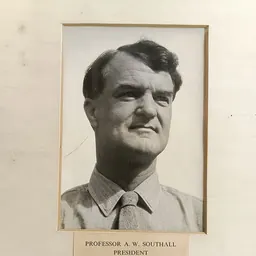

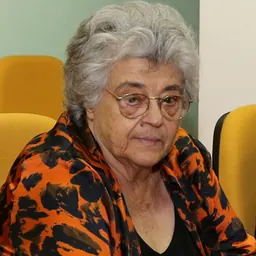

Contemporaries
People whose lives overlapped Yuri Knorozov's



Frequently asked questions
Who was Yuri Knorozov?
Soviet and Russian mesoamericanist (1922-1999)
When was Yuri Knorozov born?
Yuri Knorozov was born on 19 November 1922 in Kharkiv.
When did Yuri Knorozov die?
Yuri Knorozov died on 30 March 1999 in Saint Petersburg.
What was Yuri Knorozov's occupation?
Yuri Knorozov was an anthropologist, linguist, archaeologist, historian, egyptologist and mesoamericanist.
What nationality was Yuri Knorozov?
Yuri Knorozov was Russian.
Sources & further reading
Cite this page
APA: Biography.guide. (2026). Yuri Knorozov. https://biography.guide/yuri-knorozov/
MLA: "Yuri Knorozov." Biography.guide, https://biography.guide/yuri-knorozov/.
Chicago: "Yuri Knorozov." Biography.guide. https://biography.guide/yuri-knorozov/.
Data last updated: 2026-09-25 · Spot an error? Report a correction.
Page generated 2026-09-27 05:12 UTC