
About Yu Xinqing
Lived 1898 – 1966 (aged 67–68). Yu Xinqing was a Chinese politician.
Yu Xinqing (; 1898-4 September 1966) was a Chinese pastor and politician.
Born into a family of local government officials in Hefei, Anhui, Yu graduated from Nanking Theological Seminary as well as Columbia University. In his early years, he was a chaplain in the "Christian General" Feng Yuxiang's army. He was hailed as the "Red Priest" . Yu began his revolutionary career since 1933, he was once in exile in Japan, and he was once arrested and jailed. After the Chinese Communist Revolution, he served in various posts in government. In 1966, during the Cultural Revolution, Yu committed suicide during a series of humiliations.
Biography Early life and education Yu was born in Hefei, Anhui, in 1898, to a powerful family. His grandfather was a general in the Huai Army. He had twelve siblings. Because of war and poverty, only he and three other siblings survived. In the autumn of 1915, Yu was accepted to the newly created Nanking Theological Seminary and graduated in 1919.
Pastor career After graduation, he became a minister and pastor a church in Jiangxi. In the summer of 1922, the Henan YMCA hosted a summer camp in the capital city Kaifeng, they invited celebrities to give lectures. Yu made a stirring speech that attracted the Christian General Feng Yuxiang's attention. He was hired as Feng's chaplain. In the autumn of 1924, he pursued advanced studies at Columbia University in the United States.
Revolutionary career When he returned to China he became president of Xunzheng College in Kaifeng, Henan and then president of Mingyi Meddle School in Linfen, Shanxi, and later became director of the general affairs department of the Counter-Japanese Allies , serving as secretary-general of the warlord Feng Yuxiang.
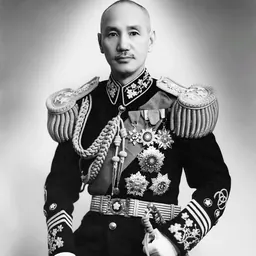
In 1933, he took part in the Fujian Incident , served as acting president of the Economic Committee of the People's Revolutionary Government . Chiang Kai-shek, the Generalissimo of the Republic of China, personally led his troops to crush the rebellion. The People's Revolutionary Government was routed and Yu went into exile in Japan.
In the summer of 1935, he returned to China and worked in the United Front of the Chinese Communist Party under the leadership of Zhou Enlai. After the fall of Shandong province, Yu served as a member of the Standing Committee of the Disaster Relief Committee of the Executive Yuan in Chongqing. He joined the China Democratic League in 1944. On September 26, 1947, he was arrested by the Nationalist government for participating the anti-government protesters in Beijing. Yu's wife, Liu Lanhua, an alumna of Yenching University, asked the former president John Leighton Stuart for help. Stuart said to Chiang Kai-shek, "This man must not be killed, he isn't a member of the Communist Party, killing him will cause discontent in many people." He was released in 1949. He had a brief stay in Hong Kong and then head for Beijing. In the same year, he attended the first plenary session of the Chinese People's Political Consultative Conference (CPPCC).
PRC era After the establishment of the People's Republic of China, he served as deputy director of the Office of the Central People's Government, deputy secretary-general of the National People's Congress, deputy director of the State Ethnic Affairs Commission, member of the Standing Committee of the China Democratic League, and vice-chairman of the Beijing Municipal Committee of the Chinese People's Political Consultative Conference. During his time as director of Dianli Bureau , he was responsible for the founding ceremony of the etiquette arrangements.
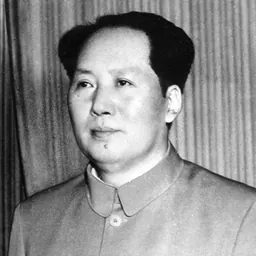
Cultural Revolution In 1966, Mao Zedong launched the Cultural Revolution, Yu wrote a letter to Prime Minister Zhou Enlai, he expressed doubts about the socialist mass movement. But soon Yu was denounced as a "monsters and freaks" (; literally: evil people) by the Communist government. Like thousands of other intellectuals in China, he experienced mistreatment and suffered political persecution. The Red Guards paraded him through the streets and beat him in public. On 4 September 1966, Yu hanged himself because of unbearable psychological pressures. "Mr. Yu is a senior intellectual who follows our Party, he is uprightness and tenacity as well as honest and upright, 'a scholar prefers death to humiliation', how could he have had that kind of insult? If I was in Beijing, I will enlighten him, perhaps he will not go that way." said Xi Zhongxun, who had worked closely with him for years.
Personal life Yu married Liu Lanhua in 1927, after they met in Columbia University. The couple had a daughter, Yu Huaxin , who was married to Feng Hongda, son of Feng Yuxiang and a rear admiral (shaojiang) in the People's Liberation Army Navy (PLAN) and deputy commander of the North Sea Fleet.
Work
Don’t just read it —
keep it.
Full-length biographies made to live with: read them, listen on the way to work, watch them tonight.
- E-book
- Audio
- Video
Instant download · yours to keep · every purchase keeps this site free
Important facts
People in Yu Xinqing's life
Named in this biography and alive at the same time





Related people
Same field, nearest in time





Contemporaries
People whose lives overlapped Yu Xinqing's



Frequently asked questions
Who was Yu Xinqing?
Chinese politician
When was Yu Xinqing born?
Yu Xinqing was born in 1898 in Hefei.
When did Yu Xinqing die?
Yu Xinqing died on 4 September 1966 in Beijing.
What was Yu Xinqing's occupation?
Yu Xinqing was a politician.
What nationality was Yu Xinqing?
Yu Xinqing was Chinese.
Sources & further reading
Cite this page
APA: Biography.guide. (2026). Yu Xinqing. https://biography.guide/yu-xinqing/
MLA: "Yu Xinqing." Biography.guide, https://biography.guide/yu-xinqing/.
Chicago: "Yu Xinqing." Biography.guide. https://biography.guide/yu-xinqing/.
Data last updated: 2026-09-20 · Spot an error? Report a correction.
Page generated 2026-09-27 05:24 UTC