
Yosl Cutler
Yiddish-American cartoonist, poet, satirist and puppeteer
About Yosl Cutler
Lived 1896 – 1935 (aged 38–39). Yosl Cutler was a writer, theatre designer, marionetteist, playwright, illuminator and satirist.
Yosl Cutler (, 1896 – June 11, 1935) was a Yiddish-American cartoonist, poet, satirist and founder of the first Yiddish puppet theatre in the United States.
Biography
Yosl Cutler, an orphaned son of a butcher, was born in Troyanov (today Troyaniv, Zhytomyr Raion), Russian Empire, and came to the United States in 1911 with an older brother. Cutler first worked as a house and sign painter.
Career A rare surviving painting by Yosl Cutler. The painting is captioned "I remember this in our shtetl in the marketplace" referring to the traveling puppet theatre.
A chance encounter with Moyshe Nadir turned Cutler into a writer, Nadir bringing Cutler into the Yiddish literary world. for the Yiddish press. In 1923, along with friends Zuni Maud and Jack Tworkov, he was hired as a stage and costume designer for the Yiddish Art Theatre of Maurice Schwartz, where he developed experience with puppeteering. Cutler was first exposed to puppets in Ukraine, where he grew up; the shows were frequently anti-Semitic, "but he loved the puppets." The trio expanded their early work during a summer spent in the Catskills, at a summer home of left wing painters and writers, who offered opinions. In 1925, the trio opened the Modjacot (a portmanteau of their names) Spiel Theatre, a Yiddish puppet theatre performed in New York City, When Tworkov left in 1926, unhappy with the socialist spin of the plays, the amalgam name was shortened to Modicot. Modicot was the first Yiddish language puppet theatre in America. The "semi-creepy Yiddish speaking puppets" were grotesque and sets tended to the surreal. Plays were delivered with an artful and sharp satire of Yiddish life, with a left-wing political outlook, but maintaining a comic edge. Collaborating with Maud, their work was always infused with social commentary, surrealism, cubism and cynical humor. The plays articulated "the clash between tradition and modernity marking Yiddish life in New York," and "skewered everything from contemporary politics to Jewish life." A noteworthy aspect of their work was to re-appropriate puppetry. The history of Slavic anti-Semitic puppet shows combined with the Jewish injunction against creating graven images made puppetry "a thoroughly un-Jewish art form." Their work has been noted to be unlike anything previously experienced in the Yiddish theatre. The works at the theatre were diverse, and included Nadir and Avrom Reyzen plays, and Maud and Cutler adaptations of Purim plays and original satires and parodies dealing with old world Yiddish foibles and hypocrisies; plays frequently included sexual liberation and, by the 1930s, pro-communist themes. Maud and Cutler were popular with general audiences, intellectuals, and "won critical acclaim from all precincts of the Yiddish press." Given their left-wing associations, this was an unprecedented agreement in the usually contentious Yiddish press.
Upon returning to the U.S. Cutler and Maud split. Cutler continued working in multiple mediums for Jewish publications and outlets. He participated in puppetry, writing and performing, at the Worker's Laboratory; and, writing a daily column for the communist Yiddish daily, Morgen Freiheit, Emanuel Levy considers Cutler to have been a "Jack of all trades", a puppeteer, craftsman, cartoonist, set designer and poet.
Cutler's early writing showed a thorough contempt for the rich, exploiters and philistines. As he matured, his writing began to impart revolutionary meaning to his satire.
He turned communist, and began writing in prose and verse amazingly clever political satire retaining the sunny cheer and infectious impishness of his early writings. He died in 1935 in an automobile accident in Iowa Falls before being able to perform the show. Approximately 10,000 people attended the funeral; he was buried in the cemetery of the International Workers Order. In 2015 the theatre collective Great Small Works performed Muttergang and Other Cheerful Downfalls, a bilingual Yiddish-English revisiting of Maud and Cutler's artistic works, re-working original scripts and using puppets and actors. Cutler's work has recently been considered to be a model for changing power relationships.
Don’t just read it —
keep it.
Full-length biographies made to live with: read them, listen on the way to work, watch them tonight.
- E-book
- Audio
- Video
Instant download · yours to keep · every purchase keeps this site free
Important facts
People in Yosl Cutler's life
Named in this biography and alive at the same time
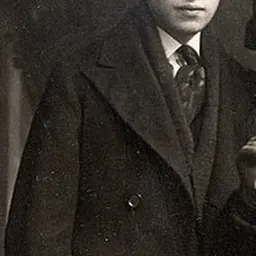
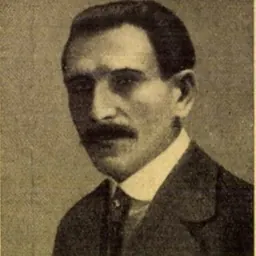

Related people
Same field, nearest in time
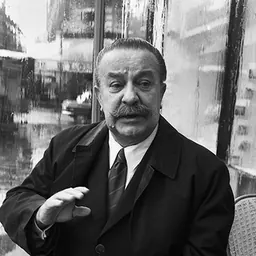

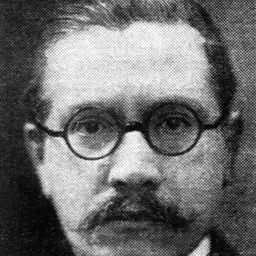

Contemporaries
People whose lives overlapped Yosl Cutler's




Frequently asked questions
Who was Yosl Cutler?
Yiddish-American cartoonist, poet, satirist and puppeteer
When was Yosl Cutler born?
Yosl Cutler was born in 1896 in Troianiv.
When did Yosl Cutler die?
Yosl Cutler died on 11 June 1935 in Iowa Falls.
What was Yosl Cutler's occupation?
Yosl Cutler was a writer, theatre designer, marionetteist, playwright, illuminator and satirist.
Sources & further reading
Cite this page
APA: Biography.guide. (2026). Yosl Cutler. https://biography.guide/yosl-cutler/
MLA: "Yosl Cutler." Biography.guide, https://biography.guide/yosl-cutler/.
Chicago: "Yosl Cutler." Biography.guide. https://biography.guide/yosl-cutler/.
Data last updated: 2026-09-20 · Spot an error? Report a correction.
Page generated 2026-09-27 05:21 UTC