
About Maurice Schwartz
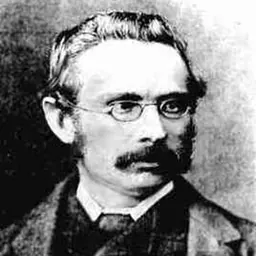
Lived 1890 – 1960 (aged 69). Maurice Schwartz was an American film director, film producer, stage actor, screenwriter, theatre director and actor.
Early life and education Schwartz was born Avrom Moishe Schwartz in Sudylkiv, Ukraine, then in the Russian Empire, to Isaac, a grain dealer, and his wife Rose (née Bernholtz) Schwartz, a Jewish family. Moishe was the oldest of three boys among the six siblings, and had three older sisters. Like many similar families, the Schwartzes immigrated to the United States in stages. In 1898 Isaac Schwartz emigrated with his three teen-aged daughters, so they could all work to get started in New York and earn money for passage for Rose and their three young sons.
The following year he sent tickets for his wife and the boys. They got as far as Liverpool, where they were to sail for the U.S., but got separated. Rose was forced to leave without Moishe. Without any English, he made his way to London, where he lived for two years, surviving with the help of strangers. His father located him in 1901, and they traveled together to New York when Moishe was twelve.
Because his Orthodox father opposed his desire to act, Schwartz left home and took a variety of jobs to support himself before finally finding work as an actor. He joined various traveling theater troupes, including one that toured the Midwest. On his return to New York City in 1907, he found his heroes, Kessler and Adler, continuing to rise in their profession. Soon Schwartz obtained a contract with Michael Thomashevsky's Green Street Theatre in Philadelphia.
Marriage and family Schwartz was briefly married to Eva Rafalo, a contralto singer born in Cincinnati, Ohio, whom he met while touring with an acting company. {citation: Marriage: "Ohio, U.S., County Marriage Records, 1774-1993" Original data: Marriage Records. Ohio Marriages. Various Ohio County Courthouses Ancestry Record 61378 #900618693 (accessed 10 June 2024) Eva Rafalo (23), daughter of Isaac Rafalo & Bertha Sclovsky, marriage to Morris Schwartz on 11 Jul 1911 in Hamilton, Ohio, USA. } They were divorced by 1911, after which he returned full-time to New York. Eva and her older sister Clara Rafalo were both actresses in the Yiddish theatre. After the divorce, Eva married Henry (Zvi Hersch) Fishman, another actor on the Yiddish stage.Citation needed Marriage: "Indiana, U.S., Marriage Index, 1800-1941" Works Progress Administration; Index to Marriage Records: Indiana Works Progress Administration, 1938-1940; Series Title: Lake County Indiana;index to Marriage Record 1850 - 1920 Inclusive Vol W. P. A. Original Record Located: County Clerk's O; Book: U; Page: 230 Ancestry Record 5059 #2335335 (accessed 10 June 2024) Eva Rafalo marriage to Harry Fishman on 31 Mar 1913 in Lake, Indiana, USA.|date=December 2023
In 1914 Schwartz married Anna Bordofsky, a 24-year-old woman from Brest-Litovsk, Belarus, who had been in the United States about a decade. She was initially involved with Kessler's Yiddish theater as well. She became his business partner, helping run the theatre. They remained married until Schwartz's death.
In 1947 the couple adopted two Polish Jewish war orphans, Moses and Fannie Englander, aged 9- and 8-years old, respectively. After losing their parents Abraham Joseph and Chana Englander in 1942, the children had been placed by the underground with Belgian Christian families. Fannie was renamed Marcelle and grew up with Maurice and Denise Vander Voordt as the only parents she really knew. The Vander Voordts protected her as their own during the German occupation. She spoke only French.
After the war, Jewish groups had worked to reunite families and place Jewish orphans with Jewish families. Schwartz met the boy Moses at the Wezembeek Orphanage in Belgium in 1946 while on a theatrical tour for displaced persons. He arranged to adopt Moses and his sister through the American Jewish Joint Distribution Committee (JDC), which had located Fannie and brought the siblings together. In New York, they taught them Yiddish and English, and about Judaism. Risa became an actress in the United States, most commonly known for her role in The Tenth Man (Chayefsky play) as Evelyn Foreman. After a total of six years with Kessler, Schwartz had other ambitions to pursue.
In 1918, Schwartz founded the Yiddish Art Theatre, taking a lease on the Irving Place Theatre, in the Union Square neighborhood in New York City. He had ambitions for a people's theater that would produce classic, literary works. As he announced in Der Tog (The Day), a Yiddish-language newspaper, he wanted "a company that will be devoted to performing superior literary works that will bring honor to the Yiddish Theatre."
Believing that an actor needed to develop by taking on a wide variety of roles, the next year he founded an associated school. He wanted to nurture talent by giving students chances to learn: he felt that taking on 25 roles would teach someone much about "the possibilities of voice, gesture and make-up." Schwartz took his company on a tour to Europe in 1924 and to South America in 1929.
By the 1930s, the Yiddish theater was declining as Jews became more assimilated and audiences decreased. In an interview in 1931, Schwartz said, "The Jewish stage was once a night school to which people came to learn the language [English]. Now Jewish playwrights are confused. They cannot go back to the old themes because the Americanized Jew does not know that life, and they have not sufficiently assimilated the life here to understand and write about it." For example, in 1931 he appeared on Broadway at the Forty-ninth Street Theatre in Ernst Toller's Expressionist play, Bloody Laughter (Hinkemann). (It had been produced in the UK in a cockney English version, and in Yiddish entitled The Red Laugh. Schwartz commissioned a translation for the New York production.) Related to German expressionism and the First World War, the play was not well received.
Filmography Year Title Role Notes1924 Jiskor Leibke 1926 Broken Hearts Benjamin Rezanov 1932 Uncle Moses Moses 1936 The Man Behind the Mask The Master 1939 Tevya Tevya 'Tevye' 1943 Mission to Moscow Dr. Botkin 1951 Bird of Paradise The Kahuna 1953 Salome Ezra 1953 Slaves of Babylon The Prophet Daniel his final film role.
Don’t just read it —
keep it.
Full-length biographies made to live with: read them, listen on the way to work, watch them tonight.
- E-book
- Audio
- Video
Instant download · yours to keep · every purchase keeps this site free
Important facts
People in Maurice Schwartz's life
Named in this biography and alive at the same time


Related people
Same field, nearest in time


Contemporaries
People whose lives overlapped Maurice Schwartz's


Frequently asked questions
Who was Maurice Schwartz?
American actor and director (1890–1960)
When was Maurice Schwartz born?
Maurice Schwartz was born on 18 June 1890 in Sudylkiv.
When did Maurice Schwartz die?
Maurice Schwartz died on 10 May 1960 in Tel Aviv, Petah Tikva.
What was Maurice Schwartz's occupation?
Maurice Schwartz was a film director, film producer, stage actor, screenwriter, theatre director and actor.
What nationality was Maurice Schwartz?
Maurice Schwartz was American.
Sources & further reading
Cite this page
APA: Biography.guide. (2026). Maurice Schwartz. https://biography.guide/maurice-schwartz/
MLA: "Maurice Schwartz." Biography.guide, https://biography.guide/maurice-schwartz/.
Chicago: "Maurice Schwartz." Biography.guide. https://biography.guide/maurice-schwartz/.
Data last updated: 2026-09-20 · Spot an error? Report a correction.
Page generated 2026-09-27 05:19 UTC