
About Isaac Schwartz
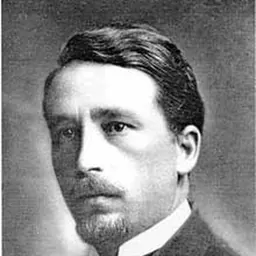
Lived 1923 – 2009 (aged 86). Isaac Schwartz was a Russian composer and film score composer.
Isaac Iosifovich Schwartz (; 13 May 1923 – 27 December 2009), also known as Isaak Shvarts, was a Soviet composer.
Schwartz was born in Romny in the Ukrainian SSR in 1923. His family moved to Leningrad in 1930, where he learned to play the piano. He gave his first concert in 1935 with the Leningrad Philharmonic Orchestra.
Schwartz's father was professor of archeology at the Leningrad State University: he was arrested in 1936 and executed two years later as part of the Great Purge. Schwartz's family was exiled to Kyrgyzstan in 1937, and Schwartz gave private music lessons in Frunze (now Bishkek) as well as occasionally accompanying the silent films at the cinema with live music.
During the Second World War, Schwartz directed one of the sections of the Red Army Choir. During that time, he met Mariya Dmitriyevna, the sister of Russian composer Dmitri Shostakovich, who introduced him to her brother. Shostakovich helped Schwartz gain entry to the Rimsky-Korsakov Conservatory in Leningrad, whence he graduated with a diploma in composition in 1951. He joined the Union of Soviet Composers in 1955. Only years later did he discover that Shostakovich had paid for his education.
Schwartz's first major commission was the music for the film Our Correspondent in 1959. He went on to compose the music for more than 100 Soviet films, including White Sun of the Desert (Белое солнце пустыни, 1969) and The Captivating Star of Happiness (Звезда пленительного счастья, 1975).
Schwartz also composed music for ballets and theatrical performances and, to a lesser extent, for television. His one symphony, Gelbe Sterne – Purimspiel im Ghetto, composed in 1993, was first performed in Saint Petersburg in 2000: it was inspired by the story of the Kovno Ghetto in Lithuania. The work was recorded on Capriccio with Russian National Philharmonic Orchestra under Vladimir Spivakov in 2005 (currently available as a download only).
Schwartz died in Siversky, near Saint Petersburg, Russian Federation, on 27 December 2009, aged 86.
Selected filmography Zhenya, Zhenechka and Katyusha (1967) The Seventh Companion (1967) The Brothers Karamazov (1969) The Stationmaster (1972) The Straw Hat (1974) The Flight of Mr. McKinley (1975) Dersu Uzala (1975) Melodies of a White Night (1976) Where were you, Odysseus? (1978) Do Not Shoot at White Swans (1980) Sofia Kovalevskaya (1985) Wild Pigeon (1986) An Umbrella for Lovers (1986) Luna Park (1992) Empire under Attack (2000)
Don’t just read it —
keep it.
Full-length biographies made to live with: read them, listen on the way to work, watch them tonight.
- E-book
- Audio
- Video
Instant download · yours to keep · every purchase keeps this site free
Important facts
People in Isaac Schwartz's life
Named in this biography and alive at the same time
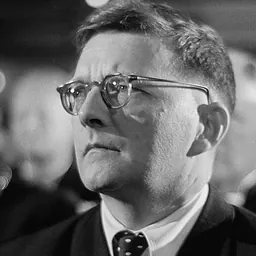

Related people
Same field, nearest in time



Contemporaries
People whose lives overlapped Isaac Schwartz's

Frequently asked questions
Who was Isaac Schwartz?
Soviet and Russian composer (1923–2009)
When was Isaac Schwartz born?
Isaac Schwartz was born on 13 May 1923 in Romny.
When did Isaac Schwartz die?
Isaac Schwartz died on 27 December 2009 in Siversky.
What was Isaac Schwartz's occupation?
Isaac Schwartz was a composer and film score composer.
What nationality was Isaac Schwartz?
Isaac Schwartz was Russian.
Sources & further reading
Cite this page
APA: Biography.guide. (2026). Isaac Schwartz. https://biography.guide/isaac-schwartz/
MLA: "Isaac Schwartz." Biography.guide, https://biography.guide/isaac-schwartz/.
Chicago: "Isaac Schwartz." Biography.guide. https://biography.guide/isaac-schwartz/.
Data last updated: 2026-09-22 · Spot an error? Report a correction.
Page generated 2026-09-27 05:07 UTC