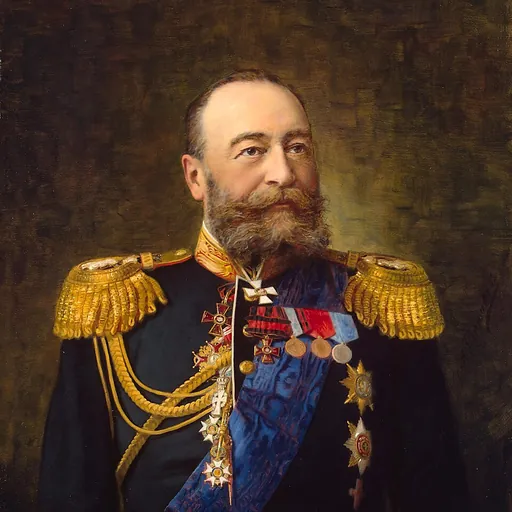
Yevgeni Ivanovich Alekseyev
Imperial Russian Navy admiral
About Yevgeni Ivanovich Alekseyev
Lived 1843 – 1917 (aged 74). Yevgeni Ivanovich Alekseyev was a Russian military personnel, governor and admiral.
Yevgeni Ivanovich Alekseyev or Alexeyev (; b. – d. May 27, 1917) was a Russian admiral in the Imperial Russian Navy, viceroy of the Russian Far East, and commander-in-chief of Imperial Russian forces at Port Arthur and in Manchuria during the first year of the Russo-Japanese War of 1904–05.
Biography According to rumor, Alekseyev was an illegitimate son of Emperor Alexander II . Alekseyev was raised by the family of Lieutenant Ivan Maximovich Alekseyev (1796–1849) in Sevastopol.
At the age of 13 Alexeyev attended the Naval Cadet Corps and completed his training three years later. He was assigned as a midshipman for four years to the corvette Varyag on a world tour. Commissioned as an ensign in 1867, he served on numerous ships in the Imperial Russian Navy including the ironclad Kniaz Pozharsky, and in 1878 received his first command: the cruiser Afrika, which he commanded on a voyage around the world from 1880 to 1883.
From 1883 to 1888 Alexeyev served as a naval attaché to France; he was promoted to the rank of captain in 1886. During this time he took the place of Grand Duke Alexei Alexandrovich who was in jail after he was arrested for a drunken fight at a brothel in Marseille, winning the Grand Duke's patronage. After his return to Russia in 1889 he was given command of the protected cruiser . In 1891 he made another round-the-world cruise, this time accompanied by the Tsarevich Nicholas (the future Tsar Nicholas II, )—during the Eastern journey of Nicholas II.
Alexeyev was promoted to rear admiral in 1892 and served on the , becoming vice admiral in 1894 and deputy chief-of-staff in 1895. From 1895 to 1897 he commanded the Russian Pacific Fleet, initially at Vladivostok, and from December 1897, at Port Arthur in the southern Liaodong Peninsula leased from Qing-dynasty China. In 1898 he was appointed governor of the Kwantung Fortified Region, and was again named commander of the Russian Pacific Fleet from 1899. He participated in the suppression of the Boxer Rebellion of 1899-1901 in China as commander of an army corps, following an appointment by War Minister Aleksey Kuropatkin
With the outbreak of the Russo-Japanese War on February 9, 1904, Alexeyev became commander of all Russian land and naval forces in the Far East. He assumed direct command over the Russian Pacific Squadron after the dismissal of Vice Admiral Oskar Stark (February 24, 1904) until the arrival of Vice Admiral Stepan Makarov (March 8, 1904), and again after Makarov's death until the appointment (April 1, 1904) of Vice Admiral Nikolai Skrydlov.
On land, Alexeyev had serious and continual disagreements with General Aleksey Kuropatkin, the former Minister of War, over the strategy employed against the Japanese. Alexeyev forced Kuropatkin to take a more aggressive position, despite Kuropatkin's insistence on waging a defensive war of attrition until the completion of the Trans-Siberian Railroad, which would bring reinforcements and supplies. Following a direct order from the Tsar, Alexeyev left Port Arthur on May 5, 1904, for Mukden, and following the Russian defeat at the Battle of Shaho (5 to 17 October 1904, New Style), was relieved of his command and ordered back to St. Petersburg on October 12, 1904.
In June 1905 the post of viceroy was abolished, and Alexeyev became a member of the State Council of Imperial Russia. In his later years he moved to Russian Armenia and worked as a school teacher. In April 1917, in the wake of the February Revolution and the abdication of Emperor Nikolai II in March 1917, he retired from public life. He died a few weeks later in Yalta, on .
Honors link=Order of St. Stanislav Order of St. Stanislaus, 3rd degree, 1871
link=Order of St. Vladimir Order of St Vladimir, 4th degree with bow, 1875 .
link=Order of St. Stanislav Order of St. Stanislaus, 2nd degree 1877.
link=Order of St. Vladimir Order of St Vladimir, 3rd degree, 1890 link=Order of St. Stanislav Order of St. Stanislaus, 1st degree, 1894
Order of the Double Dragon, 1886 (China)
link=Order of St. Vladimir Order of St Vladimir, 2nd degree, 1898
link=Order of Saint George (Russia) Order of St. George, 3rd class, 1903 link= Order of St. Alexander Nevsky Order of St. Alexander Nevsky, 1906 link=Order of St. Vladimir Order of St Vladimir, 1st degree, 1915
Don’t just read it —
keep it.
Full-length biographies made to live with: read them, listen on the way to work, watch them tonight.
- E-book
- Audio
- Video
Instant download · yours to keep · every purchase keeps this site free
Important facts
People in Yevgeni Ivanovich Alekseyev's life
Named in this biography and alive at the same time

Related people
Same field, nearest in time


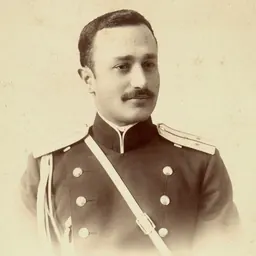
Contemporaries
People whose lives overlapped Yevgeni Ivanovich Alekseyev's

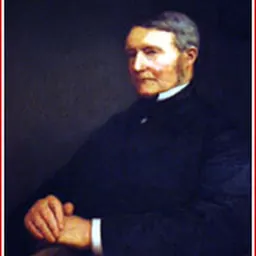
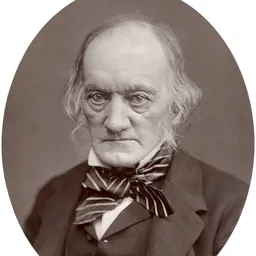
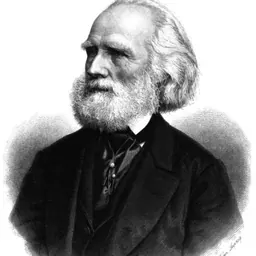
Frequently asked questions
Who was Yevgeni Ivanovich Alekseyev?
Imperial Russian Navy admiral (1843-1917)
When was Yevgeni Ivanovich Alekseyev born?
Yevgeni Ivanovich Alekseyev was born on 13 May 1843 in Saint Petersburg.
When did Yevgeni Ivanovich Alekseyev die?
Yevgeni Ivanovich Alekseyev died on 27 May 1917 in Yalta.
What was Yevgeni Ivanovich Alekseyev's occupation?
Yevgeni Ivanovich Alekseyev was a military personnel, governor and admiral.
What nationality was Yevgeni Ivanovich Alekseyev?
Yevgeni Ivanovich Alekseyev was Russian.
Sources & further reading
· Wikipedia: Yevgeni Ivanovich Alekseyev
· DBpedia: Yevgeni Ivanovich Alekseyev
Cite this page
APA: Biography.guide. (2026). Yevgeni Ivanovich Alekseyev. https://biography.guide/yevgeni-ivanovich-alekseyev/
MLA: "Yevgeni Ivanovich Alekseyev." Biography.guide, https://biography.guide/yevgeni-ivanovich-alekseyev/.
Chicago: "Yevgeni Ivanovich Alekseyev." Biography.guide. https://biography.guide/yevgeni-ivanovich-alekseyev/.
Data last updated: 2026-09-21 · Spot an error? Report a correction.
Portrait: Wikimedia Commons · author & licence
Page generated 2026-09-27 05:00 UTC