
About Yang Fang
Lived 1770 – 1846 (aged 75–76). Yang Fang was a Chinese diplomat.
Yang Fang (17701846) was a Han Chinese general and diplomat during the Qing dynasty (16441911). Born in Songtao, Guizhou Province (modern day Songtao Miao Autonomous County), he joined the military as a young man and became a secretary, where he came to the attention of General Yang Yuchun (/ 17601837), who recommended him for military school.
Career After completing his military training, Yang was involved in the suppression of the White Lotus Rebellion (17941804). In 1826, the sixth year of the reign of the Daoguang Emperor, Yang joined an army that marched north to Xinjiang to suppress a rebellion led by Altishahri warlord Jahangir Khoja. For his outstanding service during the mission he was rewarded with the title of Grand Tutor to the Heir Apparent (Tàizǐ Tàifù, ).
Promotions piled up and by 1839 Yang had held titles including Military Commander of Guangdong and Guangxi as well as Governor-general of Gansu, Zhili, Hunan and Sichuan.
When the First Opium War broke out (from the Chinese perspective) in June 1840, Qing Special Commissioners Lin Zexu and Deng Tingzhen were resolute in their opposition to the British but their successor Qishan instead sought compromise. In January the following year, Daoguang declared war on Great Britain. He appointed "Qishan Pacifier of the Rebellious" (Jìngnì, ) and made Yang Fang and Long Wen ministerial attaches (Cānzàn Dàchén, 參贊大臣).
Yang Fang disagreed with the terms of the Convention of Chuenpi signed by Qishan and British Plenipotentiary Charles Elliot in January 1841 and on March5, he arrived in Canton with a thousand troops from Hunan Province. Aged 71 and so deaf that communication with him had to be in writing, Fang led Chinese troops in an attack at the Second Battle of Canton, which ended when further negotiations between the two sides temporarily terminated hostilities. Yang Fang was subsequently reprimanded by the emperor for agreeing to a truce instead of resisting. A disappointed Yang Fang remained in Canton until a fall from his horse forced him to return to Hunan to recuperate. In 1843 he received his retirement orders from Daoguang. His career had spanned over 50 years and aside from his military exploits he had remained an indefatigable writer, poet and calligrapher.
Don’t just read it —
keep it.
Full-length biographies made to live with: read them, listen on the way to work, watch them tonight.
- E-book
- Audio
- Video
Instant download · yours to keep · every purchase keeps this site free
Important facts
People in Yang Fang's life
Named in this biography and alive at the same time


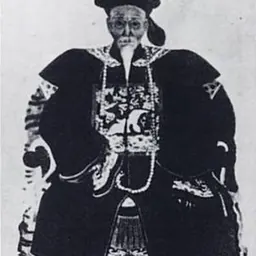

Related people
Same field, nearest in time



Contemporaries
People whose lives overlapped Yang Fang's



Frequently asked questions
Who was Yang Fang?
general
When was Yang Fang born?
Yang Fang was born in 1770.
When did Yang Fang die?
Yang Fang died in 1846.
What was Yang Fang's occupation?
Yang Fang was a diplomat.
What nationality was Yang Fang?
Yang Fang was Chinese.
Sources & further reading
· DBpedia: Yang Fang (general)
Cite this page
APA: Biography.guide. (2026). Yang Fang. https://biography.guide/yang-fang-diplomat/
MLA: "Yang Fang." Biography.guide, https://biography.guide/yang-fang-diplomat/.
Chicago: "Yang Fang." Biography.guide. https://biography.guide/yang-fang-diplomat/.
Data last updated: 2026-09-20 · Spot an error? Report a correction.
Page generated 2026-09-27 05:31 UTC