
About Daoguang Emperor
Lived 1782 – 1850 (aged 67). Daoguang Emperor was a Chinese monarch.
The Daoguang Emperor (16 September 1782 – 26 February 1850), also known by his temple name Emperor Xuanzong of Qing, personal name Minning, was the seventh emperor of the Qing dynasty, and the sixth Qing emperor to rule over China proper. His reign was marked by "external disaster and internal rebellion". These include the First Opium War and the beginning of the Taiping Rebellion which nearly brought down the dynasty. The historian Jonathan Spence characterizes the Daoguang Emperor as a "well meaning but ineffective man" who promoted officials who "presented a purist view even if they had nothing to say about the domestic and foreign problems surrounding the dynasty".
Early years
The Daoguang Emperor was born in the Forbidden City, Beijing, in 1782, and was given the name Mianning . It was later changed to Minning when he became emperor. The first character of his private name was changed from Mian to Min to avoid the relatively common character Mian. This novelty was introduced by his grandfather, the reigning Qianlong Emperor, who thought it was inappropriate to use a common character in the emperor's private name due to the longstanding practice of naming taboo.
Mianning was the second son of Prince Yongyan, the 15th son and heir of the Qianlong Emperor. Even though he was Yongyan's second son, he was first in line after Prince Yongyan to his grandfather's throne. This was because according to the dishu system, his mother, Lady Hitara, was Yongyan's primary spouse whereas his elder brother was born to Yongyan's concubine. Mianning was favored by his grandfather, the Qianlong Emperor. He frequently accompanied his grandfather on hunting trips. On one such trip, at the age of nine, Mianning successfully hunted a deer, which greatly amused the Qianlong Emperor. The emperor would abdicate five years after that incident, in 1796, when Mianning was 14. Mianning’s father Prince Yongyan was then enthroned as the Jiaqing Emperor, after which he made Lady Hitara (Mianning's mother) his empress consort. The elderly Qianlong would live three more years in retirement before dying in 1799, aged 87, when Mianning was 17.
In 1813, while he was still a prince, Mianning also played a vital role in repelling and killing Eight Trigrams invaders who stormed the Forbidden City.
Reign
One Cash coin struck in the name of Daoguang, emperor of the Qing dynasty, minted in Boo-guwang.
Khoja rebellion in Xinjiang
In September 1820, at the age of 38, Mianning inherited the throne after the Jiaqing Emperor died suddenly of unknown causes. He became the first Qing emperor who was the eldest legitimate son of his father. Now known as the Daoguang Emperor, he inherited a declining empire with Westerners encroaching upon the borders of China. His era name, "Daoguang", means "radiant path". The Daoguang Emperor had been ruling for six years when the exiled heir to the Khojas, Jahangir Khoja, attacked Xinjiang from Kokand in the Afaqi Khoja revolts. By the end of 1826, the former Qing cities of Kashgar, Yarkand, Khotan, and Yangihissar had all fallen to the rebels. After a friend betrayed him in March 1827, Khoja was sent to Beijing in an iron litter and subsequently executed, while the Qing Empire regained control of their lost territory. The Uyghur Muslim Sayyid and Naqshbandi Sufi rebel of the Afaqi suborder, Jahangir Khoja was sliced to death (Lingchi) in 1828 by the Manchus for leading a rebellion against the Qing.
First Opium War
During the Daoguang Emperor's reign, China experienced major problems with opium, which was imported into China by British merchants. Opium had started to trickle into China during the reign of the Yongzheng Emperor, but was limited to approximately 200 chests annually. By the time of the Qianlong era, this amount had increased to 1,000 chests, 4,000 chests by the Jiaqing era and more than 30,000 chests during the Daoguang era.
The Daoguang Emperor issued many imperial edicts banning opium in the 1820s and 1830s, which were carried out by Lin Zexu, whom he appointed as an Imperial Commissioner to Canton. Lin Zexu's efforts to halt the spread of opium in China led directly to the First Opium War. With China losing the war, Manchu official Qishan was made a scapegoat. The Daoguang Emperor removed his authority and banished him to Tibet. During the war, the Daoguang Emperor ordered 187 British and Indian prisoners of war held captive in Taiwan Prefecture to be summarily executed in 1842 in retaliation for the Chinese defeat at the Battle of Ningpo; the executions were carried out on 10 August by Chinese officials. The Chinese defeat in the war exposed Qing China's technological and military inferiority to European powers, which led China in being forced to cede Hong Kong to the British in the Treaty of Nanjing in August 1842, and also pay a hefty indemnity which left the treasury desperate for funds.
Death and legacy
The Daoguang Emperor died on 26 February 1850 at the Old Summer Palace, 8 km/5 miles northwest of Beijing, being the last Qing emperor to pass away in that Palace before it was burnt down by Anglo-French troops during the Second Opium War, a decade later. He was succeeded by his eldest surviving son, Yizhu, who was later enthroned as the Xianfeng Emperor. The Daoguang Emperor failed to understand the intention or determination of the Europeans, or the basic economics of a war on drugs. Although the Europeans were outnumbered and thousands of miles away from logistical support in their native countries, they could bring far superior firepower to bear at any point of contact along the Chinese coast. The Qing government was highly dependent on the continued flow of taxes from southern China via the Grand Canal, which the British expeditionary force easily cut off at Zhenjiang.
The Daoguang Emperor ultimately had a poor understanding of the British and the Industrial Revolution that Britain and Western Europe had undergone, preferring to turn a blind eye to the rest of the world, though the distance from China to Europe most likely played a part. It was said that the emperor did not even know where Britain was located in the world. His 30-year reign saw rising economic tensions, sectarian instability and foreign interventions which would eventually lead to the collapse of the Qing dynasty in 1911.
The Daoguang Emperor was interred in the Mu (; lit. "Longing" or "Admiration") mausoleum complex, which is part of the Western Qing Tombs, southwest of Beijing.
Family
Empress Xiaomucheng , of the Niohuru clan (; 1781 – 17 February 1808) Empress Xiaoshencheng , of the Tunggiya clan (; 5 July 1792 – 16 June 1833) Princess Duanmin of the First Rank (; 29 July 1813 – 7 December 1819), first daughter Empress Xiaoquancheng , of the Niohuru clan (; 24 March 1808 – 13 February 1840) Miscarriage (2 January 1824) Princess Duanshun of the First Rank (; 8 April 1825 – 27 December 1835), third daughter Princess Shou'an of the First Rank (; 12 May 1826 – 24 March 1860), fourth daughter Married Demchüghjab (; d. 1865), of the Naiman Borjigin clan, on 15 November 1841 Yizhu , the Xianfeng Emperor (; 17 July 1831 – 22 August 1861), fourth son Empress Xiaojingcheng , of the Khorchin Borjigin clan (; 19 June 1812 – 21 August 1855) Yigang , Prince Shunhe of the Second Rank (; 22 November 1826 – 5 March 1827), second son Miscarriage at four months (28 June 1828) Yiji , Prince Huizhi of the Second Rank (; 2 December 1829 – 22 January 1830), third son Princess Shou'en of the First Rank (; 20 January 1831 – 15 May 1859), sixth daughter Married Jingshou (; 1829–1889), of the Fuca clan, in May/June 1845, and had issue Yixin , Prince Gongzhong of the First Rank (; 11 January 1833 – 29 May 1898), sixth son Imperial Noble Consort Zhuangshun , of the Uya clan (; 29 November 1822 – 13 December 1866) Yixuan , Prince Chunxian of the First Rank (; 16 October 1840 – 1 January 1891), seventh son Princess Shouzhuang of the First Rank (; 24 March 1842 – 11 March 1884), ninth daughter Married Dehui , of the Bolod clan, in December 1859/January 1860, and had issue (one daughter) Yihe , Prince Zhongduan of the Second Rank (; 14 March 1844 – 17 December 1868), eighth son Yihui , Prince Fujing of the Second Rank (; 15 November 1845 – 22 March 1877), ninth son Miscarriage (1848) Noble Consort Tong , of the Šumuru clan (; 3 June 1817 – 9 November 1875) Seventh daughter (30 July 1840 – 27 January 1845) Princess Shouxi of the Second Rank (; 7 January 1842 – 10 September 1866), eighth daughter Married Jalafungga (; d. 1898), of the Niohuru clan, in November/December 1863 Tenth daughter (4 May 1844 – 26 February 1845) Noble Consort Jia , of the Gogiya clan (; 21 November 1816 – 24 May 1890), personal name Sanniu Noble Consort Cheng , of the Niohuru clan (; 10 March 1813 – 10 May 1888) Consort He , of the Hoifa-Nara clan (; d. 18 May 1836) Yiwei , Prince Yinzhi of the Second Rank (; 16 May 1808 – 23 May 1831), first son Consort Xiang , of the Niohuru clan (; 9 February 1808 – 15 February 1861) Second daughter (2 March 1825 – 27 August 1825) Princess Shouzang of the Second Rank (; 15 November 1829 – 9 August 1856), fifth daughter Married Enchong (; d. 1864), of the Namdulu clan, on 3 January 1843 Yicong , Prince Dunqin of the First Rank (; 23 July 1831 – 18 February 1889), fifth son Consort Chang , of the Hešeri clan (; 31 December 1808 – 10 May 1860) Concubine Tian , of the Fuca clan (; 15 April 1789 – 21 August 1845) Concubine Shun , of the Hoifa-Nara clan (; 21 March 1809 – 11 April 1868) Concubine Yu , of the Shang clan (; 20 December 1816 – 24 September 1897) Concubine Heng , of the Cai clan (; d. 28 May 1876) Noble Lady Ping , of the Zhao clan (; d. 5 May 1823) Noble Lady , of the Li clan (; 25 November 1827 – 26 March 1872) Noble Lady Na , of the Hoifa-Nara clan (; 5 August 1825 – 9 September 1865) Noble Lady Ding , of the Sun clan (; d. 24 January 1843) Second Class Attendant Mu , of the Hešeri clan (; d. 2 June 1832) Lady-in-waiting , of the Liu clan (; d. 1843)
Don’t just read it —
keep it.
Full-length biographies made to live with: read them, listen on the way to work, watch them tonight.
- E-book
- Audio
- Video
Instant download · yours to keep · every purchase keeps this site free
Important facts
more
Taokuang Emperor, Emperor Taokuang, Mian-mingFamily & relationships
People in Daoguang Emperor's life
Named in this biography and alive at the same time
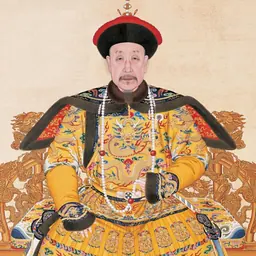


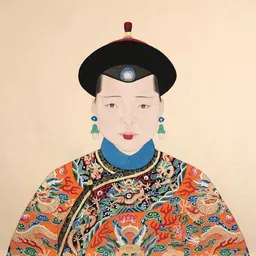
Related people
Same field, nearest in time
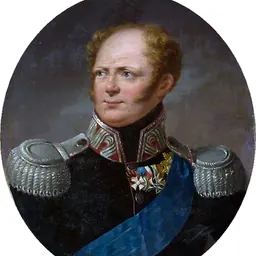


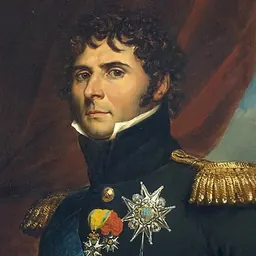
Contemporaries
People whose lives overlapped Daoguang Emperor's




Frequently asked questions
Who was Daoguang Emperor?
Qing-dynasty Chinese emperor (1782–1850)
When was Daoguang Emperor born?
Daoguang Emperor was born on 16 September 1782 in Forbidden City.
When did Daoguang Emperor die?
Daoguang Emperor died on 25 February 1850 in Old Summer Palace.
What was Daoguang Emperor's occupation?
Daoguang Emperor was a monarch.
What nationality was Daoguang Emperor?
Daoguang Emperor was Chinese.
Sources & further reading
Cite this page
APA: Biography.guide. (2026). Daoguang Emperor. https://biography.guide/daoguang-emperor/
MLA: "Daoguang Emperor." Biography.guide, https://biography.guide/daoguang-emperor/.
Chicago: "Daoguang Emperor." Biography.guide. https://biography.guide/daoguang-emperor/.
Data last updated: 2026-09-20 · Spot an error? Report a correction.
Page generated 2026-09-27 05:19 UTC