
About Wu Zuguang
Lived 1917 – 2003 (aged 85). Wu Zuguang was a Chinese playwright, director, screenwriter and film director.
Wu Zuguang (; 21 April 1917 – 9 April 2003) was a Chinese playwright, film director and social critic who has been called a "legendary figure in Chinese art and literary circles". His father Wu Ying was a founder and curator of the Beijing Palace Museum. His mother Zhou Qinqi gave birth to 15 children, 11 of whom (four sons and seven daughters) survived to adulthood. She gave birth to Wu Zuguang, her first child, in the mansion of Wu Ying's uncle Zhuang Yunkuan, a minister of the Republic of China government.
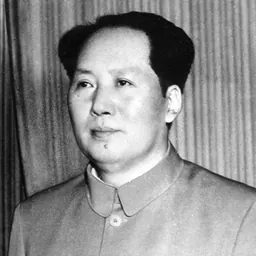
As eastern China fell to the Japanese, he moved to the wartime capital Chongqing, where he worked as an editor for the Xinmin Wanbao newspaper. In 1945, he published Mao Zedong's now famous poem "Snow: to the Tune of Garden in Full Spring", which infuriated the Kuomintang government.
Early People's Republic
After the Chinese Communist Party (CCP) won the Civil War and established the People's Republic of China in 1949, Wu returned to Beijing. Like many intellectuals at the time, he held high hopes for the new People's Republic which finally restored peace in a united China after decades of war and division. He wanted to return to writing plays, but was assigned by the government to direct Song of the Red Flag, a film about women textile workers. As he had no experience with factory life, it took him a year to finish the film, which he considered a "worthless failure." Wu helped her to study reading, writing, and calligraphy.
During this period he made the Peking opera film Goddess of the Luo River and Mei Lanfang and His Stage Art, a documentary about Mei Lanfang. He also wrote the Peking operas Three Beatings of Tao Sanchun and San Guan Yan . and was himself persecuted to death. Xin Fengxia was pressured to divorce him, but refused. Citing a legendary love story from one of her operas, she said "Wang Baochuan waited 18 years for Xue Pinggui, and I will wait 28 years for Wu Zuguang." and his publication ban was lifted after two decades.
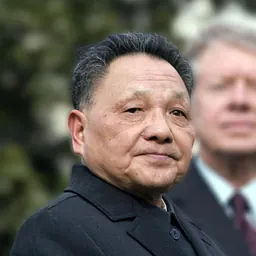
Wu was in general loyal to Deng Xiaoping's government, but continued to be an outspoken critic. In 1983, he dismissed Deng's Anti-Spiritual Pollution Campaign as futile. After the December 1986 student demonstrations, he was pressured to leave the CCP in 1987. Retired Politburo member Hu Qiaomu came to his home in person to demand his resignation from the CCP. He obliged, as he did not think he was "the sort of person who should be in the Party." In spring 1989, Wu signed a petition calling for greater political freedom. Following the 1989 Tiananmen Square protests and massacre, Wu called for a reassessment of the incident, but was forbidden to speak at a Chinese People's Political Consultative Conference meeting.
Xin Fengxia died on 12 April 1998, during a trip to Changzhou, Wu's ancestral hometown. He was devastated by the loss and his health quickly deteriorated. He suffered three strokes in the next few years, and died on 9 April 2003.
Children Wu Zuguang and Xin Fengxia had three children. Their son Wu Huan is also a writer, painter, and calligrapher. After the deaths of Wu Zuguang, he organized the exhibition "A Hundred Years of the Wu Family" at the Poly Art Museum in Beijing. It was also held in France, Hong Kong, and Taiwan.
Don’t just read it —
keep it.
Full-length biographies made to live with: read them, listen on the way to work, watch them tonight.
- E-book
- Audio
- Video
Instant download · yours to keep · every purchase keeps this site free
Important facts
Family & relationships
People in Wu Zuguang's life
Named in this biography and alive at the same time




Related people
Same field, nearest in time

Contemporaries
People whose lives overlapped Wu Zuguang's

Frequently asked questions
Who was Wu Zuguang?
Chinese playwright
When was Wu Zuguang born?
Wu Zuguang was born on 21 April 1917 in Jingzhao.
When did Wu Zuguang die?
Wu Zuguang died on 9 April 2003 in Beijing.
What was Wu Zuguang's occupation?
Wu Zuguang was a playwright, director, screenwriter and film director.
What nationality was Wu Zuguang?
Wu Zuguang was Chinese.
Sources & further reading
Cite this page
APA: Biography.guide. (2026). Wu Zuguang. https://biography.guide/wu-zuguang/
MLA: "Wu Zuguang." Biography.guide, https://biography.guide/wu-zuguang/.
Chicago: "Wu Zuguang." Biography.guide. https://biography.guide/wu-zuguang/.
Data last updated: 2026-09-20 · Spot an error? Report a correction.
Page generated 2026-09-27 05:31 UTC