
About Woody Gelman
Lived 1915 – 1978 (aged 62). Woody Gelman was an American cartoonist and publisher.
Woodrow Wilson Gelman (June 8, 1915 – February 9, 1978) was an American publisher, cartoonist, and writer for both animation and comic books. As the publisher of Nostalgia Press, he pioneered the reprinting of vintage comic strips in quality hardcovers and trade paperbacks. As an editor and art director for two-and-a-half decades at Topps Chewing Gum, he introduced many innovations in trading cards and humor products.
Gelman was the co-creator of Popsicle Pete and the co-creator of Bazooka Joe for Topps. He was also a co-creator of Mars Attacks, adapted into the 1996 film by Tim Burton.
Born in Chicago, Illinois, Gelman attended City College of New York, Cooper Union and Pratt Institute before signing on as an assistant animator, in-betweener and scripter with Fleischer Studios in 1939, continuing to write for Famous Studios in 1946.
Comic books and advertising Gelman was the creator and writer of talking animal feature "The Dodo and the Frog" for DC Comics. His comic book work from 1944 to 1954 included Nutsy Squirrel and other talking animal comic books of the 1940s, including Funny Stuff and Comic Cavalcade. He also wrote and drew the crime story, "The Kid from Brooklyn!", for Heroic Comics #32 (Sept. 1945).
In 1945, Gelman teamed with Ben Solomon to form a New York advertising art service, Solomon & Gelman, to create advertising campaigns involving cartoon characters, such as their Popsicle Pete magazine and ads for the Popsicle company. Topps writer-editor Len Brown recalled how the partnership led to Solomon and Gelman to sign on full-time with Topps:
Topps In the autumn of 1951, Gelman and Sy Berger, then a 28-year-old World War II veteran, designed the 1952 Topps baseball card set on the kitchen table of Berger's apartment on Alabama Avenue in the Broadway Junction section of Brooklyn.
Triple Nickel Books
In 1955, the firm of Solomon & Gelman published a series of 64-page juvenile novelettes. Because they retailed for 15 cents, the line was called Triple Nickel Books. The first Triple Nickel Book was very successful, as it was based on the life of Davy Crockett when Crockett was a national fad. At the same time, they published two other Triple Nickel Books about the adventures of the Power Boys, juvenile fiction in the tradition of the Hardy Boys. At least eight Power Boys adventures were published under the pseudonym Arthur Benwood, a name created by combining the first names of Ben Solomon and Woody Gelman. The line includes The Secret of Crazy Cavern (1955), Riddle of the Sunken Ship (1955), Castle of Curious Creatures (1956) and Mystery of the Marble Face (1956). These books are included in the University of South Florida's Special Collections: Tampa Children's Literature Collection. (The Triple Nickel titles are apparently unrelated to Mel Lyle's later and slightly better-known Power Boys series from the mid-1960s.)
Nostalgia Press After doing a facsimile reprint of the 1945 Little Nemo in Slumberland softcover, with an August Derleth introduction, Gelman began Nostalgia Press in the early 1960s. One of the earliest Nostalgia Press books was The Picture History of Charlie Chaplin (1965), designed by Gelman and showcasing a large collection of rare Chaplin memorabilia. In 1960, he was an associate editor of The American Card Catalog.
The first Nostalgia Press hardcover was Flash Gordon (1967), a reprint of Alex Raymond comic strips, and this book had a follow-up utilizing Flash Gordon proof sheets supplied to Gelman by the artist Al Williamson. Two years later, he compiled art by Charles Dana Gibson for The Best of Charles Dana Gibson (Bounty Books, 1969), with accompanying biographical material and an introduction by Gelman.
Nostalgia Press editors Ron Barlow and Bhob Stewart, along with EC publisher Bill Gaines, selected 23 stories, one previously unpublished, for the full-color EC Horror Comics of the 1950s; with introductions by Stewart and Larry Stark, this oversize (10" x 14") hardcover was published by Nostalgia Press in 1971.
In 1973, Gelman published a collection of Little Nemo strips, first published in Italy. Gelman discovered original strips at a cartoon studio where McCay's son worked in 1966. Many of the original drawings that Gelman recovered were displayed at the Metropolitan Museum of Art under the direction of curator A. Hyatt Mayor. He died February 9, 1978, of a stroke at Franklin General Hospital, Valley Stream, Long Island. His niece Susan Gelman and nephew Andrew Gelman are prominent academics.
Don’t just read it —
keep it.
Full-length biographies made to live with: read them, listen on the way to work, watch them tonight.
- E-book
- Audio
- Video
Instant download · yours to keep · every purchase keeps this site free
Important facts
People in Woody Gelman's life
Named in this biography and alive at the same time




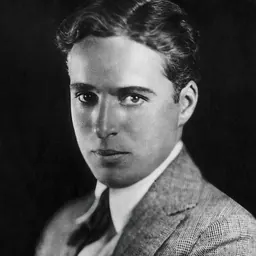

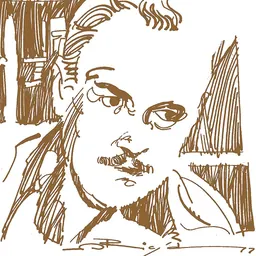
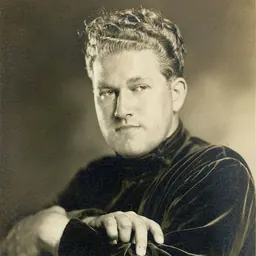
Related people
Same field, nearest in time
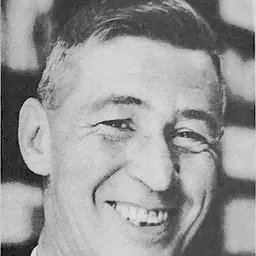

Contemporaries
People whose lives overlapped Woody Gelman's





Frequently asked questions
Who was Woody Gelman?
American publisher and cartoonist (1915–1978)
When was Woody Gelman born?
Woody Gelman was born on 8 June 1915 in New York City, Chicago.
When did Woody Gelman die?
Woody Gelman died on 9 February 1978 in Valley Stream.
What was Woody Gelman's occupation?
Woody Gelman was a cartoonist and publisher.
What nationality was Woody Gelman?
Woody Gelman was American.
Sources & further reading
Cite this page
APA: Biography.guide. (2026). Woody Gelman. https://biography.guide/woody-gelman/
MLA: "Woody Gelman." Biography.guide, https://biography.guide/woody-gelman/.
Chicago: "Woody Gelman." Biography.guide. https://biography.guide/woody-gelman/.
Data last updated: 2026-09-20 · Spot an error? Report a correction.
Page generated 2026-09-27 05:26 UTC