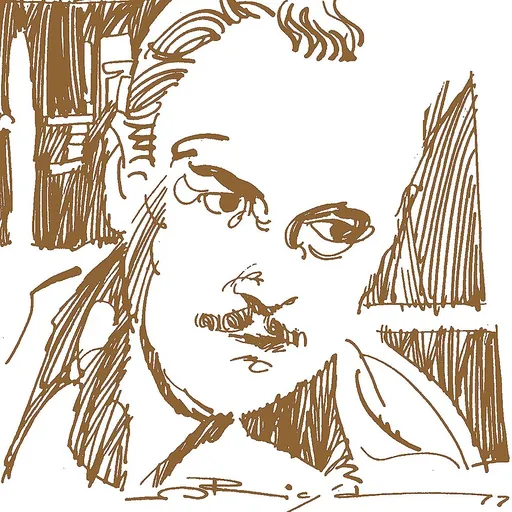
Alex Raymond
American comic strip artist and creator of Flash Gordon
About Alex Raymond
Lived 1909 – 1956 (aged 46). Alex Raymond was an American military officer, screenwriter, comics artist and cartoonist.
Alexander Gillespie Raymond Jr. (October 2, 1909 – September 6, 1956) was an American cartoonist and illustrator who was best known for creating the Flash Gordon comic strip for King Features Syndicate in 1934. The strip was subsequently adapted into many other media, from three Universal movie serials (1936's Flash Gordon, 1938's Flash Gordon's Trip to Mars, and 1940's Flash Gordon Conquers the Universe) to a 1950s television series and a 1980 feature film.
Raymond's father loved drawing and encouraged his son to draw from an early age. In the early 1930s, this led Raymond to become an assistant illustrator on strips such as Tillie the Toiler and Tim Tyler's Luck. Towards the end of 1933, Raymond created the epic Flash Gordon science fiction comic strip to compete with the popular Buck Rogers comic strip. Before long, Flash was the more popular strip. Raymond also worked on the jungle adventure saga Jungle Jim and spy adventure Secret Agent X-9 concurrently with Flash, though his increasing workload caused him to leave Secret Agent X-9 to another artist by 1935. He left the strips in 1944 to join the Marines, saw combat in the Pacific Ocean theater in 1945, and was demobilized in 1946. Upon his return to civilian life, Raymond created and illustrated the much-heralded Rip Kirby, a private detective comic strip. In 1956, Raymond was killed in a car crash at the age of 46.
He became known as "the artist's artist" and his much-imitated style can be seen on the many strips that he illustrated. Raymond worked from live models furnished by Manhattan's Walter Thornton Agency, as indicated in "Modern Jules Verne," a profile of Raymond published in the Dell Four-Color Flash Gordon #10 (1942), showing how Thornton model Patricia Quinn posed as a character in the strip.
Numerous artists have cited Raymond as an inspiration for their work, including comic artists Jack Kirby, Bob Kane, Russ Manning, and Al Williamson. George Lucas cited Raymond as a major influence for Star Wars. He was inducted into the Will Eisner Comic Book Hall of Fame in 1996. Maurice Horn stated that Raymond unquestionably possessed "the most versatile talent" of all the comic strip creators. He has also described his style as "precise, clear, and incisive."
His father was a civil engineer and road builder who encouraged his son's love of drawing from an early age, even "covering one wall of his office in the Woolworth Building" with his young son's artwork. and for whom he would produce his greatest artwork.
Raymond was influenced by a variety of strip cartoonists and magazine illustrators, including Matt Clark, Franklin Booth, and John La Gatta. Raymond assisted Lyman Young on Tim Tyler's Luck, eventually becoming the ghost artist in "1932 and 1933 ... [on] both the daily strip and the Sunday page", turning it "into one of the most eye-catching strips of the time".
Alongside ghostwriter Don W. Moore, Raymond was concurrently illustrating Secret Agent X-9, which premiered January 22, 1934, two weeks after the two other strips. It was Flash Gordon that would outlast the others, quickly "develop[ing] an audience far surpassing" that of Buck Rogers. Saint author Leslie Charteris was hired to take over the writing of the strip in September 1935, but the pair would only collaborate on one storyline. By the end of 1935, "the [work]load was too much for Raymond,"
Raymond's work on X-9 is said to particularly reach for "the feel of the best pulp interior art of the time," a style that would evolve with his own so-called "great flourishes" and "later blossom to full effect in Flash Gordon and Jungle Jim".
Run above Flash Gordon, Raymond's Jungle Jim is described by Armando Mendez as "a thing of beauty ... always more than just a topper or a shallow response to Hal Foster's exquisite Tarzan".
Shortly thereafter, he "was sent to Quantico for training in the curriculum of the Aviation Ground Officer's School," and was soon producing "posters and patriotic images from a government office in Philadelphia." The plotting of the strips is harder to attribute, the scant evidence available supporting the notion that Raymond was more than simply an illustrator. the strip eschewed many of the pulp fictional detective tropes (e.g. alcoholism, two-fisted assistants, and an assortment of interchangeable femmes fatale). Instead, "[Rip] did more cogitating than fisticuffing, and smoked a leisurely pipe while he did it;" "had a frail, balding assistant ... instead of a two-fisted sidekick;" "had a steady girlfriend ... [and] f that wasn't enough, he even wore glasses! Rip "lived and worked in a recognizable, glamorous, modern New York City on cases involving very human frailties and vice", and "grew older as the strip progressed", a continuity advancement little seen in the strips of the time (although pioneered in Gasoline Alley and Mary Worth Although the strip was published entirely in black and white, Raymond worked hard to add tone through artistic technique. "Raymond nevertheless [colored] through his use of varying linework ... [creating] color through contrast". His new style was much imitated throughout the industry and became known as 'the Raymond style'.
Circulation of the strip rose steadily, and it was the artist who was apportioned most of the praise – including being awarded the fourth Reuben Award in 1949. Prentice drew Rip Kirby until just before he died in 1999, the strip itself concluding a month later.
Legacy In 1967, Woody Gelman reprinted in hardcover some of Raymond's earlier comic strip work under his Nostalgia Press imprint. Regarded by Time magazine in 1974—alongside Prince Valiant author-illustrator Hal Foster—as "some sort of genius", and described in Jerry Bails and Hames Ware's Who's Who in American Comic Books as "ossibly the most influential artist on early comic books", Raymond's legacy as an artistic inspiration is immense. Harvey argued that it is because of Raymond and Foster that the illustrative style became the dominant one used for adventure strips. "His work and Foster's created the visual standard by which all such comic strips would henceforth be measured." Raymond's work has a "timeless appeal," many aspects of which—including the use of feathering (a shading technique in which a soft series of parallel lines helps to suggest the contour of an object) Mort Meskin, Sheldon Moldoff, Luis Garcia Mozos, Joe Orlando, Mac Raboy, John Romita Jr., Kurt Schaffenberger, Joe Sinnott, Dick Sprang and Alex Toth, among many others.
In particular, Raymond has been named as a key influence by many of the most influential and important comic book artists of all time. EC Comics-staple Al Williamson cites Raymond as a major influence, and is quoted as saying that Raymond was "the reason I became an artist". Indeed, Williamson ultimately assisted on the Flash Gordon strips in the mid-1950s, and Rip Kirby in the mid-1960s (all post-Raymond). The Raymonds also had two sons: Alan W. and Duncan. His younger brother, Jim Raymond, was also a cartoonist, and worked as assistant to Chic Young on Blondie.
Death On September 6, 1956, a month before his 47th birthday, Raymond was killed in an automobile accident in Westport, Connecticut. He was driving fellow cartoonist Stan Drake's 1956 Corvette at twice the speed limit
Awards Alex Raymond received a Reuben Award from the National Cartoonists Society in 1949 for his work on Rip Kirby, and he later served as president of the society in 1950 and 1951.
Maurice Horn calls Raymond "one of the most celebrated comic artists of all time as the creator of four outstanding comic features (a feat unequaled to this day)," noting that he "received many distinctions and awards during his lifetime for his work, both as a cartoonist and as a magazine illustrator."
Don’t just read it —
keep it.
Full-length biographies made to live with: read them, listen on the way to work, watch them tonight.
- E-book
- Audio
- Video
Instant download · yours to keep · every purchase keeps this site free
Important facts
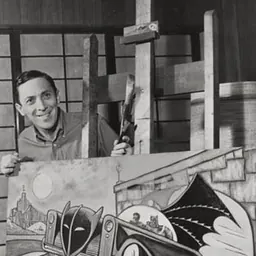
People in Alex Raymond's life
Named in this biography and alive at the same time




Related people
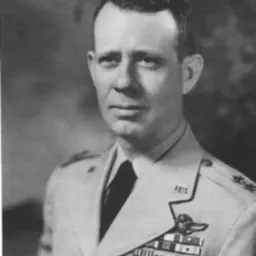
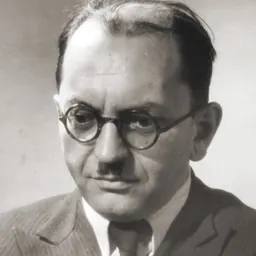
Same field, nearest in time


Contemporaries
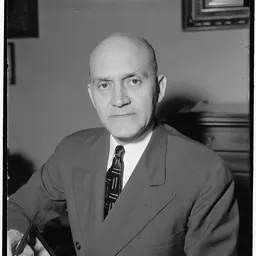
People whose lives overlapped Alex Raymond's



Frequently asked questions
Who was Alex Raymond?
American comic strip artist and creator of Flash Gordon (1909–1956)
When was Alex Raymond born?
Alex Raymond was born on 2 October 1909 in New Rochelle.
When did Alex Raymond die?
Alex Raymond died on 6 September 1956 in Westport.
What was Alex Raymond's occupation?
Alex Raymond was a military officer, screenwriter, comics artist and cartoonist.
What nationality was Alex Raymond?
Alex Raymond was American.
Sources & further reading
Cite this page
APA: Biography.guide. (2026). Alex Raymond. https://biography.guide/alex-raymond/
MLA: "Alex Raymond." Biography.guide, https://biography.guide/alex-raymond/.
Chicago: "Alex Raymond." Biography.guide. https://biography.guide/alex-raymond/.
Data last updated: 2026-09-23 · Spot an error? Report a correction.
Portrait: Wikimedia Commons · author & licence
Page generated 2026-09-27 05:05 UTC