
About Wolfgang Paul
Lived 1913 – 1993 (aged 80). Wolfgang Paul was a German physicist and university teacher, known for Ion trap and Quadrupole mass analyzer.
Wolfgang Paul (; 10 August 1913 – 7 December 1993) was a German physicist, who co-developed the non-magnetic quadrupole mass filter which laid the foundation for what is now called an ion trap. He shared one-half of the Nobel Prize in Physics in 1989 for this work with Hans Georg Dehmelt; the other half of the Prize in that year was awarded to Norman Foster Ramsey, Jr.
Early life Wolfgang Paul was born on 10 August 1913 in Lorenzkirch, Germany. He grew up in Munich where his father was a professor of pharmaceutical chemistry. After the first few years at the Technical University of Munich, he changed to Technische Universität Berlin in 1934 where he finished his Diploma in 1937 at the group of Hans Geiger. He followed his doctorate adviser Hans Kopfermann to the University of Kiel, and after being drafted to the air force, he finished his PhD in 1940 at Technische Universität Berlin.
During World War II, he researched isotope separation, which is necessary to produce fissionable material for use in making nuclear weapons.
Academic career For several years, he was a private lecturer at the University of Göttingen with Hans Kopfermann. He became a professor of Experimental Physics at the University of Bonn and stayed there from 1952 until 1993. For two years, from 1965 to 1967, he was director of the Division of Nuclear Physics at CERN. In 1970, he spent some weeks as Morris Loeb lecturer at Harvard University. He lectured in 1978 as distinguished scientist at the FERMI Institute of the University of Chicago and in a similar position at The University of Tokyo. From 1981, he was Professor Emeritus at the Bonn University.
Scientific results He developed techniques for trapping charged particles in mass spectrometry by electric quadrupole fields in the 1950s. Paul traps are used extensively today to contain and study ions. He developed molecular beam lenses and worked on a 500 MeV electron synchrotron, followed by one at 2500 MeV in 1965. Later he worked on containing slow neutrons in magnetic storage rings, measuring the free neutron lifetime.
He humorously referred to Wolfgang Pauli as his imaginary part if their surnames were considered as complex numbers.
Göttingen Manifesto In 1957, Paul was a signatory of the Göttingen Manifesto, a declaration of 18 leading nuclear scientists of West Germany against arming the West German army with tactical nuclear weapons.
Sons His son Stephan Paul is a professor of experimental physics at the Technical University of Munich. His son Lorenz Paul is a professor of physics at the University of Wuppertal.
Works
Don’t just read it —
keep it.
Full-length biographies made to live with: read them, listen on the way to work, watch them tonight.
- E-book
- Audio
- Video
Instant download · yours to keep · every purchase keeps this site free
Important facts
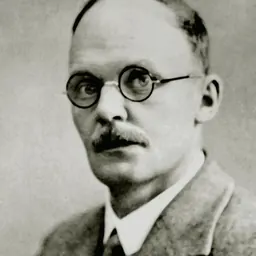
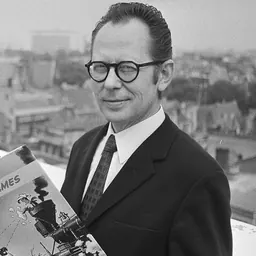
People in Wolfgang Paul's life
Named in this biography and alive at the same time



Related people
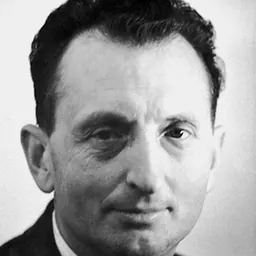
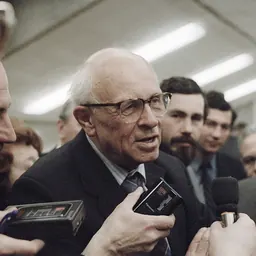
Same field, nearest in time


Contemporaries
People whose lives overlapped Wolfgang Paul's



Frequently asked questions
Who was Wolfgang Paul?
German physicist (1913–1993)
When was Wolfgang Paul born?
Wolfgang Paul was born on 10 August 1913 in Lorenzkirch.
When did Wolfgang Paul die?
Wolfgang Paul died on 7 December 1993 in Bonn.
What was Wolfgang Paul's occupation?
Wolfgang Paul was a physicist and university teacher.
What was Wolfgang Paul known for?
Wolfgang Paul was known for Ion trap and Quadrupole mass analyzer.
What nationality was Wolfgang Paul?
Wolfgang Paul was German.
Sources & further reading
Cite this page
APA: Biography.guide. (2026). Wolfgang Paul. https://biography.guide/wolfgang-paul/
MLA: "Wolfgang Paul." Biography.guide, https://biography.guide/wolfgang-paul/.
Chicago: "Wolfgang Paul." Biography.guide. https://biography.guide/wolfgang-paul/.
Data last updated: 2026-09-20 · Spot an error? Report a correction.
Page generated 2026-09-27 05:17 UTC