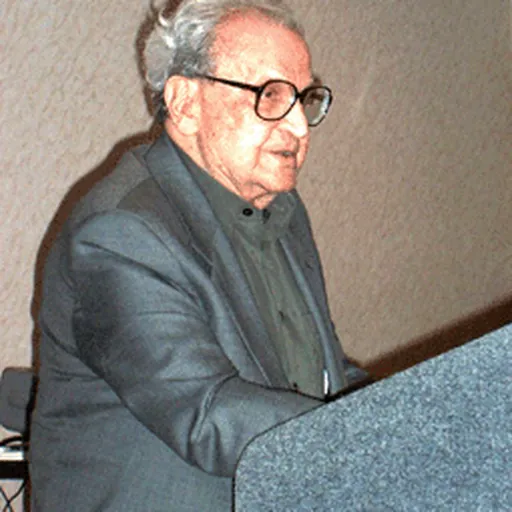
About Wolf Leslau
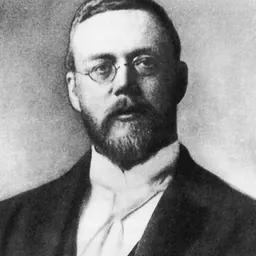
Lived 1906 – 2006 (aged 100). Wolf Leslau was an American and Polish linguist, university teacher and semitologist.
Wolf Leslau (; born November 14, 1906, in Krzepice, Vistula Land, Poland; died November 18, 2006, in Fullerton, California) was a scholar of Semitic languages and one of the foremost authorities on Semitic languages of Ethiopia.
Youth and education Leslau was born in Krzepice, a small town near Częstochowa, Poland. When he was a child his family was very poor, and after contracting tuberculosis he usually had to keep a thermometer with him to monitor his body temperature, although the reasons for this are unknown. He was orphaned by the age of 10, and was raised by his brother, and received a yeshiva education.
To avoid military service in the Polish army, he gave up his Polish citizenship (becoming a stateless person) and emigrated to Vienna, He then went to the Sorbonne to study under Marcel Cohen. His studies included most of the Semitic languages, including Hebrew, Aramaic, Akkadian, Soqotri and Ethiopic.
War years Leslau was arrested by the French police and sent to an internment camp in the Pyrenees where he spent the harsh winter of 1939–1940 with his wife and child. He was later moved to Camp des Milles, a concentration camp near Aix-en-Provence. However, with the assistance of an international aid group, he escaped with his family before the Nazis took over the camp in 1942.
Escaping to the United States, he later became a naturalized citizen of the United States. He settled in New York City, and received a Guggenheim Fellowship to continue his studies of the Semitic languages in Ethiopia. He traveled throughout the country, recording endangered Ethiopian languages. For one language, Gafat, Leslau was able to locate only four speakers. It became extinct shortly thereafter.
Career in the United States and fieldwork After teaching at the Asia Institute, the New School for Social Research, and for 4 years at Brandeis University,
Recognitions and retirement In 1965 Leslau received the Haile Selassie Prize for Ethiopian Studies in Addis Ababa from the Emperor of Ethiopia, Haile Selassie. He held the position of professor emeritus at UCLA until his death at the age of 100. He remained active in research and writing until his death. He learned to use a Macintosh computer at the age of 80.
Leslau died at a nursing home in Fullerton, California, in 2006.
Partial bibliography 1938: Lexique Soqotri (sudarabique moderne) avec comparaisons et explications étymologiques. Paris: Klincksieck. 1941: Documents tigrigna: grammaire et textes. Paris: Libraire C. Klincksieck. 1945: Short Grammar of Tigré. Publications of the American Oriental Society, Offprint Series, No. 18. New Haven. 1945: Gafat Documents: Records of a South-Ethiopic language. American Oriental series, no. 28. New Haven. 1949. "Ethiopic proverbs of Chaha." Word 5, no. 2: 214–223. 1950: Ethiopic Documents: Gurage. New York: Viking Fund Publications in Anthropology, no. 14. 1951: Falasha Anthology. Yale Judaica Series, vol. 6. New Haven & London: Yale University Press. 1956: Étude descriptive et comparative du Gafat (éthiopien méridional). Paris: Klincksieck, xx + 277 p. 1958: Ethiopic and South Arabic contributions to the Hebrew lexicon. Berkeley: Univ. of California Press, 76 p. 1958: The verb in Harari. Berkeley: Univ. of California Press, x + 86 p. 1965: An Amharic Conversation Book. Wiesbaden: Harrassowitz. 1965: Ethiopians speak. Studies in cultural background. Part 1: Harari. Near Eastern Studies, no. 7. Berkeley: University of California Press. 1965: An annotated bibliography of the Semitic languages of Ethiopia. The Hague: Mouton. 1966: Ethiopians Speak: Studies in Cultural Background. Part 2: Chaha. University of California Publication. Near Eastern Studies, no. 9, 219 p. 1967: Amharic Textbook. Wiesbaden: Harrassowitz. 1968: Ethiopians Speak: Studies in Cultural Background. Part 3: Soddo. University of California Publications. Near Eastern Studies, vol. 11. 1969: Hebrew Cognates in Amharic. Wiesbaden: Harrassowitz. 1973: English-Amharic Context Dictionary. Wiesbaden: Harrassowitz, xviii + 1503 p. 1976: Concise Amharic Dictionary. (Reissue edition: 1996) Berkeley and Los Angeles: University of California Press. 1979: Etymological Dictionary of Gurage (Ethiopic). 3 vols. Wiesbaden: Otto Harrassowitz. 1981: Ethiopians Speak: Studies in Cultural Background. Part 4: Muher. Äthiopistische Forschungen, no. 11. Wiesbaden: Franz Steiner Verlag. 1982. "Harari riddles." Rassegna di Studi Etiopici 29 (1982): 39–85. 1982: Gurage Folklore: Proverbs, beliefs, and riddles. Studien zur Kulturkunde, no. 63. Wiesbaden: Franz Steiner Verlag. 1983: Ethiopians Speak: Studies in Cultural Background. Part 5: Chaha and Ennemor. Äthiopistische Forschungen, no. 16. Wiesbaden: Franz Steiner Verlag. 1987: Comparative dictionary of Ge‛ez (Classical Ethiopic) : Gǝ‛ǝz-English/English-Gǝ‛ǝz with an index of the Semitic roots. Wiesbaden: Harrassowitz, xlix + 813 p. 1988: Fifty Years of Research: Selection of articles on Semitic, Ethiopian Semitic and Cushitic. Wiesbaden: Harrassowitz, xlv + 503 p. 1989: Concise dictionary of Gǝ‛ǝz (Classical Ethiopic). Wiesbaden: Harrassowitz, 247 p. 1990: Arabic Loanwords in Ethiopian Semitic. Wiesbaden: Harrassowitz. 1992: Gurage Studies : Collected Articles. Wiesbaden: Harrassowitz, xxix + 744 p. 1995: Reference Grammar of Amharic. Harrassowitz, Wiesbaden. 1997: Ethiopic Documents: Argobba. Grammar and dictionary. Wiesbaden: Harrassowitz. 1999: Zway Ethiopic Documents. Äthiopistische Forschungen, no. 51. Wiesbaden: Harrassowitz. 2000: Introductory Grammar of Amharic. Wiesbaden: Harrassowitz, xix + 232 p. 2001: (with Thomas L. Kane) Amharic Cultural Reader. Wiesbaden: Harrassowitz. 2004: The Verb in Mäsqan as Compared with other Gurage Dialects. Wiesbaden: Harrassowitz.
Festschriften Segert, Stanislav & András J. E. Bodrogligeti (eds.), Ethiopian Studies: Dedicated to Wolf Leslau on the Occasion of his seventy-fifth birthday, November 14, 1981, by friends and colleagues. Wiesbaden: Harrassowitz 1983, xii + 582 p. . Kaye, Alan S. (ed.), Semitic studies in honor of Wolf Leslau on the occasion of his 85th birthday, November 14, 1991. 2 Vols. Wiesbaden: Harrasowitz 1991, lxviii. + 1719 p. . Hudson, Grover (ed.), Essays on Gurage Language and Culture: Dedicated to Wolf Leslau on the Occasion of His 90th Birthday, November 14, 1996. Wiesbaden: Harrassowitz 1996, 239 p. .
Don’t just read it —
keep it.
Full-length biographies made to live with: read them, listen on the way to work, watch them tonight.
- E-book
- Audio
- Video
Instant download · yours to keep · every purchase keeps this site free
Important facts
People in Wolf Leslau's life
Named in this biography and alive at the same time



Related people
Same field, nearest in time

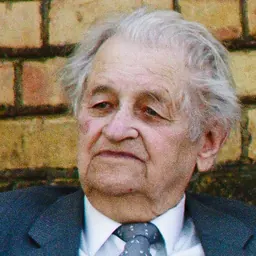

Contemporaries
People whose lives overlapped Wolf Leslau's


Frequently asked questions
Who was Wolf Leslau?
Polish-Jewish, American linguist
When was Wolf Leslau born?
Wolf Leslau was born on 14 November 1906 in Krzepice.
When did Wolf Leslau die?
Wolf Leslau died on 18 November 2006 in Fullerton.
What was Wolf Leslau's occupation?
Wolf Leslau was a linguist, university teacher and semitologist.
What nationality was Wolf Leslau?
Wolf Leslau was American and Polish.
Sources & further reading
Cite this page
APA: Biography.guide. (2026). Wolf Leslau. https://biography.guide/wolf-leslau/
MLA: "Wolf Leslau." Biography.guide, https://biography.guide/wolf-leslau/.
Chicago: "Wolf Leslau." Biography.guide. https://biography.guide/wolf-leslau/.
Data last updated: 2026-09-23 · Spot an error? Report a correction.
Portrait: Wikimedia Commons · author & licence
Page generated 2026-09-27 05:07 UTC