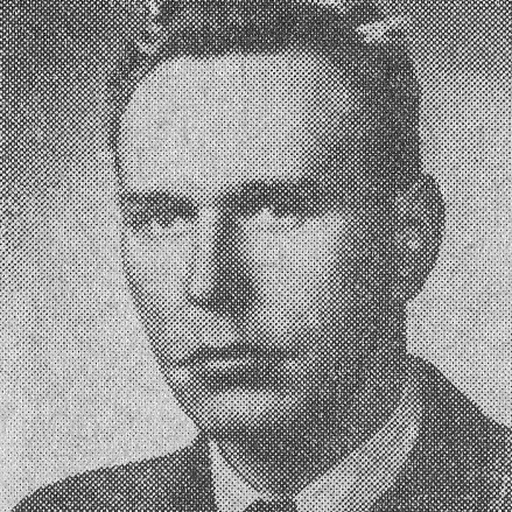
About Wojciech Fangor
Lived 1922 – 2015 (aged 92). Wojciech Fangor was a Polish painter, sculptor, printmaker, graphic artist, designer and teacher.
Wojciech Bonawentura Fangor (pronounced: ) (15 November 1922 – 25 October 2015), also known as Voy Fangor, was a Polish painter, graphic artist, and sculptor. Described as "one of the most distinctive painters to emerge from postwar Poland", Fangor has been associated with Op art and Color field movements and recognized as a key figure in the history of Polish postwar abstract art. Fangor returned to Poland in 1999 where he remained active until his death in 2015, although his international recognition had by then diminished. For his contributions to the Polish culture, Fangor was awarded several honors, including the Order of Polonia Restituta in 2001, the country's second highest civilian order, and the Gold Medal for Merit to Culture in 2004. His works are included in the permanent collections of museums in Europe, North America, and the Middle East.
Life and early career
Early life and work (1922-1940s) Wojciech Bonawentura Fangor was born on 15 November 1922 in Warsaw to an affluent family. His father, Konrad Fangor, an engineer, has been described as a "wealthy prewar entrepreneur", and a founder of Technical Society for Trade and Industry in Warsaw, while his mother, Wanda née Chachlowska, was a trained pianist. The artist's mother is said to have played an important role in encouraging her son's creative interests. Prior to the outbreak of World War II, Fangor studied first at the private grammar school of Masovian School Society and then attended Mikolaj Rey Grammar School in Warsaw. During the late 1940s, Fangor supported himself by working on official government projects, including a 1948 large-scale figurative panel in Warsaw depicting silhouettes of workers to celebrate the Unification Congress of the Polish Workers' Party and Polish Socialist Party that took place at Warsaw University of Technology between 15 and 21 December 1948, a consequential political event that is said to have officially turned Poland into a Soviet satellite state.
In the early 1950s, Fangor had completed multiple Socialist Realist works, including an oil painting titled Postaci (Figures) from 1950 which had not met with critical success at first, but which would later become one of the artist's most recognized figurative compositions, interpreted as "an archetypal expression of the Stalinist exaltation of production over consumption". The artist also began to incorporate Socialist Realist vocabulary into graphic design and several of his agitprop posters, made between 1951 and 1952, were awarded prizes at the Second National Poster Exhibition in 1952.
Polish School of Posters (1950s) In 1953, Fangor was employed as an assistant professor at the Academy of Fine Arts in Warsaw, a position he held until 1961. Following Joseph Stalin's death in 1953 and the subsequent Khrushchev's thaw, Fangor began to turn away from Socialist Realism in favor of non-figurative visual idioms. During the early 1950s, Fangor supported himself through graphic design and became one of the co-founders of what would later be known as the Polish School of Posters, together with Jan Lenica, Henryk Tomaszewski and others. However, it was not until the thaw that poster design would flourish, rebelling "against the limits of advertising, the psychology of advertising and propaganda techniques", incorporating avant-garde vocabularies. As scholar Dorota Kopacz-Thomaidis observes, the Polish School of Poster "offered an artist-driven, painterly approach to the art of poster, based on ambiguity and metaphor". These ideas were reflected in Fangor's first "painting environment", an exhibition space that incorporated paintings into the surrounding environment, titled Studium przestrzeni (Study of Space) (1958) designed together with Stanisław Zamecznik at Salon Nowej Kultury in Warsaw. Fangor's installation, shown to the public six years prior to Robert Morris's breakthrough Minimalist exhibition at New York's Green Gallery, would become one of the earliest studies of phenomenological properties of abstract art in post-war Europe.
While the exhibition was a radical experiment in incorporating painting into its surrounding space, and first such work in Polish post-war avant-garde, it was not well received by contemporary critics. Even though the cultural thaw had embraced abstraction by the late 1950s, art criticism focused on a traditional form of painting—and ways in which abstract art can counter the previously imposed Socialist Realism—rather than the kind of spatial experimentation embodied by Fangor's installation. It was not until the 1960s that Studium Przestrzeni would be recognized as a radical and influential intervention in the history of Polish post-war avant-garde.
Early international recognition (1959-1962)
The following year, several of Fangor's abstract paintings were included in a group exhibition organized at the Stedelijk Museum Amsterdam, providing the artist with a chance to showcase his recent work outside of the Iron Curtain. Around that time, the artist started to turn away from his earlier monochromatic palette in favor of color compositions. At Stedelijk, Fangor and Zamecznik created another environment installation titled Color in Space where diverse "geometric forms and bright color zones in red, blue, and black affected the space of the exhibition and the constantly changing vision of the spectator". Focused primarily on non-figurative painting, the 1961 show emphasized the importance of abstraction in the history of Polish modern art. In drawing a direct comparison between abstract art and freedom, an approach embodied by the visually liberated works of Abstract expressionism which the U.S. government had fervently promoted abroad, the exhibition served as a symbolic repudiation of Soviet politics and Socialist Realism during the Cold War. Writing in the exhibition catalogue, Selz emphasized the strong visual interaction between Fangor's paintings and surrounding environment:
No. 17, 1963 was included in The Responsive Eye held at The Museum of Modern Art in New York in 1965, an exhibition credited with originating Op art movement in the United States While the early 1960s in Fangor's career were marked by frequent international travel, the artist continued to do limited work in Poland until 1962. Between 1960 and 1962, Fangor was commissioned to decorate train platforms of the newly re-constructed Warszawa Srodmiescie PKP railway station in Warsaw. Fangor designed a series of abstract wall and ceiling mosaics that recalled the artist's investigations into the immersive properties of color in painting and its impact on the spectator. The shifting hues of mosaics set a visual rhythm and were meant to seamlessly integrate five colors (red, orange, yellow, blue, and green) into the station's architectural interior. Unlike Studium Przestrzeni, however, the Srodmiescie mosaics also had a practical application and were intended to help passengers navigate the platforms: red, orange, and yellow mosaics indicated east, while green and blue directed passengers moving westward.
Fangor's inclusion in the exhibition had an important impact on the artist's work being classified as op art in the subsequent decades, although critics have generally struggled to pinpoint the specific movement Fangor's work belonged to. In 2021, for instance, critic and art historian Karen Wilkin described one of his paintings as "a blurred version of a Noland Circle," alluding to the visual similarities between Fangor's style and that of artists associated with the color field movement.
United States (1966-1999) Fangor eventually settled permanently in the United States in 1966 where he was offered a teaching job at Fairleigh Dickinson University in New Jersey. In 1970 he became the first Polish artist to have an individual exhibition at the Solomon R. Guggenheim Museum in New York City. In a review for the New York Times, critic John Canaday found some parallels between Fangor's organic shapes and Jean Arp's biomorphic forms of the Surrealist period and compared his technique to that of Color field painters. At the same time, Canaday acknowledged the difficulty of establishing an authentic art historical precedent to the artist's idiosyncratic large-scale and highly vibrant non-mimetic paintings. He described Wojciech Fangor as "the great romantic of Op Art, working not by rule but by a combination of intuition and experiment, appealing not to reason but to our yearning toward the mysterious". In 1977 Wojciech Fangor designed decoration of two American public schools.
Return to Poland (1999-2015) In 1999, Wojciech Fangor returned to Poland where he continued to exhibit his work. While the artist continued to be celebrated in his home country, Fangor's recognition abroad had by then diminished. The Swiss collector and auctioneer Simon de Pury opined in 2015 that Fangor would have a "much higher" profile had he decided to remain in the U.S. The first monographic publication devoted to the artist's career, titled Wojciech Fangor. Malarz przestrzeni (Wojciech Fangor. Painter of Space) and edited by art historian Bozena Kowalska, was published in 2001. Two years later, a major retrospective exhibition of Fangor's oeuvre was held at the Center for Contemporary Art at Ujazdów Castle in Warsaw. In 2004, his paintings were included in a survey show titled Beyond Geometry: Experiments in Form, 1940s-1970s at the Los Angeles County Museum of Art (later traveling to Pérez Art Museum Miami), which brought together examples of "European and Latin American concrete art, Argentine Arte Madí-Brazilian Neo-Concretism, Kinetic and Op Art, Minimalism, and various forms of post-minimalism" and positioned Fangor's work within the context of global post-war tendencies in abstract art. In 2014, Wojciech Fangor received Jan Cybis Award.
Warsaw Metro M2 murals (2007) In 2007, Fangor was asked to design decorative wall murals for seven underground stations of the new line of the Warsaw Metro.
Wojciech Fangor died in 2015 aged 92 and was survived by his wife, Magdalena Shummer-Fangor, and two children. At the time of his death, he resided in Błędów, Grójec County, a village near Warsaw.
Legacy Collections Wojciech Fangor's work is in the permanent collections of the Museum of Modern Art in New York, The Phillips Collection in Washington, D.C., the McNay Art Museum in San Antonio, the San Francisco Museum of Modern Art, the Stedelijk Museum Amsterdam, the Israel Museum in Jerusalem, the National Museum, Warsaw, and Muzeum Sztuki in Łódź, among other institutions worldwide.
Art market In December 2023, M39 (1969) sold for US$1.9 million at Desa Unicum Auction House in Warsaw, the highest price paid at auction for a work by Wojciech Fangor.
Selected works
Don’t just read it —
keep it.
Full-length biographies made to live with: read them, listen on the way to work, watch them tonight.
- E-book
- Audio
- Video
Instant download · yours to keep · every purchase keeps this site free
Important facts
People in Wojciech Fangor's life
Named in this biography and alive at the same time
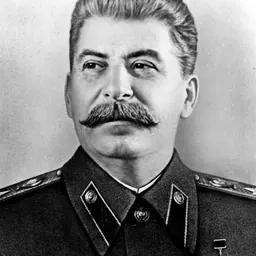
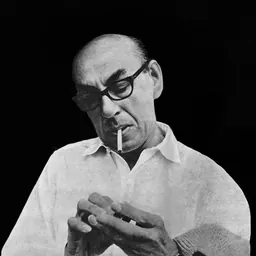
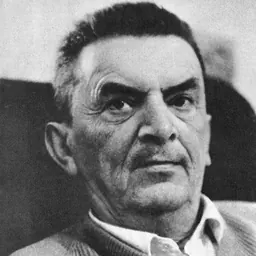

Related people
Same field, nearest in time


Contemporaries
People whose lives overlapped Wojciech Fangor's

Frequently asked questions
Who was Wojciech Fangor?
Polish artist (1922-2015)
When was Wojciech Fangor born?
Wojciech Fangor was born on 15 November 1922 in Warsaw.
When did Wojciech Fangor die?
Wojciech Fangor died on 25 October 2015 in Warsaw.
What was Wojciech Fangor's occupation?
Wojciech Fangor was a painter, sculptor, printmaker, graphic artist, designer and teacher.
What nationality was Wojciech Fangor?
Wojciech Fangor was Polish.
Sources & further reading
Cite this page
APA: Biography.guide. (2026). Wojciech Fangor. https://biography.guide/wojciech-fangor/
MLA: "Wojciech Fangor." Biography.guide, https://biography.guide/wojciech-fangor/.
Chicago: "Wojciech Fangor." Biography.guide. https://biography.guide/wojciech-fangor/.
Data last updated: 2026-09-25 · Spot an error? Report a correction.
Portrait: Wikimedia Commons · author & licence
Page generated 2026-10-04 09:28 UTC