
About Władysław Aleksander Łubieński
Lived 1703 – 1767 (aged 63). Władysław Aleksander Łubieński was a Polish catholic priest and catholic bishop.
Władysław Aleksander Łubieński (1 November 1703 – 21 June 1767) was archbishop of Lwów (1758–59) and primate of Poland (1759–1767). He was an ally of the Czartoryski Familia and of the Russian Empire and an opponent of religious tolerance. He acted as interrex in 1763–1764, after the death of King Augustus III of Poland and prior to the election of Stanisław August Poniatowski as king of the Polish–Lithuanian Commonwealth.
Early life and ecclesiastical career Łubieński was born on 1 November 1703 to Maciej (a member of a szlachta family that held the Pomian coat of arms) and Marianna Łubieński . He was baptized on 11 November that same year. He was first educated at a Jesuit college in Kalisz, then at the diocesan seminary in Łowicz, before matriculating to the Kraków Academy in the winter of 1722, where he studied theology and canon law. He then traveled to Rome in 1724, where he continued his theological studies at the Roman College. Afterwards, he went on a journey throughout western Europe — visiting Italy, France and the Holy Roman Empire — and recording his travels in a detailed diary, the manuscript for which was later destroyed in World War II.
Upon his return to Poland, Łubieński joined the court of Teodor Andrzej Potocki, becoming his secretary and prelate; he was also installed as a canon of the cathedral chapter at Gniezno on 29 December 1726. He was consecrated a priest by Potocki at Gniezno Cathedral in 1727; he was then appointed coadjutor scholastic of Kraków by his uncle, , after celebrating his first mass,
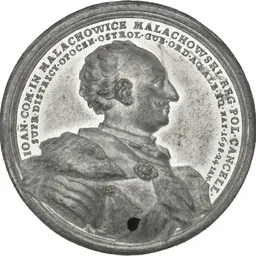
At the royal court, Łubieński belonged to faction opposing the Czartoryski familly and the Familia. After attempting to reconcile the Potocki family with the court in 1743, and in the wake of the disruption of the 1744 session of the Sejm, he began secret negotiations with Józef Wandalin Mniszech and Antoni Michał Potocki to form a Potocki confederation; when the Czartoryskis were to form their own such confederation, the Potockis ould have Augustus III form a confederated sejm, auction off the treasury and army, and in the process remove the Familia from power. While this plan was originally approved by the king and by von Brühl, the latter would eventually leak the plan to Andrzej Stanisław Załuski, who severely criticized the plan. This resulted in Łubieński's attempt to run for the position of deputy chancellor of the crown failing, with the king instead appointing and granting a "lesser seal of approval" to , a candidate supported by the Familia, in 1746. Nonetheless, Łubieński continued to work against the Familia; working alongside Jan Małachowski, he fought against the Czartoryski family in the 1754 case surrounding the Ostrogski fee tail, which saw the royal court break from the Czartoryskis and the Familia.
Don’t just read it —
keep it.
Full-length biographies made to live with: read them, listen on the way to work, watch them tonight.
- E-book
- Audio
- Video
Instant download · yours to keep · every purchase keeps this site free
Important facts
People in Władysław Aleksander Łubieński's life
Named in this biography and alive at the same time
Related people
Same field, nearest in time
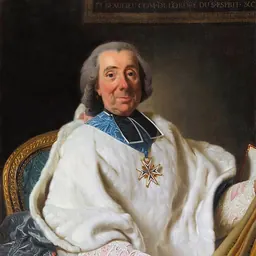

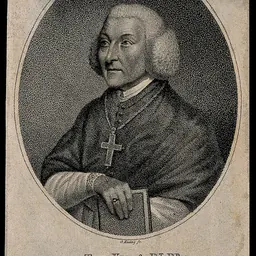
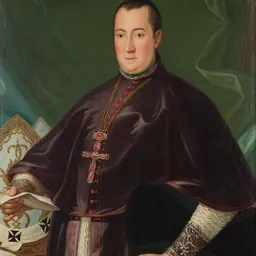

Contemporaries
People whose lives overlapped Władysław Aleksander Łubieński's


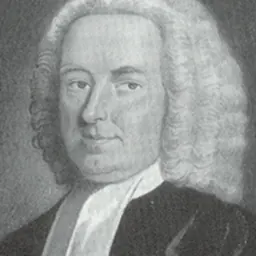


Frequently asked questions
Who was Władysław Aleksander Łubieński?
Catholic archbishop
When was Władysław Aleksander Łubieński born?
Władysław Aleksander Łubieński was born on 1 November 1703 in Galicia.
When did Władysław Aleksander Łubieński die?
Władysław Aleksander Łubieński died on 21 June 1767 in Gniezno.
What was Władysław Aleksander Łubieński's occupation?
Władysław Aleksander Łubieński was a catholic priest and catholic bishop.
What nationality was Władysław Aleksander Łubieński?
Władysław Aleksander Łubieński was Polish.
Sources & further reading
· Wikipedia: Władysław Aleksander Łubieński
· DBpedia: Władysław Aleksander Łubieński
Cite this page
APA: Biography.guide. (2026). Władysław Aleksander Łubieński. https://biography.guide/wladyslaw-aleksander-lubienski/
MLA: "Władysław Aleksander Łubieński." Biography.guide, https://biography.guide/wladyslaw-aleksander-lubienski/.
Chicago: "Władysław Aleksander Łubieński." Biography.guide. https://biography.guide/wladyslaw-aleksander-lubienski/.
Data last updated: 2026-09-20 · Spot an error? Report a correction.
Page generated 2026-09-27 05:27 UTC