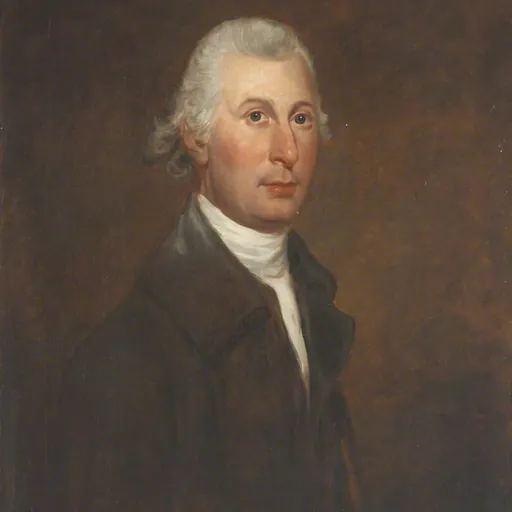
About William Wood
Lived 1745 – 1808 (aged 62). William Wood was a British botanist and christian minister.
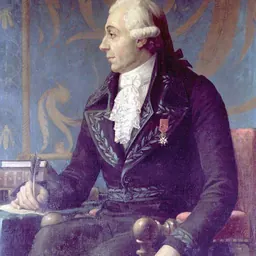
William Wood (29 May 1745 – 1 April 1808) was an English Unitarian minister and botanist who was involved in efforts to remedy the political and educational disabilities of Nonconformists under the Test Acts.
Life Wood was born in Collingtree, near Northampton. His father was Benjamin Wood, who attended the services of Philip Doddridge. Wood was educated at Stephen Addington's school at Market Harborough, Leicestershire, then from 1761, studied for the ministry under David Jennings, Samuel Morton Savage, Andrew Kippis, and Abraham Rees.
Wood's first sermon was preached at Debenham, Suffolk in 1766 and he became minister at Stamford, Lincolnshire the following year. He subsequently preached all over London. Wood and Rees were both ordained in Southwark. Wood served for a while in Ipswich as assistant to Thomas Scott before, in 1773, succeeding Joseph Priestley at Mill Hill Chapel in Leeds, on the recommendation of Priestley himself and Richard Price, the latter having become a close friend.
Doctrine and activism Though his father was a Calvinist, Wood did not follow him. He rejected belief in the Trinity but, as was common at the time, he did not pronounce on doctrinal matters during his sermons. Wood published several collections of sermons and a liturgy, Form of Prayers (1801), for the use of his congregation.
Wood was active in the parliamentary campaigns against the Test and Corporation Acts, chairing a public meeting in Leeds in 1789 and becoming a county delegate to the London committee for repeal.
It was Wood who was critical in preventing the dissolution of the Manchester Academy when George Walker resigned, recommending its move to York and becoming a visitor.
Botany In Leeds, Wood took to taking horse rides for his health and discovered an interest in botany. He developed a recognised expertise and contributed to several encyclopaedia. His Herbarium was donated to the Leeds City Museum in 1951.
Family Wood married Louisa Ann Oates (1758–1806), the daughter of a wealthy Leeds family, in 1780 and they had three sons and one daughter. George William Wood, his eldest son, was Member of Parliament for South Lancashire, a prominent Manchester Unitarian, businessman and leader of civil society.
Don’t just read it —
keep it.
Full-length biographies made to live with: read them, listen on the way to work, watch them tonight.
- E-book
- Audio
- Video
Instant download · yours to keep · every purchase keeps this site free
Important facts
People in William Wood's life
Named in this biography and alive at the same time





Related people
Same field, nearest in time




Contemporaries
People whose lives overlapped William Wood's




Frequently asked questions
Who was William Wood?
English Unitarian minister and botanist (1745-1808)
When was William Wood born?
William Wood was born on 29 May 1745.
When did William Wood die?
William Wood died on 1 April 1808.
What was William Wood's occupation?
William Wood was a botanist and christian minister.
What nationality was William Wood?
William Wood was British.
Sources & further reading
· DBpedia: William Wood (botanist)
Cite this page
APA: Biography.guide. (2026). William Wood. https://biography.guide/william-wood-botanist/
MLA: "William Wood." Biography.guide, https://biography.guide/william-wood-botanist/.
Chicago: "William Wood." Biography.guide. https://biography.guide/william-wood-botanist/.
Data last updated: 2026-09-23 · Spot an error? Report a correction.
Portrait: Wikimedia Commons · author & licence
Page generated 2026-09-27 05:07 UTC