
About William Wales
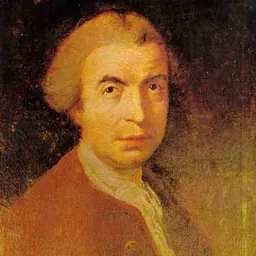
Lived 1734 – 1798 (aged 63–64). William Wales was a British mathematician, astronomer, explorer, pedagogue and computer.
William Wales (1734? – 29 December 1798) was a British mathematician and astronomer who sailed on Captain Cook's second voyage of discovery, then became Master of the Royal Mathematical School at Christ's Hospital and a Fellow of the Royal Society.
Early life Wales was born around 1734 to John and Sarah Wales and was baptised in Warmfield (near the West Yorkshire town of Wakefield) that year. As a youth, according to the historian John Cawte Beaglehole, Wales travelled south in the company of a Mr Holroyd, who became a plumber in the service of George III. By the mid-1760s, Wales was contributing to The Ladies' Diary. In 1765 he married Mary Green, sister of the astronomer Charles Green.
1769 transit of Venus and wintering at Hudson Bay As part of the plans of the Royal Society to make observations of the June 1769 transit of Venus, which would lead to an accurate determination of the astronomical unit (the distance between the Earth and the Sun), Wales and an assistant, Joseph Dymond, were sent to Prince of Wales Fort on Hudson Bay to observe the transit, with the pair being offered a reward of £200 for a successful conclusion to their expedition. The party arrived at Prince of Wales Fort in August 1768. On their arrival, the pair constructed two "Portable Observatories", which had been designed by the engineer John Smeaton. Construction work occupied the pair for a month and then they settled in for the long winter season.
When the day of the transit, 3 June 1769, finally arrived, the pair were lucky to have a reasonably clear day and they were able to observe the transit at around local midday. However, the two astronomers' results for the time of first contact, when Venus first appeared to cross the disc of the Sun, differed by 11 seconds; the discrepancy was to prove a cause of upset for Wales. On his return, Wales was still upset by the difference in the observations and refused to present his findings to the Royal Society until March 1770; however, his report of the expedition, including the astronomical results as well as other climatic and botanical observations, met with approval and he was invited by James Cook to join his next expedition. The primary objective of Wales and Bayly was to test Larcum Kendall's K1 chronometer, based on the H4 of John Harrison.
Later life Following his return, Wales was commissioned in 1778 to write the official astronomical account of Cook's first voyage.
Wales became Master of the Royal Mathematical School at Christ's Hospital and was elected a Fellow of the Royal Society in 1776. The writer Leigh Hunt, another of Wales' pupils, remembered him as "a good man, of plain simple manners, with a heavy large person and a benign countenance".
He was appointed as Secretary of the Board of Longitude in 1795, serving in that position until his death in 1798. He was nominated by the First Lord of the Admiralty, Earl Spencer, and his appointment confirmed 5 December 1795.
Recognition of his work During his voyage of 1791–95, George Vancouver, who had studied astronomy under Wales as a midshipman on HMS Resolution during Cook's second circumnavigation, named Wales Point, a cape at the entrance to Portland Inlet on the coast of British Columbia, in honour of his tutor; the name was later applied to the nearby Wales Island by an official at the British Hydrographic Office. In his journal, Vancouver recorded his gratitude and indebtedness to Wales's tutelage "for that information which has enabled me to traverse and delineate these lonely regions."
Wales featured on a New Hebrides (now Vanuatu) postage stamp of 1974 commemorating the 200th anniversary of Cook's discovery of the islands.
Works by William Wales
The Method of Finding the Longitude by timekeepers London: 1794.
Don’t just read it —
keep it.
Full-length biographies made to live with: read them, listen on the way to work, watch them tonight.
- E-book
- Audio
- Video
Instant download · yours to keep · every purchase keeps this site free
Important facts
People in William Wales's life
Named in this biography and alive at the same time
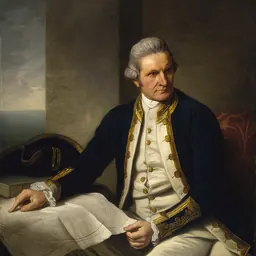

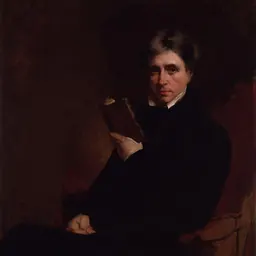
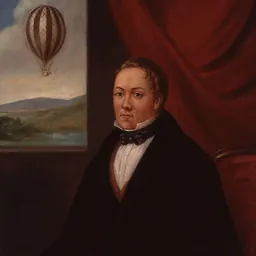
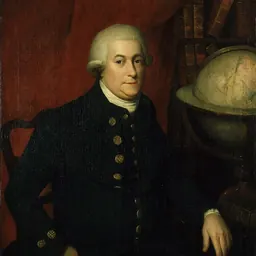


Related people
Same field, nearest in time

Contemporaries
People whose lives overlapped William Wales's




Frequently asked questions
Who was William Wales?
British astronomer
When was William Wales born?
William Wales was born in 1734 in Yorkshire.
When did William Wales die?
William Wales died on 29 December 1798 in London.
What was William Wales's occupation?
William Wales was a mathematician, astronomer, explorer, pedagogue and computer.
What nationality was William Wales?
William Wales was British.
Sources & further reading
· DBpedia: William Wales (astronomer)
Cite this page
APA: Biography.guide. (2026). William Wales. https://biography.guide/william-wales/
MLA: "William Wales." Biography.guide, https://biography.guide/william-wales/.
Chicago: "William Wales." Biography.guide. https://biography.guide/william-wales/.
Data last updated: 2026-09-20 · Spot an error? Report a correction.
Page generated 2026-09-27 05:29 UTC