
William Thornton Rickert Fox
American political scientist and international relations theoretician
About William Thornton Rickert Fox
Lived 1912 – 1988 (aged 76). William Thornton Rickert Fox was an American political scientist.
William Thornton Rickert Fox (January 12, 1912 – October 24, 1988), generally known as William T. R. Fox (or occasionally W. T. R. Fox), was an American foreign policy professor and international relations theoretician at the Columbia University (1950–1980, emeritus 1980–1988). He is perhaps mostly known as the coiner of the term "superpower" in 1944. He wrote several books about the foreign policy of the United States of America and the United Kingdom (and the British Empire). He was a pioneer in establishing international relations, and the systematic study of statecraft and war, as a major academic discipline. National security policy and an examination of civil-military relations were also focuses of his interests and career. He was the founding director of Columbia's Institute of War and Peace Studies and held the position from 1951–1976.
Early life and early career Fox was born and grew up in Chicago. He also studied international law under Quincy Wright. He was one of the contributors to Bernard Brodie's landmark 1946 volume The Absolute Weapon: Atomic Power and World Order, where he recognized with Brodie that the future nuclear stand-off between the U.S. and U.S.S.R. would become focused on the fear of mutual destruction, but in his portion explored ways that international agreements to limit or control nuclear weapons might improve matters. Fox came away from his activities during this period convinced that the framing of international relations theory should be around the proposition that, "If man is to have the opportunity to exercise some measure of rational control over his destiny, the limits of the possible and the consequences of the desirable both have to be investigated."
Columbia years and organizational positions Fox joined the Columbia faculty as a full professor in 1950. Fox said that the new institute would focus on security studies and that its aim was "to find a road to security with the most peace and the least war." Early areas of focus for the institute were civil–military relations and the Cold War and nuclear strategy;
Under the leadership of Fox, the Institute of War and Peace Studies became a viable operation; John A. Krout, dean of the graduate faculty, said after ten years had gone by that the institute had "done a great deal of fine work". One emphasis of the institute was in research, and by 1986 nearly 70 books had been published in connection with the institute.
Fox often spent time abroad as a scholar, including in England in 1955, as a Fulbright Lecturer at the Rio Branco Institute and Pontifical Catholic University of Rio de Janeiro in Brazil in 1966, in Mexico in 1967, and as a visiting research fellow at Australian National University in 1968 and 1979. He served as a consultant to the U.S. Department of State for a number of years, as well as to other governmental agencies, and lectured at the National War College and various service branch colleges. Fox also worked on behalf of the Arms Control and Disarmament Agency, addressing issues related to the security of Western Europe. In a 1967 address to one of the World Affairs Councils of America, Fox said that NATO "seems superfluous because it is working ... it is in part a victim of its own success."
During his career, Fox described himself as a "pragmatic meliorist" who believed in the possibility of improving how international relations were conducted and in highlighting the normative meanings of domestic and world policies. Towards the end of his career at Columbia, he developed an explicit focus on moral concerns and human rights, giving courses such as "Means and Ends in International Relations" and "Human Rights and U.S. Foreign Policy".
He was the first managing editor of the journal World Politics, a position he held from 1948 to 1953. He remained a member of its editorial board through 1978. In addition, he was a founding editor of the journal International Organization. In addition, he was a former vice president of the American Political Science Association.
Legacy In 1991, The Evolution of Theory in International Relations, a Festschrift-like collection of essays in honor of William T. R. Fox, was published, many of which had been featured in the special Spring/Summer 1990 issue of Journal of International Affairs. Edited by Robert L. Rothstein, it featured contributions from Kenneth N. Waltz, Robert Jervis, Glenn H. Snyder, Louis Henkin, Ernst B. Haas, and others, as well as a preface from his wife, Annette Baker Fox. In her essay, Professor Elizabeth C. Hanson said that, "Bill Fox helped to shape international relations as a major academic field and to demonstrate the relevance of its theoretical investigations to policy making." She went on to describe his contributions as a professor and colleague, writing that, "Fox's influence as teacher and mentor on the discipline of international relations was enormous. Scores of students who participated in his seminars now fill high academic or policy-making positions."
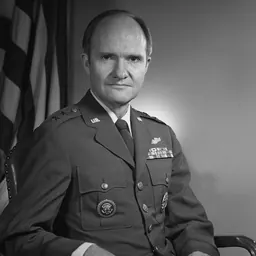
In other settings, the scholar Lucja Swiatkowski Cannon wrote that Fox "was a U.S. pioneer in establishing the systematic study of statecraft and war as an academic discipline." Another scholar, James McAllister, noted that Fox's influence at Columbia's Institute of War and Peace Studies was being felt well after his death. Two-time National Security Advisor Brent Scowcroft recalled of his time at Columbia's graduate school in the early 1950s, "My guiding star was William T. R. Fox, who had a really fine strategic mind, and I was fortunate to have him to guide me. ... he's probably the one person who stands out in my mind as having shaped the way I thought." The British international relations scholar Michael Cox mentioned Fox as one of the "giants" of international relations theory, along with Hans Morgenthau, Paul Nitze, Arnold Wolfers, and Reinhold Niebuhr. Glenn H. Snyder Warner R. Schilling Morton Kaplan William Kaufmann Lucian Pye Roger Hilsman Brent Scowcroft Amos Jordan Michael Armacost Michael Nacht Richard N. Gardner Samuel P. Huntington Robert Rothstein
Published works Books The Super-Powers: The United States, Britain, and the Soviet Union – Their Responsibility for Peace (Harcourt Brace, 1944) The Absolute Weapon: Atomic Power and World Order (Harcourt Brace, 1946) [co-author with Bernard Brodie, Frederick Sherwood Dunn, Arnold Wolfers, Percy Ellwood Corbett] Theoretical Aspects of International Relations (University of Notre Dame Press, 1959) [editor] The American Study of International Relations (University of South Carolina Press, 1968) [compilation of previously published journal articles] NATO and the Range of American Choice (Columbia University Press, 1967) [co-author with Annette Baker Fox] American Arms and a Changing Europe: Dilemmas of Deterrence and Disarmament (Columbia University Press, 1973) [co-author with Warner R. Schilling, Catherine M. Kelleher, and Donald J. Puchala] European Security and the Atlantic System (Columbia University Press, 1973) [co-editor with Warner R. Schilling] A Continent Apart: The United States and Canada in World Politics (Bissell Lectures, 1982–3) (University of Toronto Press, 1985)
Selected articles "Competence of Courts in Regard to 'Non-Sovereign' Acts of Foreign States", American Journal of International Law, Vol. 35, No. 4 (Oct., 1941), pp. 632–640. "The Super-Powers at San Francisco", in The Review of Politics, Vol. 8, No. 1 (1946), pp. 115–127. "Interwar International Relations Research: The American Experience", in World Politics, Vol. 2, No. 1 (1949), pp. 67–79. Britain and America in the Era of Total Diplomacy, Center of International Studies, Princeton University, 1952 [report, co-author with Annette Baker Fox] "Civilians, Soldiers, and American Military Policy", in World Politics, Vol. 7, No. 3 (1955), pp. 402–418. "The Teaching of International Relations in the United States", in World Politics, Vol. 13, No. 3 (1961), pp. 339–359 [co-author with Annette Baker Fox] "Representativeness and Efficiency Dual Problem of Civil-Military Relations", in Political Science Quarterly, Vol. 76, No. 3 (Sep., 1961), pp. 354–366. "Science, Technology and International Politics", in International Studies Quarterly, Vol. 12, No. 1. (Mar., 1968), pp. 1–15. "'The Truth Shall Make You Free': One Student's Appreciation of Quincy Wright", in The Journal of Conflict Resolution, Vol. 14, No. 4. (Dec., 1970), pp. 449–452. "The Problems of War Termination: The Causes of Peace and Conditions of War", in Annals of the American Academy of Political and Social Science, Vol. 392, How Wars End. (Nov., 1970), pp. 1–13.
Don’t just read it —
keep it.
Full-length biographies made to live with: read them, listen on the way to work, watch them tonight.
- E-book
- Audio
- Video
Instant download · yours to keep · every purchase keeps this site free
Important facts
People in William Thornton Rickert Fox's life
Named in this biography and alive at the same time




Related people
Same field, nearest in time




Contemporaries
People whose lives overlapped William Thornton Rickert Fox's





Frequently asked questions
Who was William Thornton Rickert Fox?
American political scientist and international relations theoretician (1912-1988)
When was William Thornton Rickert Fox born?
William Thornton Rickert Fox was born on 12 January 1912 in Chicago.
When did William Thornton Rickert Fox die?
William Thornton Rickert Fox died on 24 October 1988 in Greenwich.
What was William Thornton Rickert Fox's occupation?
William Thornton Rickert Fox was a political scientist.
What nationality was William Thornton Rickert Fox?
William Thornton Rickert Fox was American.
Sources & further reading
· Wikipedia: William Thornton Rickert Fox
Cite this page
APA: Biography.guide. (2026). William Thornton Rickert Fox. https://biography.guide/william-thornton-rickert-fox/
MLA: "William Thornton Rickert Fox." Biography.guide, https://biography.guide/william-thornton-rickert-fox/.
Chicago: "William Thornton Rickert Fox." Biography.guide. https://biography.guide/william-thornton-rickert-fox/.
Data last updated: 2026-09-20 · Spot an error? Report a correction.
Page generated 2026-09-27 05:33 UTC