
About Quincy Wright
Lived 1890 – 1970 (aged 79). Quincy Wright was an American political scientist, historian, sociologist, university teacher and jurist.
Philip Quincy Wright (December 28, 1890 – October 17, 1970) was an American political scientist based at the University of Chicago known for his pioneering work and expertise in international law, international relations, and security studies. He headed the Causes of War project at the University of Chicago, which resulted in the prominent 1942 multi-volume book A Study of War.
Biography Born in Medford, Massachusetts, Wright received his B.A. from Lombard College in 1912. He completed his Ph.D. at the University of Illinois in 1915. He also received an LL.D. He taught at Harvard University and the University of Minnesota before joining the department of social sciences at the University of Chicago in 1923. In 1927, he was elected a Fellow of the American Academy of Arts and Sciences. He was one of the co-founders of Chicago's Committee On International Relations in 1928, the first graduate program in international relations established in the United States. In addition to his academic work, Wright was an adviser to Justice Robert H. Jackson at the Nuremberg Trials, and often provided advice to the U.S. State Department. During World War II, Wright was a consultant in the U.S. State Department. In 1956 he became Professor of International Law in the Woodrow Wilson Department of Foreign Affairs at the University of Virginia. He retired in 1961 and became a visiting professor at numerous universities, both within the United States and abroad, including, Tsing Hua University in Beijing, the Graduate Institute of International Studies in Geneva, Mexico, Cuba, The Hague and Turkey.
Throughout his career Wright served as president of several scholarly bodies, including the American Association of University Professors (1944–1946), the American Political Science Association (1948–1949), the International Political Science Association (1950–1952), and the American Society of International Law (1955–1956). He was elected to the American Philosophical Society in 1943. He was a member of the editorial board of the American Association of International Law from 1923 until his death. He was also active in the U.S. United Nations Association.
Wright's father was the economist Philip Green Wright and his brothers were the geneticist Sewall Wright and the aeronautical engineer Theodore Paul Wright.
Academic work During the 1920s, the horrors of World War I were foremost in the thoughts of many social scientists. Soon after his arrival at Chicago, Wright organized an ongoing interdisciplinary study of wars, which eventually resulted in over 40 dissertations and 10 books. Wright summarized this research in his magnum opus A Study of War (1942).
According to Karl Deutsch of Harvard University,
Wright's study of warfare inspired many social scientists and his database of wars is an indispensable resource for anyone seriously interested in quantitative studies of human conflicts.
Other than A Study of War, Wright published a further 20 books and nearly 400 journal articles during his career. Several of his books became standard texts, including Mandates Under the League of Nations (1930) and The Study of International Relations (1955). In The Study of International Relations, Wright distinguished between eight root disciplines of international relations: "international law, diplomatic history, military science, international politics, international organization, international trade, colonial government, and the conduct of foreign relations." These disciplines were supplemented by the following specialties: "world history, world geography, pacifism, the psychology and sociology of international relations; humanistic, social, and biological disciplines; and the recent development of regional studies, operational research, and group dynamics." While conducting research for Mandates Under the League of Nations (1930), which was funded by a Guggenheim Foundation grant, Wright visited Damascus less than two weeks after it had been shelled during the Great Syrian Revolt. Some of Wright's contemporaries, such as Elbridge Colby, criticized Wright, arguing that "savage tribes" were not protected by international humanitarian law.
Selected publications The Control of American Foreign Relations. 1922. Macmillan. "The Palestine Problem", Political Science Quarterly, Vol. 41, No. 3 (September 1926), pp. 384–412, Mandates Under the League of Nations. 1930. University of Chicago Press. Research in International Law Since the War. 1930. Carnegie Endowment for International Peace. Public Opinion and World Politics. 1933. University of Chicago Press. A Study of War. 1942. University of Chicago Press. The Study of International Relations. 1955. Appleton-Century-Crofts. The Strengthening of International Law. 1960. Academic of International Law. International Law and the United States. 1960. Asia Publishing House. The Role of International Law in the Elimination of War. 1961. Oceana.
Don’t just read it —
keep it.
Full-length biographies made to live with: read them, listen on the way to work, watch them tonight.
- E-book
- Audio
- Video
Instant download · yours to keep · every purchase keeps this site free
Important facts
People in Quincy Wright's life
Named in this biography and alive at the same time



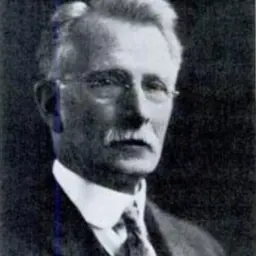


Related people
Same field, nearest in time




Contemporaries
People whose lives overlapped Quincy Wright's


Frequently asked questions
Who was Quincy Wright?
American political scientist (1890–1970)
When was Quincy Wright born?
Quincy Wright was born on 28 December 1890 in Medford.
When did Quincy Wright die?
Quincy Wright died on 17 October 1970 in Charlottesville.
What was Quincy Wright's occupation?
Quincy Wright was a political scientist, historian, sociologist, university teacher and jurist.
What nationality was Quincy Wright?
Quincy Wright was American.
Sources & further reading
Cite this page
APA: Biography.guide. (2026). Quincy Wright. https://biography.guide/quincy-wright/
MLA: "Quincy Wright." Biography.guide, https://biography.guide/quincy-wright/.
Chicago: "Quincy Wright." Biography.guide. https://biography.guide/quincy-wright/.
Data last updated: 2026-09-20 · Spot an error? Report a correction.
Page generated 2026-09-27 05:23 UTC