
About William T. Bovie
Lived 1882 – 1958 (aged 75). William T. Bovie was an American inventor and biophysicist, known for Electrosurgery.
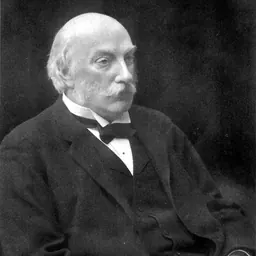
William T. Bovie (September 11, 1882 – January 1, 1958) was an American scientist and inventor. He is credited with conceptualizing the field of biophysics and with inventing a modern medical device known as the Bovie electrosurgical generator. Bovie taught or conducted research at Harvard University, Northwestern University, Jackson Laboratory and Colby College.
Early life Bovie was born in Michigan, the son of Henrietta and William Bovie. His father practiced as both a rural physician and veterinarian, and he died when Bovie was 18 years old. Because of his father's death, Bovie had to save money to attend college, working as a stenographer while he did so. While in Missouri, he met his future wife, Martha Adams. The couple had one son. In 1914, he completed a Ph.D. in plant physiology from Harvard University.
Career Bovie electrosurgical unit exhibited at the André Vésale hospital in Montigny-le-Tilleul (Belgium). Bovie conducted research with radium at Harvard before working on electrocautery. He was not the first to work with electricity in surgery. It was known, for example, that electric current above certain frequencies could cut tissue without inducing muscular contraction. Bovie used such knowledge to create his electrosurgical device and he first employed it in neurosurgical cases with Harvey Cushing, known as the father of neurosurgery.
Bovie's device allowed Cushing to reexplore operations in patients with brain masses that had been declared inoperable. While the device revolutionized surgery, there were occasional technical problems. Cushing recalled an instance in which the current from Bovie's device short circuited through a retractor. Electricity traveled up Cushing's arm and to his headlight, causing a sensation that Cushing described as "unpleasant to say the least."
Known as the founder of the field of biophysics, Bovie chaired the new biophysics department at Northwestern University after his relatively brief association with Cushing. He was made a Fellow of the American Academy of Arts and Sciences.
Bovie later worked at Jackson Laboratory in Bar Harbor, Maine, and at Colby College.
Later life Bovie was relatively poor in his later life. He had not been motivated by financial gain, so he had sold the patent rights to his electrosurgical device to a manufacturer for one U.S. dollar. He had diabetes, arthritis, and long-standing obesity, and his early work with radium led to chronic pain in his hands. He died on January 1, 1958.
Don’t just read it —
keep it.
Full-length biographies made to live with: read them, listen on the way to work, watch them tonight.
- E-book
- Audio
- Video
Instant download · yours to keep · every purchase keeps this site free
Important facts
Related people
Same field, nearest in time


Contemporaries
People whose lives overlapped William T. Bovie's





Frequently asked questions
Who was William T. Bovie?
American scientist and inventor (1882–1958)
When was William T. Bovie born?
William T. Bovie was born on 11 September 1882 in Augusta.
When did William T. Bovie die?
William T. Bovie died on 1 January 1958 in Fairfield.
What was William T. Bovie's occupation?
William T. Bovie was an inventor and biophysicist.
What was William T. Bovie known for?
William T. Bovie was known for Electrosurgery.
What nationality was William T. Bovie?
William T. Bovie was American.
Sources & further reading
Cite this page
APA: Biography.guide. (2026). William T. Bovie. https://biography.guide/william-t-bovie/
MLA: "William T. Bovie." Biography.guide, https://biography.guide/william-t-bovie/.
Chicago: "William T. Bovie." Biography.guide. https://biography.guide/william-t-bovie/.
Data last updated: 2026-09-20 · Spot an error? Report a correction.
Page generated 2026-09-27 05:01 UTC