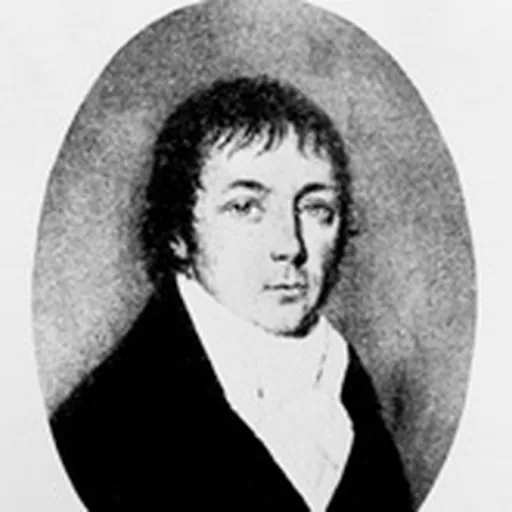
William Smith
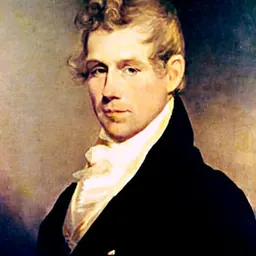
Member of U.S. Senate representing South Carolina in 1816
About William Smith
Lived 1762 – 1840 (aged 77–78). William Smith was an American politician, lawyer and judge.
William Smith (June 26, 1840), often Judge Smith or Judge Wm. Smith in written records of his era, was an American lawyer, judge, plantation owner, and politician. He served two discontinuous terms in the United States Senate, from 1816 to 1823, and from 1826 to 1831, representing the state of South Carolina. Smith was one of the major figures of South Carolina politics during the first third of the 19th century, and formed an intense rivalry with John C. Calhoun, arguing against Calhoun's nationalist views, and advocating for states' rights. He was also a leading pro-slavery voice in the Senate. He fiercely attacked the then-feeble movement to abolish slavery in the United States, and spent his legislative career on both the state and federal levels advocating for the perpetuation of the slave trade and the expansion of legal slavery across the continent. He was also vituperative opponent of government spending on infrastructure or public development ("internal improvements"), to the point that he counterintuitively voted against the admission of Mississippi, Alabama, and Missouri as new U.S. states where slavery would be legal, apparently because he thought the U.S. government was being greedy in its reserve of land for public use, in usurpation of the power of the citizen and the existing states.
Smith was awarded electoral votes for the vice presidency in two separate presidential elections. When Smith's lifelong friend Andrew Jackson became president he tried twice to persuade Smith to take a seat on the U.S. Supreme Court but Smith declined on both occasions.
Smith left both the Senate and South Carolina in the 1830s, in part because Calhoun had been victorious in their power struggle. Smith bought and developed vast tracts of land in the west. His investments were well-chosen and ultimately wildly profitable in part because he was privileged with inside information. U.S. Indian Commissioner plenipotentiary Jackson had advised him to invest in the vicinity of the Tennessee River before land cession treaties had been signed with the Chickasaw and Cherokee, and Smith himself was a member of the Private Land Claims committee that oversaw real estate claims and disputes that had arisen in the wake of the Louisiana Purchase. Smith developed massive plantation complexes in Alabama and along the Red River of the South in Louisiana, as well as acquiring hundreds of slaves to plant those lands with the profitable cash crops of cotton and sugar. Once settled in Huntsville, Smith served in the Alabama state legislature until his death. When he died in 1840 he was said to be "almost a millionaire in wealth," Smith's granddaughter and heir, Mary Taylor Calhoun, volunteered to a researcher that "vague impression that, by a re-adjustment of the boundary lines between North and South Carolina, his birth-place, formerly in the jurisdiction of South Carolina, was thrown into North Carolina. Not much is known about Smith's early life outside of his education. According to his granddaughter, "Judge Smith's father was, at one time, a man of considerable property, but his fortune was greatly impaired by the depreciation of the continental money. He, however, was able to give his sons as good classical educations as the academies of those days afforded. Judge Smith was a good Latin and Greek scholar...His father started him in the world with only one negro, Priam, well known here as a foreman, and now living on the farm, adjacent to the town of Huntsville, which Judge Smith left to Mrs. Calhoun." The school at Bullock's Creek was located in the "District between Broad and Catawba Rivers," and taught by Rev. Mr. Joseph Alexander, who also had a school in the Waxhaws. Over a century later, another Carolinian described Smith as "a strong personal friend of President Jackson." The memoirs of Alabama "belle" Virginia Clay-Clopton, published 1904, described Smith as "the warm friend of Andrew Jackson." Another report attesting to Bennett Smith's alcohol use is in the 1845 journal of Murfreesboro resident Samuel Harvey Laughlin, who wrote that, "Maj. Bennett Smith, a remarkable man, is still living, had removed to town to enjoy his fortune about the time I went to the place to live. He pretended, however, now and then, especially when drunk, to engage in the practice of law."
Smith then attended Mt. Zion College in Winnsboro, South Carolina, which was the first preparatory school in the region. He once stated to a friend stated that his life could be described as "wild, reckless, intemperate, rude and boisterous, yet resolute and determined." To that same friend he also credited all of his success to a promise he once made to his wife, Margaret Duff, to forego alcohol.
Smith's law career began on January 6, 1784 when he was admitted to the bar. In one notable case, his client who had been charged for killing a horse failed to appear before the court. Smith did not see the man for a number of years until he ran into him in the Hall of the House of Representatives. The man, known to Smith by the surname "Elchinor", now went by the name John Alexander and was a Representative for the state of Ohio. Smith ensured that Representative Alexander paid him for his previous services.
He may have been resident in the York District during his South Carolina days, but also dwelled for a time in Pinckneyville in the Union District. In 1806 he was elected president of the South Carolina State Senate. In 1808 he became a judge. As a jurist his temperament was considered "tyranical but fair."
According to a South Carolina newspaper, in about 1815 he built a grand house in Yorkville: "The lot on which it stood comprises a beautiful pack of twelve acres...In the construction of the house, only the best heart lumber was used, and at that period carving and ornamental work being the rage on all houses of pretension, no expense was spared by the builder in this style of ornamentation. We have heard it stated that the cost of the house was , and after it was finished was regarded as the finest residence then in the upper part of the State, and persons were known to travel & distance of sixty miles or more for no other purpose but to see the wonderful piece of architecture." At some point, perhaps in the 1820s, he also built a fine house at Turkey Creek. He served his first term as a U.S. Senator was 1817 to 1823, when he was replaced by Robert Y. Hayne. In 1820, during the debates over the Missouri Compromise, Smith "directly linked the reopening [of the transatlantic slave trade to South Carolina] and the Louisiana Purchase...Supporting the expansion of slavery without restriction, Smith entered volumes of archival documents from the Charleston slave trade into the congressional record to demonstrate that his state's African slave trade from 1803 to 1808 actually fed the western frontier rather than South Carolina." Smith was one of the first Southerners to argue, at the time of the Missouri Compromise in 1820, that American slavery was a "positive good", arguing that the enslaved were "so domesticated, or so kindly treated by their masters, and their situations so improved" that few would express discontent with their condition.
Shortly after taking office, Smith began a political feud with John C. Calhoun which would last the duration of his political career in South Carolina.
During the 1820s, Smith began buying up land in the west. In 1823 he bought a lot at the northwest corner of Eustis and Greene streets that became the first parcel in what became what was called the Calhoun House property, and every year until 1832 bought more lots in town until he owned the entire block as well as "most of the block that fronts on East Side Square." According to Huntsville architectural historian Linda Bayer, "he began assembling acreage immediately northeast of the town, in what is now East Huntsville Addition, with the purchase of 640 acres for $18,000 cash. Additional purchases in 1828 and 1831 increased this holding to almost 1,000 acres, and this land became his Huntsville plantation which he named Spring Grove." This property was later known as Calhoun Grove. He was sent to the U.S. Senate a second time in December 1826. and "their sameness of political creed cemented and strengthened their earlier ties."
In 1839, the American Anti-Slavery Society published American Slavery As It Is. Smith's neighbor's son, a young Presbyterian minister who had become close friends with Theodore Dwight Weld and an ardent abolitionist, contributed three pages of anecdotes about slavery in the vicinity of Huntsville, where he had grown up. Rev. William T. Allan's "Testimony" began with information about Smith.
Anti-Slavery Record, March 1835; Rev. Allan's description is quoted on page 27 Allan's description of the use of what was called "the hot paddle" on the enslaved brickmaker Charles, "within sight and hearing of the academy and public garden," was probably the source of the cover illustration of The Anti-Slavery Record of March 1835.
Vice-presidential candidacies Smith was a contender in the presidential–vice presidential contests during both the 1828 and 1836 electoral cycles. In 1828, seven electors from Georgia chose him for vice president, instead of Calhoun, the Democratic nominee.
He was also a splinter candidate for Vice President of the United States in 1836: Virginia refused to accept Richard Mentor Johnson as the Democratic vice presidential candidate. Johnson was considered the "western" candidate but his relationship with a mixed-race woman, Julia Chinn, alienated the "southern" contingent, which voted for the ticket of Martin Van Buren and William Smith, putting Johnson one electoral vote short of a majority; the Senate went on to elect Johnson. The votes for Smith were apparently the result of an "overture to faithless electors."
Supreme Court consideration Jackson wanted Smith to serve on the U.S. Supreme Court when there was a vacancy in 1829 but Smith declined. On March 3, 1837, outgoing President Andrew Jackson nominated Smith to the Supreme Court. Five days later, the newly seated Senate of the 25th Congress confirmed Smith's nomination by a vote of 23–18. However, Smith declined the appointment and did not serve. Martin Van Buren then appointed to the bench John McKinley, who had been partners with Jackson's longtime associates John Coffee and James Jackson in the Cypress Land Company, a land speculation operation in northern Alabama.
Death and legacy Smith died in June 1840 at his Huntsville estate Calhoun Place of "congestive fever" in after a month-long illness. He was buried in Madison County, Alabama.
Smith Street in Huntsville's Old Town Historic District is named for Senator Smith.
Personal life Smith's widow, the former Margaret Duff, died at Huntsville on January 24, 1842, "at a very advanced age."
Bennett Smith (brother) William Smith's brother Bennett "Ben" Smith (1763–1848) was "a wealthy and prominent lawyer...who lived in princely style." According to one account he was admitted to practice in Buncombe County, North Carolina in the 1790s. He was married to Isabella Dickson, a daughter of Congressman Joseph Dickson. Smith was appointed the first Rutherford County attorney in 1808. Smith was the head of a household in Rutherford County, Tennessee at the time of the U.S. population censuses of 1810, 1820, 1830, and 1840. Taylor was in the South Carolina House of Representatives, and was a Congressman from South Carolina for one term (1815–1817). Mary Smith died young but her only child, another daughter, was raised and educated by her grandparents.
Don’t just read it —
keep it.
Full-length biographies made to live with: read them, listen on the way to work, watch them tonight.
- E-book
- Audio
- Video
Instant download · yours to keep · every purchase keeps this site free
Important facts
People in William Smith's life
Named in this biography and alive at the same time



Related people
Same field, nearest in time



Contemporaries
People whose lives overlapped William Smith's




Frequently asked questions
Who was William Smith?
member of U.S. Senate representing South Carolina in 1816
When was William Smith born?
William Smith was born in 1762 in North Carolina.
When did William Smith die?
William Smith died on 26 June 1840 in Huntsville.
What was William Smith's occupation?
William Smith was a politician, lawyer and judge.
What nationality was William Smith?
William Smith was American.
Sources & further reading
· DBpedia: William Smith (South Carolina politician, born 1762)
Cite this page
APA: Biography.guide. (2026). William Smith. https://biography.guide/william-smith-politician-1762/
MLA: "William Smith." Biography.guide, https://biography.guide/william-smith-politician-1762/.
Chicago: "William Smith." Biography.guide. https://biography.guide/william-smith-politician-1762/.
Data last updated: 2026-09-20 · Spot an error? Report a correction.
Portrait: Wikimedia Commons · author & licence
Page generated 2026-09-27 04:57 UTC