
About William Robert Ming
Lived 1911 – 1973 (aged 62). William Robert Ming was an American lawyer and civil rights.
William Robert Ming Jr. (May 7, 1911 – June 30, 1973) was an American lawyer, attorney with the National Association for the Advancement of Colored People (NAACP) and law professor at University of Chicago Law School and Howard University School of Law. He presided over the Freeman Field mutiny courts-martial involving the Tuskegee Airmen. He is best remembered for being a member of the Brown v. Board of Education litigation team and for working on a number of the important cases leading to Brown, the decision in which the United States Supreme Court ruled de jure racial segregation a violation of the Equal Protection Clause of the Fourteenth Amendment of the United States Constitution.
Legal career Ming was admitted to the bar in 1933 and subsequently practiced law in both public and private capacities.
Military service Ming volunteered and served in the Army's Judge Advocates General Corp, rising to the rank of captain.
Freeman Field Mutiny
He was one of ten officers to preside over the Freeman Field mutiny courts-martial. They were appointed by General Frank O'Driscoll Hunter. Colonel Benjamin O. Davis Jr., Captain George L. Knox II, Captain James T. Wiley, captain John H. Duren, Captain Charles R. Stanton, captain William T. Yates, Captain Elmore M. Kennedy, Captain Fitzroy Newsum, 1st Lieutenant William Robert Ming Jr., 1st Lieutenant James Y. Carter. Trial Judge Advocates were: Captain James W. Redden and 1st Lieutenant Charles B. Hall.
Litigation Ming was one of the architects of the legal strategy leading to the Supreme Court's landmark decision in Brown v. Board of Education, working on the litigation team for that case and on a number of the important cases leading to Brown, including Shelley v. Kraemer (declaring unconstitutional state enforcement of restrictive racial covenants in housing) and Sweatt v. Painter and McLaurin v. Oklahoma State Regents (declaring unconstitutional separate but equal facilities for black professionals and graduate students in state universities).
Other important decisions Ming played a role in include: NAACP v. Alabama (holding state's demand for NAACP membership lists unconstitutional), Sipuel v. Board of Regents (striking the exclusion of qualified black students from all-white state law schools), Ward v. Texas (holding the use of coerced confessions in murder prosecutions unconstitutional), Missouri ex rel Gaines v. Canada (holding that states that provide a school to white students must provide in-state education to blacks as well), and Virginia State Bar v. S.W. Tucker (Virginia State Bar's attempt to disbar Samuel Wilbert Tucker non-suited/dismissed).
King trial In Montgomery, Alabama in May 1960, in front of an all-white jury, Ming helped defend Martin Luther King Jr. on perjury charges related to alleged tax evasion, obtaining an acquittal. A "reluctantly admiring" Alabama lawyer was quoted: "Negro or not, he is a master of the law." King wrote of the trial as a "turning point" in his life and praised Ming and his other principal lawyer, Hubert Thomas Delany: "They brought to the courtroom wisdom, courage, and a highly developed art of advocacy; but most important, they brought the lawyers' indomitable determination to win. After a trial of three days, by the sheer strength of their legal arsenal, they overcame the most vicious Southern taboos festering in a virulent and inflamed atmosphere and they persuaded an all-white jury to accept the word of a Negro over that of white men."
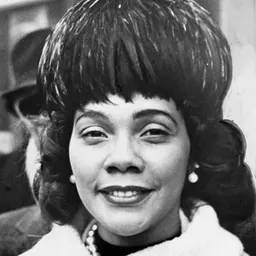
King's wife, Coretta Scott King, would later say of the trial: "A southern jury of twelve white men had acquitted Martin. It was a triumph of justice, a miracle that restored your faith in human good."
Tax evasion and incarceration In 1970, Ming was prosecuted for tax evasion and, despite having paid the back taxes and fines, was sentenced to 16 months in prison. In January 1973, he began to serve his sentence. A number of friends and colleagues urged authorities to grant him parole and release from prison. After a stroke, Ming was paroled and sent to Veteran's Research Hospital in Chicago.
Don’t just read it —
keep it.
Full-length biographies made to live with: read them, listen on the way to work, watch them tonight.
- E-book
- Audio
- Video
Instant download · yours to keep · every purchase keeps this site free
Important facts
People in William Robert Ming's life
Named in this biography and alive at the same time






Related people
Same field, nearest in time



Contemporaries
People whose lives overlapped William Robert Ming's




Frequently asked questions
Who was William Robert Ming?
American lawyer and activist (1911-1973)
When was William Robert Ming born?
William Robert Ming was born on 7 May 1911 in Chicago.
When did William Robert Ming die?
William Robert Ming died on 30 June 1973 in Chicago.
What was William Robert Ming's occupation?
William Robert Ming was a lawyer and civil rights.
What nationality was William Robert Ming?
William Robert Ming was American.
Sources & further reading
· Wikipedia: William Robert Ming
· DBpedia: William Robert Ming
Cite this page
APA: Biography.guide. (2026). William Robert Ming. https://biography.guide/william-robert-ming/
MLA: "William Robert Ming." Biography.guide, https://biography.guide/william-robert-ming/.
Chicago: "William Robert Ming." Biography.guide. https://biography.guide/william-robert-ming/.
Data last updated: 2026-09-20 · Spot an error? Report a correction.
Page generated 2026-09-27 05:28 UTC