
About Samuel Wilbert Tucker
Lived 1913 – 1990 (aged 77). Samuel Wilbert Tucker was an American lawyer and civil rights.
Samuel Wilbert Tucker (June 18, 1913 – October 19, 1990) was an American lawyer and a cooperating attorney with the National Association for the Advancement of Colored People (NAACP). His civil rights career began as he organized a 1939 sit-in at the then-segregated Alexandria, Virginia public library. A partner in the Richmond, Virginia, firm of Hill, Tucker and Marsh (formerly Hill, Martin and Robinson), Tucker argued and won several civil rights cases before the Supreme Court of the United States, including Green v. County School Board of New Kent County which, according to The Encyclopedia of Civil Rights In America, "did more to advance school integration than any other Supreme Court decision since Brown."
Early life and education
Tucker was born in Alexandria, Virginia, on June 18, 1913. His father, Samuel A. Tucker, a real estate agent and NAACP member, and teacher mother saw to his formal and informal education. Tucker later said: "I got involved in the civil rights movement on June 18, 1913, in Alexandria. I was born black." Although Alexandria was less segregated than Richmond and Norfolk, it provided no high school for black children, so after graduating from 8th grade, he had to "bootleg" a high school education across the Potomac River in Washington, D.C., at Armstrong High School. Black Virginia children commuted by streetcar. In June 1927, when Tucker was 14, he, 2 brothers and a friend refused to leave their seats after a streetcar crossed the river into Alexandria, despite the request of a white woman who believed one of the seats was designated only for whites. She swore out a warrant charging them with disorderly conduct and abusive language, and the police levied no fine upon the 11 year old Otto Tucker, but fined Samuel Tucker $5 plus court costs and his older brother George $50 plus court costs, claiming that as eldest he should have known better. However, on appeal, an all-white jury found the young men not guilty.
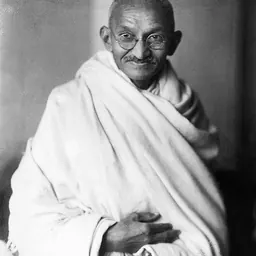
Tucker began drafting deeds to help his father at an early age, and also began reading the law books of Tom Watson, a lawyer who shared an office with the senior Tucker. Samuel attended Howard University whose chaplain Howard Thurman had become an outspoken proponent of Mahatma Gandhi's nonviolent resistance strategy and where Charles Houston established the nation's first program in civil rights law. He earned his undergraduate degree in 1933. Tucker soon qualified for the Virginia bar exam based on his studies in Watson's law office, but had to wait until June 1934, when he reached age 21, to begin practicing law. He was defended by a lawyer named Thomas Watson, who knew Tucker because he routinely ran errands for Watson and organized papers for him. Tucker was admitted to the state bar in 1934, ironically in the same courtroom where a jury had acquitted him of the trolley car incident which occurred in 1927, and began practicing in Alexandria. As a condition for their critical donation (which supplemented federal funds from the Public Works Administration and labor from the Works Progress Administration), the family of Kate Waller Barrett, insisted the City of Alexandria commit to funding the library's operating expenses. Thus monies from Black taxpayers were used to fund the library, although Tucker had previously shown that the library refused cards to Black prospective patrons.
On August 21, 1939, five young black men whom Tucker had recruited and instructed – William Evans, Otto L. Tucker, Edward Gaddis, Morris Murray, and Clarence Strange – entered the library one by one, requested applications for library cards and, when refused, each one took a book off the shelf and sat down in the reading room until they were removed by the police. Tucker had instructed the men to dress well, speak politely and offer no resistance to the police so as to minimize the chance of the men being found guilty of disorderly conduct or resisting arrest. Tucker defended the men in the ensuing legal actions, which resulted in the disorderly conduct charges against the protestors being dropped by city attorney Armistead Boothe (who would later become a key figure in desegregating Virginia schools), and in a branch library being established for blacks.
While the sit-in received a four-paragraph story in the local Alexandria Gazette newspaper and brief mention in the Washington Post, the Chicago Defender ran the story on its front page accompanied by a photograph of the arrest, noting that the protest was being viewed as a "test case" in Virginia. While Tucker succeeded in defending the sit-in participants, he was not satisfied with the separate but equal resolution of creating a new branch library, the Robert H. Robinson Library, for blacks. In a 1940 letter to the librarian of the whites-only library, Tucker stated that he would refuse to accept a card to the new blacks-only branch library in lieu of a card to be used at the existing library.
The photograph of the sit-in participants in jackets and ties calmly but resolutely being escorted from the library by uniformed police has itself become a learning aid in Alexandria. Periodically, the city has commemorated the sit-in and used it as a teaching opportunity about the Jim Crow segregation era, with students from Samuel W. Tucker Elementary donning similar attire, acting out the sit-in events and posing in recreations of the photograph.
Wartime service, then move to Emporia World War II interrupted his fledgling legal practice. Tucker entered the army and served in the 366th Infantry, which saw combat in Italy. Tucker rose to the rank of major.
As World War II ended, the Virginia State Conference of the National Association for the Advancement of Colored People had W. Lester Banks as executive secretary, Dr. Jesse M. Tinsley of Richmond and later E. B. Henderson of Falls Church as president, and Oliver W. Hill, Martin A. Martin and Spottswood Robinson as attorneys (the latter as liaison to the NAACP Legal Defense Fund). Tucker had returned to Alexandria but decided it had too many black lawyers, so he moved his law practice to Emporia, Virginia, in the heart of Southside Virginia.
There, Tucker was the only black lawyer. There were neither black judges nor black jurors. The white legal establishment in Greensville County often did not appreciate Tucker's criminal defense tactics, which attacked not only the evidence against his poor black clients, but racial imbalance in the system itself. For example, Tucker defended Jodie Bailey who, after drinking, stabbed the popular white proprietor of an automobile repair business during a charge dispute, and the man died. With NAACP help, Tucker established that in the previous three decades, no trial jury in Greensville County had included any black jurors. The Virginia Supreme Court overturned Bailey's conviction, but ordered a new trial, where he was convicted again.
Cooperating attorney for the NAACP under fire As the Civil Rights Movement developed during the postwar era, Tucker came to have a central role in its legal battles in Virginia. He ultimately filed suits in nearly 50 counties, including Alexandria and neighboring Arlington and Fairfax. However, U.S. Senator Harry F. Byrd had vowed Massive Resistance to school desegregation, and that fall a special session of the Virginia General Assembly adopted (and Governor Thomas B. Stanley signed) a package of new laws to maintain segregation and close desegregating schools, which came to be known as the "Stanley Plan." That collection of bills also contained seven relating to NAACP activities, and expanded the definitions of the common law legal ethics offenses of barratry, champerty and maintenance.
Legislative committees led by James M. Thomson and John B. Boatwright attempted to use those new laws against the NAACP and cooperating attorneys. The Boatwright Committee subpoenaed NAACP membership lists, and issued reports in November 1957 and November 1958 accusing NAACP attorneys (including Tucker) of violating these laws and urging the Virginia State Bar to prosecute them. The Boatwright Committee specifically accused Tucker of soliciting "not less than 10 cases involving litigation" and claimed that some of his plaintiffs were signed up under false pretenses or had not realized they were becoming involved in litigation. Tucker became the only NAACP attorney that the Virginia State Bar attempted to prosecute and disbar for these expanded offenses. That prosecution began in February 1960, and the NAACP sent attorney Robert Ming from Chicago to defend Tucker before the state court in Emporia. The case was repeatedly dismissed without prejudice (allowing prosecutors to re-file), particularly after Commonwealth's attorney Harold Townsend asserted that Tucker had no right to confront or even identify his accusers because this was a bar proceeding. The NAACP rallied to Tucker's defense in fighting what it viewed as an attempt to derail legal desegregation in Virginia. It was transferred to Sussex County and finally dismissed in early 1962, although the judges orally reprimanded Tucker for his handling of an estate case. Tucker also continued to fight against racial discrimination in jury selection.
In 1966, the NAACP Legal Defense and Educational Fund named Tucker "lawyer of the year". In 1967, for example, Tucker had about 150 civil rights cases before state and federal courts. Patience for "mere deliberate speed" had run out. The next day, Tucker appeared before U.S. District Judge Robert Merhige Jr. in Richmond with 40 files of desegregation cases he wanted reopened. He also appeared a year later in Washington, D.C., before the Senate Judiciary Committee to oppose the nomination to the Supreme Court of Judge Clement Haynesworth, who had often upheld school segregation.
Political activism and honors Tucker twice ran for U.S. Congress in the 4th District (17 southern Virginia counties including Greensville) against segregationist Watkins Abbitt, one of U.S. Senator Harry F. Byrd's key allies—in 1964 as an Independent and in 1968 as a Republican. Though Tucker knew he would never win more than 30% of the vote against the powerful incumbent, he believed the battles important to register the protests as well as aspirations of black voters in the district.
Death and legacy
Tucker died on October 19, 1990, survived by his wife Julia. They had no children. He is buried at Arlington National Cemetery, sharing a tombstone with his elder brother George.
In 1998, Emporia, Virginia, dedicated a monument in Tucker's honor, with an inscription calling him "an effective, unrelenting advocate for freedom, equality and human dignity – principles he loved – things that matter." In 2014, the city's library began collecting donations for the Samuel W. Tucker Fund, to expand a collection relating to civil rights history.
Also in 2000, the Richmond City Council voted to rename a bridge formerly named after Confederate General J. E. B. Stuart after Tucker, despite controversy.
In 2001, the Virginia State Bar's Young Lawyers Conference implemented the Oliver Hill/Samuel Tucker Institute, named for both Oliver Hill and Samuel Tucker. The institute seeks to reach future lawyers, in particular minority candidates, at an early age to provide them with exposure and opportunity to explore the legal profession they might not otherwise receive.
Since 2001, the Oliver W. Hill & Samuel W. Tucker Scholarship Committee has presented scholarships to deserving first year law students at Virginia law schools and Howard University.
Don’t just read it —
keep it.
Full-length biographies made to live with: read them, listen on the way to work, watch them tonight.
- E-book
- Audio
- Video
Instant download · yours to keep · every purchase keeps this site free
Important facts
People in Samuel Wilbert Tucker's life
Named in this biography and alive at the same time




Related people
Same field, nearest in time



Contemporaries
People whose lives overlapped Samuel Wilbert Tucker's




Frequently asked questions
Who was Samuel Wilbert Tucker?
American lawyer and civil rights activist (1913–1990)
When was Samuel Wilbert Tucker born?
Samuel Wilbert Tucker was born on 18 June 1913 in Alexandria.
When did Samuel Wilbert Tucker die?
Samuel Wilbert Tucker died on 19 October 1990 in Richmond.
What was Samuel Wilbert Tucker's occupation?
Samuel Wilbert Tucker was a lawyer and civil rights.
What nationality was Samuel Wilbert Tucker?
Samuel Wilbert Tucker was American.
Sources & further reading
· Wikipedia: Samuel Wilbert Tucker
· DBpedia: Samuel Wilbert Tucker
Cite this page
APA: Biography.guide. (2026). Samuel Wilbert Tucker. https://biography.guide/samuel-wilbert-tucker/
MLA: "Samuel Wilbert Tucker." Biography.guide, https://biography.guide/samuel-wilbert-tucker/.
Chicago: "Samuel Wilbert Tucker." Biography.guide. https://biography.guide/samuel-wilbert-tucker/.
Data last updated: 2026-09-22 · Spot an error? Report a correction.
Page generated 2026-09-27 05:22 UTC