
About William Paca
Lived 1740 – 1799 (aged 58). William Paca was an American and British politician, lawyer, judge, planter class and jurist.
William Paca ( or ; October 31, 1740 – October 13, 1799) was a Founding Father of the United States who was a signatory to the Continental Association and the United States Declaration of Independence. He was a Maryland delegate to the First Continental Congress and the Second Continental Congress, governor of Maryland, and a district judge of the United States District Court for the District of Maryland.
Early life
Born on October 31, 1740, in Abingdon, Province of Maryland, British America, Paca entered school at the Philadelphia Academy and Charity School in 1752, and went on to attend the College of Philadelphia (now the University of Pennsylvania), graduating in 1759 with a Bachelor of Arts degree. He was also to receive a Master of Arts degree from the same institution in 1762, though this required no further study, only that Paca request it and be in good standing. He also attended the Inner Temple in London and read law in 1761 the daughter of a prominent Maryland planter, and they were married on May 26, 1763. They had three children, though only their son John Philemon survived into adulthood. He was governor of Maryland from 1782 to 1785. He was a delegate to the Maryland State Convention of 1788, to vote whether Maryland should ratify the proposed Constitution of the United States.
Death and legacy
Paca's judicial service terminated on October 13, 1799, due to his death at his estate of Wye River, in Queen Anne's County, Maryland and was interred in a family cemetery on the estate. He bequeathed to his heirs more than a hundred slaves.
Paca was admitted as an honorary member of The Society of the Cincinnati in the state of Maryland in 1783. "The resolution conferring the honor, adopted November 22, 1783, reads in part: ... In consideration of the abilities, merit, patriotism of His Excellency, Governor Paca, this society direct that Secretary-General Williams wait on His Excellency and inform him that this society do themselves the honor to consider him as an honorary member." He later served as the vice president of the Maryland Society from 1784-1787. Unlike hereditary members, honorary members are not eligible to be represented by a living descendant.
His Annapolis home, the Paca House and Garden, was added to the National Register of Historic Places and designated a National Historic Landmark in 1971. The William Paca Club in New Providence, New Jersey, is named in his honor. The club cites the fact that Paca was the only Italian-American besides Caesar Rodney to sign the Declaration of Independence as the reason for bestowing him this honor. Paca-Carroll House at St. John's College is named for Paca and fellow signer of the Declaration of Independence, Charles Carroll.
At least four schools are named in honor of Paca: William Paca Elementary School in Baltimore City, Maryland, William Paca Elementary School in Landover, Maryland, William Paca Elementary School in New York City, and William Paca Middle School in Mastic Beach, New York. In Abingdon, in 2022, Harford County renamed the school that bears his name, due to William Paca's slave-owning past.
Alleged Italian ancestry
Paca has been described as being of Italian ancestry from Abruzzo. According to Stanley South, "he rumor that the name was Italian came from a remark made in 1911 by James Cardinal Gibbons of Baltimore, who commented that he thought a relationship existed between Paca and the Italian family Pecci". In a July 18, 1937, letter to the New York Times, a self-described descendant of Paca claimed:The ancestors of William Paca were of Italian and English origin. The name is said to have originally been spelled Pacci [sic]. However, in an interview with Giovanni Schiavo, the letter writer apparently attributed the suggestion that the name was Pecci to Cardinal Gibbons. Schiavo also reported that Paca mentioned Pope Leo XIII, whose surname was Pecci, during the interview. Neither "Pecci" nor "Pacci" (nor "Pacca") are attested, but that could be attributed to the fact that the Italian spelling of the name would have simply been difficult or unfamiliar to the English-speaking clerks of the time.
If the Paca family did have Anglo-Italian origins, they were distant. William Paca's father John Paca was born in Colonial Maryland, as was his grandfather Aquila Paca . His great-grandfather Robert Paca was born in England in 1632, arrived in Maryland by 1651 and may also have gone by the surname "Peaker."
Don’t just read it —
keep it.
Full-length biographies made to live with: read them, listen on the way to work, watch them tonight.
- E-book
- Audio
- Video
Instant download · yours to keep · every purchase keeps this site free
Important facts
People in William Paca's life
Named in this biography and alive at the same time
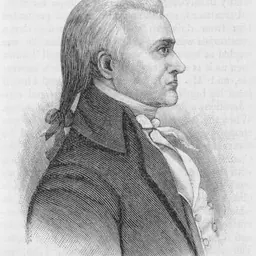
Related people
Same field, nearest in time


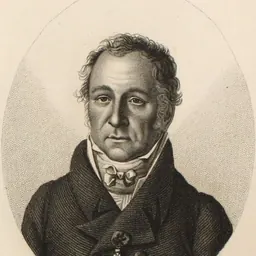

Contemporaries
People whose lives overlapped William Paca's

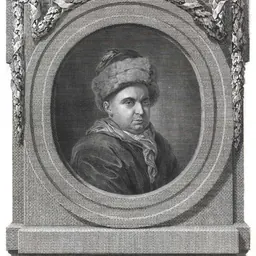




Frequently asked questions
Who was William Paca?
American judge (1740–1799)
When was William Paca born?
William Paca was born on 31 October 1740 in Abingdon-on-Thames, Abingdon.
When did William Paca die?
William Paca died on 23 October 1799 in Queen Anne's County.
What was William Paca's occupation?
William Paca was a politician, lawyer, judge, planter class and jurist.
What nationality was William Paca?
William Paca was American and British.
Sources & further reading
Cite this page
APA: Biography.guide. (2026). William Paca. https://biography.guide/william-paca/
MLA: "William Paca." Biography.guide, https://biography.guide/william-paca/.
Chicago: "William Paca." Biography.guide. https://biography.guide/william-paca/.
Data last updated: 2026-09-26 · Spot an error? Report a correction.
Page generated 2026-09-27 05:15 UTC