
About William Nicholas
Lived 1785 – 1812 (aged 27). William Nicholas was a British military personnel.
William Nicholas (12 December 1785 – 14 April 1812) was an English officer and military engineer in the British Army. From 1806 to 1812, he was engaged in eleven sieges and battles in Italy, Egypt, and Spain, and died of wounds.
William, third son of Robert Nicholas, by Charlotte, , was born at Ashton Keynes, Wiltshire, in 1785. Educated at a private school at Hackney, and admitted to the Royal Military Academy, Woolwich, in 1799, he obtained a commission in the Royal Engineers in 1801, became first lieutenant in 1802, and worked on the naval defences at Dover until 1805.
In 1806, he followed the expedition to Sicily, fought at Maida, took part in the capture of Scylla, and was promoted second captain. In 1807, in the Egyptian campaign, he distinguished himself at Rosetta by assisting to carry the wounded General Meade to safety. In 1808, he took part in the defence of Scylla, and was mentioned in despatches. He also made a report on the western country of Sicily which was highly approved. In 1809, he was sent on a mission to the Spanish army in Spain, and served with General Blake's army at Alcanitz. He went to England at the end of 1809 to regain his health.
In 1810, he was sent to Cádiz as second engineer officer of the defence, and on the death of Major Lefebure at Matagorda he succeeded to the command of the Engineers at Cádiz. He distinguished himself at Barrosa in 1811, and was publicly thanked on the field by Sir Thomas Graham. In 1812, at Badajoz, he made considerable efforts to move men into the Santa Maria breach. Leading at least two charges, he was four times wounded. He was shot again leading a third charge and had to be dragged from the field to receive treatment. He died eight days later, with the brevet rank of major conferred upon him.
Early life
William Nicholas was born at Ashton Keynes, near Cricklade, in Wiltshire, on 12 December 1785. He was the third son of Robert Nicholas, Esquire, at one time Member of Parliament for Cricklade, and many years chairman of the board of excise, by Charlotte, sixth daughter of Admiral Sir Thomas Frankland, Baronet. On his father's side, he was collaterally related to Sir Edward Nicholas, principal secretary of state to Charles I and Charles II; and on his mother's was lineally descended from Cromwell.
Nicholas was schooled at Mr. Newcome's establishment at Hackney, and was admitted, upon the nomination of the Marquess Cornwallis, a cadet of the Royal Military Academy, Woolwich at the end of 1799. He describes it in a letter from Monteleone in Calabria, 11 July 1806:
He took part in the capture of the fortress of Scylla in July 1806. Of the siege he wrote, "nobody can judge of the fatigue who was not experienced it … at first starting, I was 20 hours without moving off the batteries, beginning the 2d p. m. one day, working all night and till 12 next day; up at 3 next morning, working till 3 in the afternoon, and so on." Soon afterwards he was selected by General Sir John Moore, to accompany him and Lieutenant-colonel Banbury on a tour of Sicily. He was promoted second captain on 25 August 1806.
Egypt
On his return from Sicily he accompanied the expedition to Egypt in 1807, In a latter dated 31 April Nicholas describes the fighting, although he does not mention the incident which was remembered years later by General Robert Meade: when Meade was dangerously wounded in the eye, Nicholas, assisted by Captain James, bore him in their arms out of the bloodshed in the streets of Rosetta, and placed him on the camel which carried him to Alexandria. In the general retreat towards the sea and Alexandria, Nicholas notes how those left behind were "barbarously butchered by the Turks, whose cavalry came out and deliberately cut off the heads of our poor helpless comrades."
Meanwhile, in Alexandria, another detachment of the army, rather stronger, was then sent to renew the attempt; the force was ordered to proceed with a strong force of artillery, to destroy the town with "shot and shell". It was not Nicholas's turn to accompany this party, but he specially applied to be sent, on the ground of knowing the place, and so was permitted to go.
Return to Italy
Nicholas was seriously ill on leaving Alexandria, from an injury received on his left breast by jumping into shallow water head first and striking upon a hidden rock. His breathing and lungs were affected, and his surgeon, Mr. Fitzpatrick, who had attended him for nearly three years, dreaded a rapid decline, as he could not raise his voice above a low whisper, and was so weak that the least irritation threw him into fits. The heat of the climate had previously much weakened him, but during the voyage from Egypt to Sicily, by care and attention he recovered.
He was with Colonel Robertson at the attack of Bagnara, where the French voltigeurs of the 22nd or 23rd Light Infantry suffered heavy casualties. For this action he was again favourably mentioned in the letter of service to General Sherbrooke, on which he observes,
He made a tour of the principal towns, and the country in the western part of, Sicily, and his report was forwarded by General Sherbrooke to the secretary of state for the war department. This report was at the time highly approved, and established his reputation.
Spain
In the following year, 1809, he was sent by Sir John Stuart on a very confidential mission to the Spanish army in Spain. On 20 May, he joined General Joaquín Blake's army at Alcanitz in Arragon, and did good service in the battle there. He went back to Sicily, and not long after joined the British army at Ischia, on the capture of the island. He went to England at the end of 1809 to recover health, as he still suffered from the blow in the chest he had received in the fighting at Alexandria. He was succeeded in the command by Captain J. F. Birch. Captain Burgoyne makes the following allusion in his journal to the death of Lefebure:
At La Isla, in October 1810, Nicholas received an order to take charge of the Engineer department during the absence of Captain Birch, who had gone to Cádiz to recover his health. His exertions for the defence of the place received the approbation of Sir Thomas Graham and Sir Henry Wellesley. Whilst reconnoitring the marshy stations, he was frequently obliged to strip, and swim from bank to bank, through the dykes, and was often up to his knees in mud and water.
In the beginning of 1811, he received intelligence of the death of his next brother, Lieutenant Thomas Nicholas, wrecked in the Satellite, at night, off the coast of France in December 1810; his elder brother, Captain Robert Nicholas, had been wrecked off St. Domingo in the Lark during a white squall in 1809. In March 1811, he took part in the Battle of Barrosa, and with Captain Birch was publicly thanked on the battlefield by Graham, who, holding out his hands to them, said: "There are no two officers in the army to whom I am more indebted than to you two; you have shown yourselves as fine fellows in the field as at your redoubts."
Death
On 13 February 1812, Nicholas left Cádiz for Elvas, and took part in the third and last Siege of Badajoz. On the night before the siege of 6 April 1812, having volunteered to reconnoitre, he stripped, and crossed the artificial lake to the east of Badajoz, known as the inundation, and ascertained the safest passage for the column. To him was confided the task of leading the troops of the advance to the great breach. Nicholas and Lieutenant Emmett worked to lead men of the 4th Division into the Santa Maria breach amid the chaos and confusion, He led at least two rushes with small numbers of men, trying to reach the top, but was each time repulsed. Then, on seeing Lieutenant-colonel Macleod and Captain James fall, and hearing the soldiers ask who was to lead them, On the same day Lieutenant T. M. Pitts wrote:
Nicholas died on 14 April, the eighth day after his wounds. Sir Thomas Graham wrote that "no soldier ever distinguished himself more", and his "heroic conduct" could "never be forgotten". Sir Richard Fletcher, the commanding Royal Engineer, placed a monumental stone, with an inscription, over his grave. He had been brevetted major on the receipt of the favourable despatch of the Marquis of Wellesley, but he did not live to know it.
Of the officers of the Royal Engineers who led the storming columns at Badajos three were killed and three wounded; the former being Captain Nicholas and Lieutenants Edward de Salaberry and Thomas Lascelles; those wounded were Captain John Williams, Lieutenants Anthony Emmett and Melhuish.
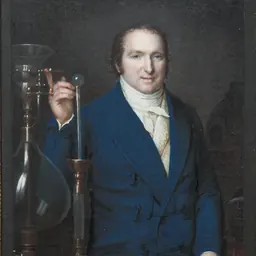
Likenesses Lieutenant B. Pymm made a drawing of Nicholas at Cádiz in 1812, engraved by E. Scriven of London and printed with an obituary in the Royal Military Chronicle in February 1813, in which the sitter is shown dressed in the style of uniform worn by officers of the Royal Engineers at that period. In around 1814 the enamel painter Henry Bone also made a pen and ink drawing, after Pymm's original, which is now in the National Portrait Gallery, London.
Don’t just read it —
keep it.
Full-length biographies made to live with: read them, listen on the way to work, watch them tonight.
- E-book
- Audio
- Video
Instant download · yours to keep · every purchase keeps this site free
Important facts
People in William Nicholas's life
Named in this biography and alive at the same time



Related people
Same field, nearest in time


Contemporaries
People whose lives overlapped William Nicholas's


Frequently asked questions
Who was William Nicholas?
British army officer (1785–1812)
When was William Nicholas born?
William Nicholas was born on 17 January 1785 in Ashton Keynes.
When did William Nicholas die?
William Nicholas died on 17 January 1812 in Badajoz city.
What was William Nicholas's occupation?
William Nicholas was a military personnel.
What nationality was William Nicholas?
William Nicholas was British.
Sources & further reading
· DBpedia: William Nicholas (officer)
Cite this page
APA: Biography.guide. (2026). William Nicholas. https://biography.guide/william-nicholas/
MLA: "William Nicholas." Biography.guide, https://biography.guide/william-nicholas/.
Chicago: "William Nicholas." Biography.guide. https://biography.guide/william-nicholas/.
Data last updated: 2026-09-25 · Spot an error? Report a correction.
Page generated 2026-09-27 05:13 UTC