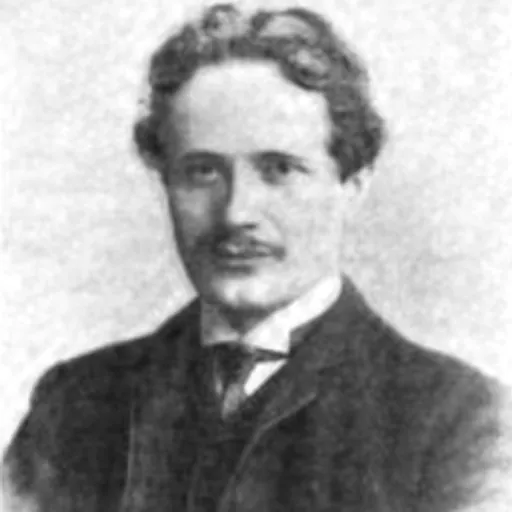
About William Maxwell
Lived 1860 – 1928 (aged 67–68). William Maxwell was a journalist and writer.
Sir William Maxwell (1860 – 23 December 1928) was a British journalist, soldier, writer and civil servant.
Early life Maxwell was born in 1860 in Workington, Cumberland of Irish-born parents William and Mary Maxwell. His father was an insurance agent. Maxwell was described in 1881 as a "Reporter on Newspaper".
He married Clara Hardy, daughter of Adam Hall Hardy, of Buttershaw, Bradford, on 15 June 1886, at St Pauls Church, Buttershaw.
War correspondent Western military attachés and war correspondents with the Japanese forces after the Battle of Shaho (1904): 1. Robert Collins; 2. David Fraser; 3. Capt. Francois Dhani; 4. Capt. James Jardine; 5. Frederick McKenzie; 6. Edward Knight; 7. Charles Victor-Thomas; 8. Oscar Davis; 9. William Maxwell; 10. Robert MacHugh; 11. William Dinwiddie; 12. Frederick Palmer; 13. Capt. Berkeley Vincent; 14. John Bass; 15. Martin Donohoe; 16. Capt. ____; 17. Capt. Carl von Hoffman; 18. ____; 19. ____; 20. ____; 21. Gen. Sir Ian Hamilton; 22. ____; 23. ____; 24. ____; 25. ____. Maxwell was a war correspondent for the London Standard, covering the Anglo-Egyptian victory at Battle of Omdurman (1898).
He forwarded reports to London from South Africa throughout the Second Boer War (1899–1902). He survived enteric fever and reported the Siege of Ladysmith. He followed Lord Roberts' campaign from the capture of Bloemfontein through battles at Lydenberg and the Komatipoort.
Prior to the outbreak of the Great War in Europe, he covered the Balkan War (1912).
During the First World War, he reported the First Battle of the Marne (September 1914) for the London Daily Telegraph. Shortly afterwards, he enlisted with the rank of captain and assignment to the general staff.
Press correspondents at Gallipoli were required to submit all their writing to Captain William Maxwell, whose approval was necessary under regulations drawn up by and enforced by the British Army. Although many later questioned the level of censorship at Gallipoli, most accepted the censorship as an essential element of wartime reporting. Gallipoli's geographic isolation made Maxwell's task was made easier by the isolation of the area that he oversaw. The Gallipoli campaign was fought on the edge of a virtually uninhabited mountain range. The only way to cable messages from Gallipoli was through the official channels.
Later life After the war Maxwell became a section chief in the Secret Service. He died at "Longfield" his home in Wraysbury on 23 December 1928. 1906 — From Yalu to Port Arthur, London: Hutchinson & Co. OCLC 2010584 1921 — What's Wrong with Your Work?, New York: Trade Press Feature Service, Inc.
Honours and awards 1906 — Order of the Rising Sun, Japan. 1919 – Knight Commander of the Order of the British Empire
Don’t just read it —
keep it.
Full-length biographies made to live with: read them, listen on the way to work, watch them tonight.
- E-book
- Audio
- Video
Instant download · yours to keep · every purchase keeps this site free
Important facts
People in William Maxwell's life
Named in this biography and alive at the same time







Related people
Same field, nearest in time

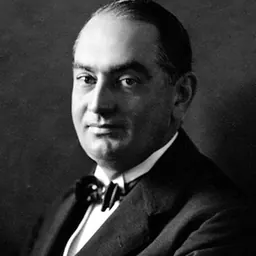
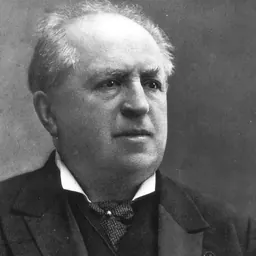
Contemporaries
People whose lives overlapped William Maxwell's
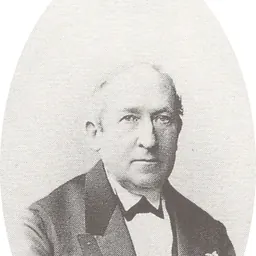

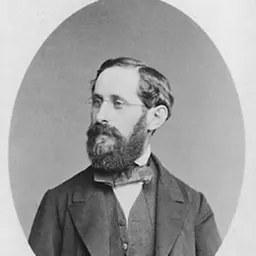

Frequently asked questions
Who was William Maxwell?
British journalist, soldier, writer and civil servant
When was William Maxwell born?
William Maxwell was born in 1860 in Workington.
When did William Maxwell die?
William Maxwell died in 1928.
What was William Maxwell's occupation?
William Maxwell was a journalist and writer.
Sources & further reading
· DBpedia: William Maxwell (journalist)
Cite this page
APA: Biography.guide. (2026). William Maxwell. https://biography.guide/william-maxwell-journalist/
MLA: "William Maxwell." Biography.guide, https://biography.guide/william-maxwell-journalist/.
Chicago: "William Maxwell." Biography.guide. https://biography.guide/william-maxwell-journalist/.
Data last updated: 2026-09-22 · Spot an error? Report a correction.
Portrait: Wikimedia Commons · author & licence
Page generated 2026-09-27 05:04 UTC