
About William Matthew Scott
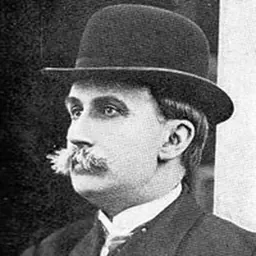
Lived 1893 – 1964 (aged 70). William Matthew Scott was a British writer, novelist, playwright and caricaturist.
William Matthew Scott (30 September 1893 – 7 May 1964), pen name Will Scott, was a British writer of stories and books for adults and children, published from 1920 to 1965. Towards the end of his life he was best known for The Cherrys series, written for children and published between 1952 and 1965. His mother was Eliza Anne (or Eliza Annie) Scott née Hibbard, formerly a dressmaker. The tannery would have been odiferous during smog or to houses downwind of it; at 128 Camp Road, Camp Road was a terrace which fronted onto the pavement, with no gardens.
William Matthew Scott was born at 128 Camp Road (now Oatland Lane) Camp Road was demolished in the 1960s. His place of birth was next to the poor Jewish immigrant area of tailors and shoemakers, called the Leylands, in the All Souls district of Leeds. At least until 1911 Scott lived in the working-class areas of Little London and Woodhouse, next to Meanwood Beck. All the addresses at which Scott lived in his youth were demolished in the early 1960s slum clearances, but many of these buildings were known to be repairable, so that "slum" was often a misnomer. in the All Souls parish of north Leeds, Yorkshire, and only four streets away from the Scotts' previous home in Clayfield Street. It was a four-room corner house in a back-to-back row on the corner with Cambridge Road. In the 1911 Census he was aged 17 years, and he and his family had moved away from the tannery. He had no siblings and he was a lithographic artist apprentice, living with his parents in a back-to-back house at 49 Ganton Mount at Woodhouse, Leeds; the street is now rebuilt as modern houses. In 1911 his father was a journeyman joiner, and his mother a housewife. The 1911 census enumerator recorded that the house had eight rooms instead of the regular back-to-back four rooms, so number 49 must have been a larger corner house. born at 1 Highfield Terrace, Golders Green when Scott described himself as a black and white artist. From 1929 to 1932 he was living at Crown Hill Cottage, West Cliff Drive. at 125 Grand Drive. However he contributed to the life of Herne Bay by directing its amateur dramatic society The Mask Players from 1930 to 1940. Steventon and Ford suggest that The Mask includes a veiled description of Scott, thus: "Thirty-five ... Clean-shaven. Horn-rimmed glasses. A successful author and poseur. A weakness for the limelight". However the latter "weakness" was his eagerness to sit in the wings in theatres and caricature the players, while at the same time shunning any spotlight on his own person. However the idyll of a holiday town far from London was interrupted by the Second World War. He was appointed as a fire point guard for his street, High View Avenue, and he wrote later that the town began to empty as residents left to serve their country. The Thoresby Society has commented that, "his only memorial is his work". On this occasion the entertainment consisted of variety sketches and turns, including and accompanied by "a breezy pianoforte selection". It also included a rare speech by Scott, who was known to "shun the limelight". for example The Mask Players Girls performed a variety concert in aid of a wartime charity at St Johns Hall on 31 October 1940, charging 6d entry fee. By 1945 The Mask Players had disbanded due to war operations, and the group was succeeded by Theatrecraft. At the same time, Scott was a member of a Whitstable amateur troupe, the Lindley Players. One of his short stories published in The Strand was "Not Guilty". In his introduction to this story, Jack Adrian says:
"Scott broke into The Strand in 1934, thereafter selling the magazine nearly thirty stories over the next dozen years, most of which display the confident precision of the craftsman; not a few, like "Not Guilty", have an amoral tinge to them which lifts them wholly out of the ruck". The short, short stories tend to rely for effect on the audience's expectation being trumped by a clever twist at the end. Although the short stories are long out of print, one by Will Scott was reprinted in 1992, in The Folio Anthology of Humour, this being a reprint of a P.G. Wodehouse's A Century of Humour collections of 1935 and 1936. For John Bull, Scott devised a short story called Thirty Years Later (1940), about former lovers who meet again after thirty years, a theme not unlike that of the 1939 wartime song, We'll Meet Again, even though neither the story nor the song directly references war.
Passing Show (The) Magazine Where Men Are Men (1926) is a humorous tale about a henpecked husband. The Fingerprint (1926) is a detective story about an unsolved crime where the evidence consists of unusually large thumbprints. The Ten Year Smile (1927) is a murder mystery in which a felon explains why he is pleased with himself. Scott devised a series of train-journey mysteries for this publisher, seeing them in print in 1938. The plots are set on the 9.15 a.m. commuter train of the 1930s which "rolls its way up to London, as it has done for years ... it rolls through the blossoming orchards in the springtime, the harvests in the autumn; in the summer through the ripening fields; in the winter, for part of the time at least, in the dark". A small part of this idyll can still be glimpsed occasionally from the Herne Bay–Victoria train window. The British Library holds a reference copy.
Plays and films Scott wrote comedies and thrillers for the stage. It has been said that "his real love was the theatre". The play was revived onstage and made into two films: Creeping Shadows (1931), and The Limping Man (1936). The 1931 film was promoted as "Even more thrilling than Bram Stoker and Edgar Alan Poe", and as "another Dracula". The play went on tour and then debuted in London on Monday 19 January 1931 at the Royalty Theatre, starring Franklin Dyall, Eve Gray, Miriam Lewes and Arthur Hardy. It was copyrighted in the same year as a play in three acts in the United States. The Times review was printed the following day. The Daily Express review said: "Will Scott, an artist and author, has written in The Limping Man a comedy thriller which is far above the average if only for the reason that it contains at least a score of very amusing lines. There is a valuable Rembrandt, a Henry VIII mansion, mysterious footsteps, a bell that rings by itself, a suspicious-looking butler, Americans, a man murdered at the crossroads – all sorts of ingredients that would mix up into a stage mystery. The solution is by no means an obvious one. Franklin Dyall is a modern man of mystery – a being who wanders all over the globe solving crimes that baffle every one else. Arthur Hardy, who has been acting in this play on tour for some months, has some admirable lines as a fashionable physician . . . If The Limping Man had been produced two years ago I should have promised it a long run".
In 1935 The Limping Man was at the Phoenix Theatre; by 1936 the play was at the Saville Theatre, and produced by Arthur Hardy.
His Wife's Mother, filmed 1932
This stage play was filmed as His Wife's Mother (1932). The plot is a comedy in which a man pretends to be his own double when he is seen with an actress by his mother-in-law. It was an adaptation of one of his plays, The Queer Fish. an atmospheric thriller in which a series of murders occurs in a foggy London square. However the plot of the film may differ from the original play, which is a comedy about crooks with jewellery hidden in an umbrella. Scott always kept a low profile at the advance screenings, sometimes putting himself at disadvantage thereby. On one occasion at the Apollo Theatre, Scott was challenged by the theatre manager to give his identity backstage and mid-performance. Lawrence Noble, who took part in the pageant in 1937, recalled in 1998: "He was a shy and modest man. He wrote the pageant script, directed, assembled the cast and humoured and persuaded all the disparate elements. Will Scott loved Herne Bay".
Novels
According to Steventon and Ford (2013), some reviewers compared Scott's fiction with the works of Saki, G. K. Chesterton and O. Henry. The book retailed at 7s 6d in the UK, and The Sunday Times review of May 1925 said: "The reader will be unusually thrilled by Mr Scott's brilliantly conceived story – really a little masterpiece of ingenuity". This is the first of three novels by Scott in which the hero is Disher:
Shadows (1928)
The 1928 Philadelphia edition is dedicated to "my friend W.A. Williamson, Skipper of the Good Ship Passing Show of London, who, also, thinks an Adventure in the Armchair is worth two in the Bush". Five editions were published 1928–1931 in English and German. The British Library holds two reference copies. The 1928 dust jacket is illustrated in art deco style. It shows a bright orange silhouette of the haunted house on a hill against a grey sky with full moon, and below it are black shadows of trees on the base of the hill. At the top and bottom of this picture it says: "Disher solves another mystery / Shadows / by Will Scott / author of The Black Stamp". The dustjacket illustrates the fictional setting of the book at a grand and ancient house on a hill, called Tinker's Revel,
The Mask (1929)
Three editions were published 1929–1931 in English and German. In this whodunit novel, private detective Will Disher is described as suave, plump, astute and bored, but Scotland Yard still asks him for help in solving the mystery. The plot begins with the masked-murderer scenario, this one being a toff in evening dress. Much of the plot takes place in an English country house, and some of it is set in London, but the general setting is the marshland just south of Herne Bay and Birchington in Kent. Real local place names such as Maypole, Whitstable and Stodmarsh are transmuted into fictional places with names such as the Hope Poles Inn, Winstonlea and Stodmere Farm, and a chase through countryside at night evokes the true atmosphere of the marshes around the rivers Stour and Wantsum with their dykes or banked drainage trenches, twisting lanes and dark woods. In 1925 Scott and his publisher Cassell were successfully sued by a reader who identified himself with a character and place in the Black Stamp novel. After that, Scott became more careful in his use of local names and places. The British Library holds no reference copy of this novel, but it does hold an American anthology of detective stories called Clues.
The Man (1930) A novel of 287 pages, published by Stanley Paul of London, 1930. The British Library holds a reference copy.
Children's books: The Cherrys series
Scott had three main motives for beginning to write his first children's books in 1950. Although he was still publishing short stories, some of his target magazines had closed. He had become a grandfather, but there was a third motive. He said he was "driven to write children's books by my grandchildren, but ... I wrote them to please myself. I wrote the kind of children's books that I knew I would like to read". Numbers 1–12 in the series were illustrated by Lilian Buchanan who also illustrated some of Enid Blyton's children's books. Numbers 1–12 in the series contain various pictorial maps of the stories' fictional settings, for example Market Cray and River House, on the end papers. The maps are based upon sketches and ideas by Scott, and they were realised by Lilian Buchanan. They contain some details which have similarities with the layout of Herne Bay. Judith Ford (2013) describes Captain Cherry thus: This book was published in French by Editions G. P. in 1962 under the title La famille Cherry de la maison sur la Riviere, translated by Genevieve Meker and illustrated in colour by Pierre Le Guen. Happenings: (1) Their first happening (Orienteering in setting inspired by Dawes Folly at East Blean Woods near Dargate, Kent); (2) Through hostile territory (Escaping under cover, set at fictional St Mary Cray); (3) Treasure Island (bivouacking up a tree, set in St Mary Cray, mentions 1951 Great Exhibition); (4) If only we’re in time! (Car rally quiz, fictional St Dennis Bay setting inspired by Minnis Bay at Birchington-on-Sea, first Black Jack story); (5) Nothing at all to do (sending messages via animals, set in St Mary Cray); (6) Find me who can! (First manhunt for Black Jack, set in St Mary Cray, dares); (7) He must be somebody (second manhunt for Black Jack, set in St Mary Cray, keeping covert watch); (8) Black Jack strikes again! (third manhunt for Black Jack, set in St Mary Cray, treasure map); (9) Clue upon clue (fourth manhunt for Black Jack, set in St Mary Cray, fingerprints); Unmasked! (final instalment of Black Jack story, set in St Mary Cray, disguises). This book was published by American Book Company in 1962 in French under the title Les Cherry Et Compagnie; illustrated by Pierre Le Guen. Happenings: (1) The games they get up to (the game of left-right, set in fictional St Mary Cray); (2) Man in armour (description of gale inspired by North Sea flood of 1953); (3) Adventure on See-Saw Mountain (polar conditions and relief expedition, set in St Mary Cray); (4) Disappearing trick (first instalment of Black Jack Junior story, set in St Mary Cray, setting false trails); (5) Black Jack Junior, Pirate (second instalment of Black Jack Junior story, set in St Mary Cray, boat-chase) (6) Kidnapped (pirates, set in St Mary Cray); (7) Mystery of See-Saw Mountain (mountain-climbing, set in St Mary Cray); (8) The Empty House (night-searches, set in St Mary Cray); (9) Little clue, big clue (intruder identified, set in St Mary Cray); (10) Biggest clue of all (blindfolded Mystery tour). It was published in French in 1963 by Rouge et Or Dauphine as Les Cherry au Bord de la Mer, illustrated by Pierre Le Guen. In 1970 it was published by Estudios Cor in Portuguese as Uma aventura na praia (A Familia Cherry). Happenings: The message in the bottle; The watch on the coast (coastguarding); On the trail of the Oozlum (reference to Oozlum bird, description of wanted man and manhunt, coastguarding); Alone on a desert isle (shipwreck and rescue); Follow my leader (how the Cherrys met the Pringles, inspired by the Woozle story by A. A. Milne, i.e. people tracking each other in a circuit); Look out for Smiths! (avoiding an imaginary fifth column made up of people called Smith); The slap-dash carnival (inspired by the 1950s Herne Bay Carnival. Happenings: The great reception (the children lay on a reception committee greeting); Let it rain! (snakes and ladders game on the staircase); Mr. Pringle has a go (attempt by Pringle to create a happening); The Crocotosh (the children hide under a raincoat); Early birds (following a newspaper trail); The other house (the first Littles and Bigs story - the children leave a clue to a prize for the adults); The torn treasure chart (the Bigs and Littles each receive two-quarters of the chart - each must fight for the other two-quarters to find the treasure); The battle of Bigs And Littles (Bigs and Littles creep up on each other to see the pieces of chart); Let them have it! (Roy gives the Littles' pieces of chart to the Bigs); I know where! (the race to the buried treasure). Happenings: The get-on-with-its; The great cross-over; The well-I-never place; The seaside at home; The peculiar periscope; The famous think; The big idea; The big mystery; The big work; The big day. There could be literary references in these subtitles to ancient ideas of transition and perception. It was published in French in 1963 by Rouge et Or Dauphine as Les Cherry et la Double Fleche, illustrated by Pierre Le Guen. Happenings: This way to anywhere; The double arrow; Adventures of Jimmy's party; Adventures of Joe's party; Again and again; Roy in his own; Public notice; After him!; Strange disappearance of Mr Wilks; This way to the Bang Kwit. Happenings: The wreck; The castaways; The cave; Exploring the jungle; Mountain rescue; The mysterious footprint; Yes, it's pirates!; A sail! A sail!; But where can it be?; Buried treasure. Happenings: Mr Wilks cries 'Look!’; Mr. Nobody; Nothing but mysteries; The standstill race; The Society For Finding Things Out; Old sailor from over the water; Away they go; Smart work; The same-sounding words; The end of the trail. Happenings: Keep your eyes open; The mystery of Mr Wotherspoon; The mystery of the pirate chief; Spik no English!; The great seaweed mystery; The writing in the sand; The mystery of the Jumping Jacks; The mystery of Neptune Island; Most mysterious of all; It's a mystery! Happenings: A very peculiar affair; He must be watched; Red hot news!; The next move; At it again; Caught!; What a surprise!; Then who is it?; I know who it is; Oh no, it isn't! Happenings: The day that woke up; Missing!; The Home-made Police-Force; Hot on the trail; The footprint again; The light in the window; That third clue; Clue all the time; Action!; Portrait of the Queen. This story is a follow-my-leader tracking game. The pictorial map on the endpapers has some reference to Winnie-the-Pooh and the Woozle story in which Pooh and Piglet are following their own footprints. Happenings: Where has he got to?; To the rescue!; Strange tale from a stranger; Which way now?; Here's your jungle!; Escape!; False trail; All meet at One-Tree Hill; Lost in the fog; Rescue! The British Library holds a reference copy. In the winter of 1962–1963 there was an unusually thick snowfall and the surface of the sea froze along the shoreline close to Scott's house, Windermere, on Westcliff at Herne Bay. It is possible that this book was a response to that winter. Happenings: Nothing but nothing; Enter Mr. Misery; The start of a rumour; The search from end to end; You'd never guess!; "Keep him out of sight!"; Tell-tale trail; If only it works; Vanished!; Away again. The British Library holds a reference copy. Happenings: First appearance of the blue balloon; What the littles thought; What the bigs thought; But what did the man think?; Watched; Where is Augustus?; The amazing truth; The light in the window; The night watch; Last appearance of the blue balloon. The British Library holds a reference copy. It is set in a recognisable version of Herne Bay, Kent and Hampton-on-Sea. These are given the fictional names of Sandilands and West Bay respectively, and bear no resemblance to Sandilands in Lincolnshire. Herne Bay's clock tower and adjoining public gardens appear in the story, as do Hampton-on-Sea's jetty, concrete shelter, the beach and the boating lake as it was in 1955. Swalecliffe Avenue appears in the story under the name of Matchbox Lane, and as of 2011 the area of scrub mentioned in the book still exists. Pleasant Cottage (later called Hampton Bungalow) in Swalecliffe Avenue appears in the story as Dilly Dally cottage in Matchbox Lane. Mary Willett's drawings within the book bear little or no resemblance to Herne Bay or Hampton-on-Sea, but the hand-drawn map at the end of the book – possibly by Will Scott – is clearly derived from OS maps of Hampton-on-Sea. The endpapers-drawing shows an idealised Swalecliffe Avenue. and the caretaker at Hampton Primary School was Mr Stickels. The boots are possibly a reference to the 1931 monologue Brahn Boots by Stanley Holloway, which was still regularly played on BBC Home Service radio in the 1950s. The song's lyrics describe the apparent low-class taste of a man clad in brown boots, but he is too modest to say that he has given his good black boots away to the poor; it is really a parable on the subject of unquestioning snobbery. An obvious clue not followed by the children is that the thief initially enters the shop asking for the previous Wednesday's newspaper. The book's publication in 1955 and the timing of the plot during the June half-term holiday possibly indicate the Children and Young Persons (Harmful Publications) Act of 6 June 1955. If this is so, then the disagreeable man could be taken to be the author's characterisation of D. C. Thomson & Co., or its cartoonist Bill Holroyd, who published children's cartoons such as Jack Silver and His Dog Black. This cartoon was later lampooned by Viz as Jack Black and his Dog Silver. It is perhaps also significant in this context that the publication of Half-Term Trail in 1955 follows press commentary on the first few books of The Cherrys series, and that Scott did not like to be compared with Enid Blyton. In Will Scott's story, the children pursue the brown-booted man unquestioningly, and they are described thus: ". . . and if you'd done something you shouldn't have done they were the last people you'd have liked to have looking at you. They looked really dangerous". The children douse the brown-booted man with red paint at the end; this could be understood as a symbolic killing as the paint is blood-coloured. We never find out what has driven him to steal or why he is bad-tempered. This aspect suggests that the apparently simple children's tale has a moral depth which is possibly intended to undermine its own plot and thus to bring into question the moral basis of some other children's detective tales of the era. The British Library holds a reference copy. The book contains 13 coloured and black and white illustrations in the text, one frontispiece and a cover illustration, all by C. Clixby Watson, plus 4 coloured and black and white maps by Henry West and others. The dust-jacket summary says: "A wise old night-watchman convinced Dick, Mick and Henry that any unvisited place is uncharted territory – and that there was no need to climb Everest or track through dark jungles to enjoy the thrill of discovery. In fact, they found the tracing of an unnamed river to its source a most exciting adventure". The story is set near Newbury, Berkshire. Chapters: 1. Somewhere – But Where? 2. The End of Somewhere; 3. The Beginning of Nowhere; 4. Several Questions; 5. The Second Camp; 6. The Relief Expedition; 7. The Rising at Million Bridges; 8. The Expedition Moves On; 9. The Last Camp; 10. Green Hat's Game; 11. No Time to Lose; 12. The Last Lap; 13. The Top of All; 14. Back to Somewhere.
Don’t just read it —
keep it.
Full-length biographies made to live with: read them, listen on the way to work, watch them tonight.
- E-book
- Audio
- Video
Instant download · yours to keep · every purchase keeps this site free
Important facts
People in William Matthew Scott's life
Named in this biography and alive at the same time






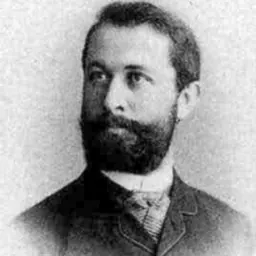
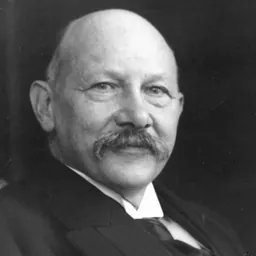
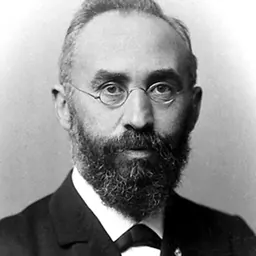
Related people
Same field, nearest in time


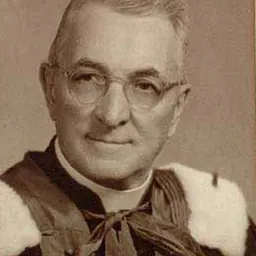

Contemporaries
People whose lives overlapped William Matthew Scott's


Frequently asked questions
Who was William Matthew Scott?
author, playwright, screenplay-writer
When was William Matthew Scott born?
William Matthew Scott was born on 30 September 1893 in Leeds.
When did William Matthew Scott die?
William Matthew Scott died on 7 May 1964 in Herne Bay.
What was William Matthew Scott's occupation?
William Matthew Scott was a writer, novelist, playwright and caricaturist.
What nationality was William Matthew Scott?
William Matthew Scott was British.
Sources & further reading
· Wikipedia: William Matthew Scott
· DBpedia: William Matthew Scott
Cite this page
APA: Biography.guide. (2026). William Matthew Scott. https://biography.guide/william-matthew-scott/
MLA: "William Matthew Scott." Biography.guide, https://biography.guide/william-matthew-scott/.
Chicago: "William Matthew Scott." Biography.guide. https://biography.guide/william-matthew-scott/.
Data last updated: 2026-09-20 · Spot an error? Report a correction.
Page generated 2026-09-27 05:23 UTC