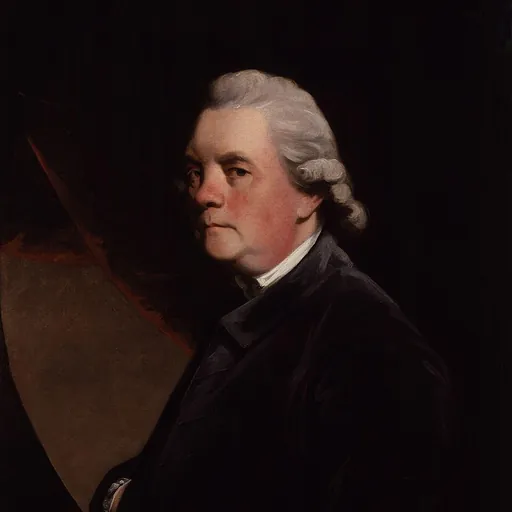
About William Mason
Lived 1724 – 1797 (aged 73). William Mason was a poet, painter, draftsperson, writer and catholic priest.
William Mason (12 February 1724 – 7 April 1797) was an English poet, divine, amateur draughtsman, author, editor and gardener.
Life He was born in Hull and educated at Hull Grammar School and St John's College, Cambridge. He was ordained in 1754 and held a number of posts in the church.
In 1747, his poem "Musaeus, a Monody on the Death of Mr. Pope" was published to acclaim and quickly went through several editions. Summarizing this poem, a threnody, William Lyon Phelps writes:
Among his other works are the historical tragedies Elfrida (1752) and Caractacus (1759) (both used in translation as libretti for 18th century operas: Elfrida - Paisiello and LeMoyne, Caractacus - Sacchini (as Arvire et Évélina) and a long poem on gardening, The English Garden (three volumes, 1772–82). His garden designs included one for the Viscount Harcourt.
He entered the Church in 1754, and in 1762 became the precentor and canon of York Minster.
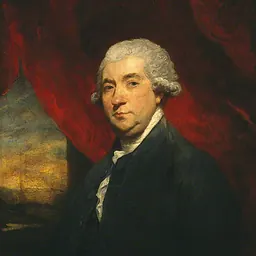
He was the friend, executor, and biographer of Thomas Gray, who was a great influence on his own work. In 1775 The Poems of Mr. Gray. To which are prefixed Memoirs of his Life and Writings by W[illiam]. Mason. York, was published. James Boswell said that in his Life of Samuel Johnson (1791) he "resolved to adopt and enlarge upon the excellent plan of Mr Mason, in his Memoirs of Gray." Mason was also a friend of Horace Walpole and Joshua Reynolds.
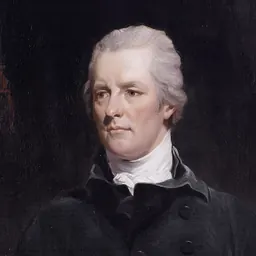
Mason's artwork was considered worthy of showing at the Royal Academy between 1782 and 1786. In 1785, he was William Pitt the Younger's choice to succeed William Whitehead as Poet Laureate but refused the honour.
Two of his works of scenes at the York racecourse, "A Country Racecourse with horses preparing to start" and "A Country Racecourse with horses running". were reproduced as mezzotint illustrations in 1786 by Francis Jukes in collaboration with Robert Pollard.
Memorial inscriptions for Mason may be found in the church at Aston near Rotherham where he was rector and at Poet's Corner in Westminster Abbey. A cenotaph was also erected by Countess Harcourt in the gardens at Nuneham Courtenay.
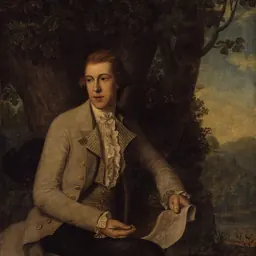
He was the guardian of Francis Ferrand Foljambe during his minority.
Gallery: The English Garden
Don’t just read it —
keep it.
Full-length biographies made to live with: read them, listen on the way to work, watch them tonight.
- E-book
- Audio
- Video
Instant download · yours to keep · every purchase keeps this site free
Important facts
People in William Mason's life
Named in this biography and alive at the same time

Related people
Same field, nearest in time

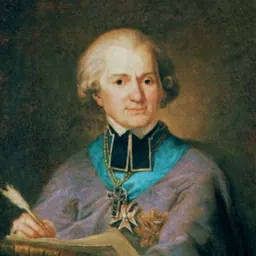

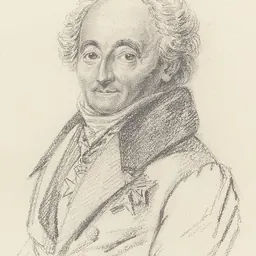
Contemporaries
People whose lives overlapped William Mason's



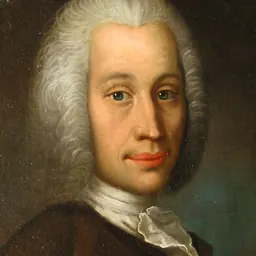
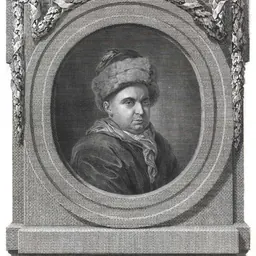
Frequently asked questions
Who was William Mason?
poet (1724-1797)
When was William Mason born?
William Mason was born on 12 February 1724 in Kingston upon Hull.
When did William Mason die?
William Mason died on 7 April 1797 in Aston.
What was William Mason's occupation?
William Mason was a poet, painter, draftsperson, writer and catholic priest.
Sources & further reading
· DBpedia: William Mason (poet)
Cite this page
APA: Biography.guide. (2026). William Mason. https://biography.guide/william-mason-poet/
MLA: "William Mason." Biography.guide, https://biography.guide/william-mason-poet/.
Chicago: "William Mason." Biography.guide. https://biography.guide/william-mason-poet/.
Data last updated: 2026-09-22 · Spot an error? Report a correction.
Portrait: Wikimedia Commons · author & licence
Page generated 2026-09-27 04:58 UTC