
About William M. Walton
Lived 1832 – 1915 (aged 83). William M. Walton was an American lawyer and politician.
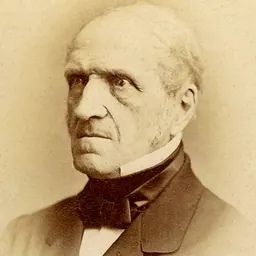
William Martin Walton (January 17, 1832 – July 1, 1915) was a lawyer in Austin, Texas. During the Civil War, Walton served as a major in the Confederate Army. After the war, he was elected attorney general of the state and also headed the state Democratic Party. At the time of his death, Walton was one of the most respected lawyers in Texas.
Early life William Martin "Buck" Walton, the son of Samuel Walker Walton and Mary Wilkerson Lowe Walton, was born near Canton, Mississippi, on January 17, 1832. Walton had three brothers (George, Philip and Jesse) and a sister, Mary. "Buck" was a nickname given to Walton by his brother, George, and was used throughout his life. In 1834, the Walton family moved to Carroll County, newly created from Indian lands in the Choctaw Session. When Walton was just seven years old, Samuel Walker Walton died. His widow Mary married Benjamin C. Strange. Benjamin and Mary Strange and the family moved to Texas in 1844, where the four Walton boys stayed only one year before going back to Mississippi, where Walton received a share of his late father's estate. Mr. Strange died in 1848 and Mary in 1849.
When he was seventeen, Walton was appointed deputy district clerk and in about two years saved enough money to go to the University of Virginia, where he studied law. He did not graduate before returning to Carroll County. In Carrollton, Will began to read law, studying with the firm of William Cothran and James Z. George.
Move to Texas and Civil War William M. Walton arrived in Austin on February 19, 1853, just a month past his twenty-first birthday. He immediately took the job of deputy clerk in the District Clerk's office to familiarize himself with the practice of law in Texas. In July 1853, Andrew J. Hamilton, later governor of Texas, offered him a partnership that continued until Hamilton was elected to the U.S. Congress in 1858.
In 1867, the Reconstruction Acts, which were passed over President Andrew Johnson's veto, effectively shut down the governments of most of the southern states and removed Confederate veterans from elected office. The Democratic administration of James W. Throckmorton, of which Walton was a part, was replaced with a Republican government under Elisha M. Pease and Texas came under military occupation.
Walton served as the chairman of the state Democratic executive committee from 1866 to 1872, during Reconstruction and the unpopular tenure of Republican Governor Edmund J. Davis. Walton helped form a coalition of conservative and moderate elements to combat the electoral power of the Radical Republicans and retake control of the state government. This came to pass with the election of Richard Coke in 1873.
Walton intended to run for attorney general again in the 1876 elections. At the Texas Democratic Convention, in January of that year, he had a very large following and his nomination seemed assured, but when he learned that his opponent, Hannibal H. Boone, was a crippled Confederate veteran in need of a steady income to support his large family, Walton withdrew from the race. In a letter to his son, Walton wrote:
the scene was the wildest you ever saw. There were 1500 men present in the house. They threw up their hats, laughed, cried, caught me in their arms, hugged me and at one time, I was really afraid they would kill me in their furious enthusiasm over my act ... ... it was a grand scene.
Walton retired in 1907 after three bouts of severe illness. He spent his days entertaining visitors on the front porch of his Austin home. Mrs. Walton died on June 23, 1914, and her husband followed on July 1, 1915. They were both buried in the Walton family plot at Austin's old Oakwood Cemetery.
Resolutions by the Travis County Bar Association ordered that his portrait, "which adorns the District Courtroom, be draped in mourning". The portrait of William Walton still hangs today in a courtroom in the Travis County courthouse.
Frank Johnson, the author of Texas and Texans, called Major Walton the Nestor of the Austin bar and, in commenting on his ability as a lawyer, quoted David B. Culberson, "As a trial lawyer I had rather go against any lawyer in the state than 'Buck' Walton." Johnson also wrote that, "Major Walton's specialties in the law were land and murder cases, and without specifying cases of either sort it is enough to say that at the time of his retirement from the bar he was credited with more cases of the kind than any lawyer in Texas."
Don’t just read it —
keep it.
Full-length biographies made to live with: read them, listen on the way to work, watch them tonight.
- E-book
- Audio
- Video
Instant download · yours to keep · every purchase keeps this site free
Important facts
People in William M. Walton's life
Named in this biography and alive at the same time




Related people
Same field, nearest in time


Contemporaries
People whose lives overlapped William M. Walton's




Frequently asked questions
Who was William M. Walton?
American politician (1832–1915)
When was William M. Walton born?
William M. Walton was born on 17 January 1832 in Canton.
When did William M. Walton die?
William M. Walton died on 1 July 1915 in Austin.
What was William M. Walton's occupation?
William M. Walton was a lawyer and politician.
What nationality was William M. Walton?
William M. Walton was American.
Sources & further reading
· Wikipedia: William M. Walton
Cite this page
APA: Biography.guide. (2026). William M. Walton. https://biography.guide/william-m-walton/
MLA: "William M. Walton." Biography.guide, https://biography.guide/william-m-walton/.
Chicago: "William M. Walton." Biography.guide. https://biography.guide/william-m-walton/.
Data last updated: 2026-09-20 · Spot an error? Report a correction.
Page generated 2026-09-27 05:03 UTC