
About William Walton
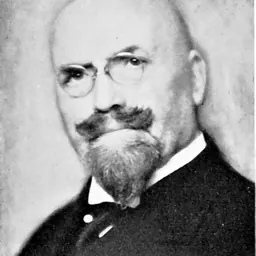
Lived 1902 – 1983 (aged 80). William Walton was a British classical composer, conductor, film score composer, opera composer, composer and musician.
Sir William Turner Walton (29 March 19028 March 1983) was an English composer. During a sixty-year career, he wrote music in several classical genres and styles, from film scores to opera. His best-known works include Façade, the cantata Belshazzar's Feast, the Viola Concerto, the First Symphony, and the British coronation marches Crown Imperial and Orb and Sceptre.
Born in Lancashire, the son of a classical musician, Walton was a chorister and then an undergraduate at Christ Church, Oxford. On leaving the university, he was taken up by the literary Sitwell siblings, who provided him with a home and a cultural education. His earliest work of note was a collaboration with Edith Sitwell, Façade, which at first brought him notoriety as a modernist, but later became a popular ballet score.
In middle age, Walton left England and set up home with his young wife Susana on the Italian island of Ischia. By this time, he had ceased to be regarded as a modernist, and some of his compositions of the 1950s were criticised as old-fashioned. His only full-length opera, Troilus and Cressida, was among the works to be so labelled and has made little impact in opera houses. In his last years, his works came back into critical fashion; his later compositions, dismissed by critics at the time of their premieres, were revalued and regarded alongside his earlier works.
Walton was a slow worker, painstakingly perfectionist, and his complete body of work across his long career is not large. His most popular compositions continue to be frequently performed in the 21st century.
Early life and education
Walton was born into a musical family in Oldham, Lancashire, the second son in a family of three boys and a girl. His father, Charles Alexander Walton, was a musician who had trained at the Royal Manchester College of Music under Charles Hallé, and made a living as a singing teacher and church organist. Charles's wife, Louisa Maria (née Turner), had been a singer before their marriage. William Walton's musical talents were spotted when he was still a young boy, and he took piano and violin lessons, though he never mastered either instrument. He was more successful as a singer: he and his elder brother sang in their father's choir, taking part in performances of large-scale works by Handel, Haydn, Mendelssohn and others.
Walton was sent to a local school, but in 1912 his father saw a newspaper advertisement for probationer choristers at Christ Church Cathedral School in Oxford and applied for William to be admitted. The boy and his mother missed their intended train from Manchester to Oxford because Walton's father had spent the money for the fare in a local public house. The Dean of Christ Church, Dr Thomas Strong, noted the young Walton's musical potential and was encouraged in this view by Sir Hubert Parry, who saw the manuscripts of some of Walton's early compositions and said to Strong, "There's a lot in this chap; you must keep your eye on him."
At the age of sixteen Walton became an undergraduate of Christ Church. It is sometimes said that he was Oxford's youngest undergraduate since Henry VIII, and though this is probably not correct, he was nonetheless among the youngest. He came under the influence of Hugh Allen, the dominant figure in Oxford's musical life. Allen introduced Walton to modern music, including Stravinsky's Petrushka, and enthused him with "the mysteries of the orchestra". Walton spent much time in the university library, studying scores by Stravinsky, Debussy, Sibelius, Roussel and others. He neglected his non-musical studies, and though he passed the musical examinations with ease, he failed the Greek and algebra examinations required for graduation.
Little survives from Walton's juvenilia, but the choral anthem A Litany, written when he was fifteen, anticipates his mature style.
Walton with the Sitwells: left to right Osbert, Edith, Sacheverell, Walton, and, with the Façade megaphone, Neil Porter of the Old Vic. At Oxford Walton befriended several poets including Roy Campbell, Siegfried Sassoon and, most importantly for his future, Sacheverell Sitwell. Walton was sent down from Oxford in 1920 without a degree or any firm plans. Sitwell invited him to lodge in London with him and his literary brother and sister, Osbert and Edith. Walton took up residence in the attic of their house in Chelsea, later recalling, "I went for a few weeks and stayed about fifteen years".
Career The Sitwells looked after their protégé both materially and culturally, giving him not only a home but a stimulating cultural education. He took music lessons with Ernest Ansermet, Ferruccio Busoni and Edward J. Dent. He attended the Russian ballet, met Stravinsky and Gershwin, heard the Savoy Orpheans at the Savoy Hotel and wrote an experimental string quartet heavily influenced by the Second Viennese School that was performed at a festival of new music at Salzburg in 1923.
In 1923, in collaboration with Edith Sitwell, Walton had his first great success, though at first it was a succès de scandale. |group= n The work consisted of Edith's verses, which she recited through a megaphone from behind a screen, while Walton conducted an ensemble of six players in his accompanying music. The Manchester Guardian wrote of "relentless cacophony". The Observer condemned the verses and dismissed Walton's music as "harmless". In The Illustrated London News, Dent was much more appreciative: "The audience was at first inclined to treat the whole thing as an absurd joke, but there is always a surprisingly serious element in Miss Sitwell's poetry and Mr Walton's music ... which soon induced the audience to listen with breathless attention." In The Sunday Times, Ernest Newman said of Walton, "as a musical joker he is a jewel of the first water ... Here is obviously a humorous musical talent of the first order.
Among the audience were Evelyn Waugh, Lytton Strachey, Virginia Woolf and Noël Coward. The last was so outraged by the avant-garde nature of Sitwell's verses and the staging, that he marched out ostentatiously during the performance. (Soon afterwards Coward wrote a revue sketch lampooning the Sitwells, which caused a feud between him and them that lasted for decades.) Nevertheless, the work soon became accepted, and within a decade Walton's music was used for the popular Façade ballet, choreographed by Frederick Ashton.
Portsmouth Point by Thomas Rowlandson inspired Walton's overture of the same name. Walton's works of the 1920s, while he was living in the Sitwells' attic, include the overture Portsmouth Point, dedicated to Sassoon and inspired by the well-known painting of the same name by Thomas Rowlandson. It was first heard as an entr'acte at a performance in Diaghilev's 1926 ballet season, where The Times complained, "It is a little difficult to make much of new music when it is heard through the hum of conversation." Sir Henry Wood programmed the work at the Proms the following year, where it made more of an impression. The composer conducted this performance; he did not enjoy conducting, but he had firm views on how his works should be interpreted, and orchestral players appreciated his "easy nonchalance" and "complete absence of fuss." Walton's other works of the 1920s included a short orchestral piece, Siesta (1926) and a Sinfonia Concertante for piano and orchestra (1928), which was well received at its premiere at a Royal Philharmonic Society concert, but has not entered the regular repertory.
The Viola Concerto (1929) brought Walton to the forefront of British classical music. It was written at the suggestion of Sir Thomas Beecham for the viola virtuoso Lionel Tertis. When Tertis received the manuscript, he rejected it immediately. The composer and violist Paul Hindemith stepped into the breach and gave the first performance. The work was greeted with enthusiasm. In The Manchester Guardian, Eric Blom wrote, "This young composer is a born genius" and said that it was tempting to call the concerto the best thing in recent music of any nationality. Tertis soon changed his mind and took the work up. A performance by him at a Three Choirs Festival concert in Worcester in 1932 was the only occasion on which Walton met Elgar, whom he greatly admired. Elgar did not share the general enthusiasm for Walton's concerto.
Walton's next major composition was the massive choral cantata Belshazzar's Feast (1931). It began as a work on a modest scale; the BBC commissioned a piece for a small chorus, orchestra of no more than fifteen players, and soloist. Osbert Sitwell constructed a text, selecting verses from several books of the Old Testament and the Book of Revelation. As Walton worked on it, he found that his music required far larger forces than the BBC proposed to allow, and Beecham rescued him by programming the work for the 1931 Leeds Festival, to be conducted by Malcolm Sargent. Walton later recalled Beecham as saying, "As you'll never hear the work again, my boy, why not throw in a couple of brass bands?" While there, Walton met Susana Gil Passo (1926–2010), daughter of an Argentine lawyer. At 22 she was 24 years younger than Walton (Alice Wimborne had been 22 years his senior), and at first she ridiculed his romantic interest in her. He persisted, and she eventually accepted his proposal of marriage. The wedding was held in Buenos Aires in December 1948. From the start of their marriage, the couple spent half the year on the Italian island of Ischia, and by the mid-1950s they lived there permanently.
Walton's last work of the 1940s was his music for Olivier's film of Hamlet (1948). After that, he focused his attentions on his opera Troilus and Cressida. On the advice of the BBC, he invited Christopher Hassall to write the libretto. This did not help Walton's relations with the Sitwells, each of whom thought he or she should have been asked to be his librettist. Work continued slowly over the next few years, with many breaks while Walton turned to other things. In 1950 he and Heifetz recorded the Violin Concerto for EMI. In 1951 Walton was knighted. In the same year, he prepared an authorised version of Façade, which had undergone many revisions since its premiere. In 1953, following the accession of Elizabeth II he was again called on to write a coronation march, Orb and Sceptre; he was also commissioned to write a choral setting of the Te Deum for the occasion. (The march, like Crown Imperial, was played again at the coronation of Charles III and Camilla in 2023.) The premiere had a friendly reception, but there was a general feeling that Hassall and Walton had written an old-fashioned opera in an outmoded tradition. The piece was subsequently staged in San Francisco, New York and Milan during the next year, but failed to make a positive impression, and did not enter the regular operatic repertory.
In 1956 Walton sold his London house and took up full-time residence on Ischia. He built a hilltop house at Forio and called it La Mortella. Susana Walton created a magnificent garden there. Walton's other works of the 1950s include the music for a fourth Shakespeare film, Olivier's Richard III, and the Cello Concerto (1956), written for Gregor Piatigorsky, who gave the premiere in January 1957 with the Boston Symphony Orchestra and the conductor Charles Munch. Some critics felt that the concerto was old-fashioned; Peter Heyworth wrote that there was little in the work that would have startled an audience in the year the met its iceberg (1912). It has nevertheless entered the regular repertoire, performed by Paul Tortelier, Yo-Yo Ma, Lynn Harrell and Pierre Fournier among others.
In 1966 Walton successfully underwent surgery for lung cancer. Until then he had been an inveterate pipe-smoker, but after the operation he never smoked again. While he was convalescing, he worked on a one-act comic opera, The Bear, which was premiered at Britten's Aldeburgh Festival, in June 1966, and enthusiastically received. Walton had become so used to being written off by music critics that he felt "there must be something wrong when the worms turned on some praise." Walton received the Order of Merit in 1967, the fourth composer to be so honoured, after Elgar, Vaughan Williams and Britten. After his experience over Battle of Britain, Walton declared that he would write no more film music, but he was persuaded by Olivier to compose the score for a film of Chekhov's Three Sisters in 1969.
Last years Walton was never a facile or quick composer, and in his final decade, he found composition increasingly difficult. He repeatedly tried to compose a third symphony for André Previn, but eventually abandoned it. Many of his final works are re-orchestrations or revisions of earlier music. He orchestrated his song cycle Anon in Love (originally for tenor and guitar), and at the request of Neville Marriner adapted his String Quartet in A minor as a Sonata for String Orchestra. One original work from this period was his Jubilate Deo, premiered as one of several events to celebrate his seventieth birthday. The British prime minister, Edward Heath, gave a birthday dinner for Walton at 10 Downing Street, attended by royalty and Walton's most eminent colleagues; Britten presented a Walton evening at Aldeburgh and Previn conducted an all-Walton concert at the Royal Festival Hall.
Walton revised the score of Troilus and Cressida, and the opera was staged at Covent Garden in 1976. Once again it was plagued by misfortune while in preparation. Walton was in poor health; Previn, who was to conduct, also fell ill; and the tenor chosen for Troilus pulled out. As in 1954, the critics were generally tepid. Some of Walton's final artistic endeavours were in collaboration with the film-maker Tony Palmer. Walton took part in Palmer's profile of him, At the Haunted End of the Day, in 1981, and in 1982 Walton and his wife played the cameo roles of King Frederick Augustus and Queen Maria of Saxony in Palmer's nine-hour film Wagner. In March 1982 there were concerts marking Walton's eightieth birthday, at the Barbican and Royal Festival halls. The audience's response to the performance of Belshazzar's Feast, at the latter, conducted by Previn, moved the composer to tears.
Walton died at La Mortella on 8 March 1983, at the age of 80.
Music
Walton was a slow worker. Both during composition and afterwards he would continually revise his music; he said, "Without an india-rubber I was absolutely sunk." Consequently, his total body of work from his sixty-year career as a composer is not large. Between the first performance of Façade in 1923, for example, and that of the Sinfonia Concertante in 1928, he averaged only one small piece a year. Of his work as a whole, Byron Adams in Grove's Dictionary of Music and Musicians writes:
In the 1930s, Walton also had two of his major orchestral works on disc, both on Decca, the First Symphony recorded by Harty and the London Symphony Orchestra, and the Viola Concerto with Frederick Riddle and the LSO conducted by the composer. In the 1940s Walton moved from Decca to its older, larger rival, EMI. The EMI producer Walter Legge arranged a series of recordings of Walton's major works and many minor ones over the next twenty years; a rival composer expressed the view that if Walton had an attack of flatulence (he used an earthier expression), Walter Legge would record it.
Walton himself, although a reluctant conductor, conducted many of the EMI recordings, and some for other labels. He made studio recordings of the First Symphony, the Viola Concerto, the Violin Concerto, the Sinfonia Concertante, the Façade Suites, the Partita, Belshazzar's Feast, and suites from his film scores for Shakespeare plays and The First of the Few. Some live performances conducted by Walton were recorded and have been released on compact disc, including the Cello Concerto and the Coronation Te Deum.
Almost all Walton's works have been recorded for commercial release. EMI published a "Walton Edition" of his major works on CD in the 1990s, and the recording of the Chandos Records "Walton Edition" of his works was completed in 2010. His best-known works have been recorded by performers from many countries.
Legacy In 1944, it was said of Walton that he summed up the recent past of English music and augured its future. Later writers have concluded that Walton had little influence on the next generation of composers. In his later years, Walton formed friendships with younger composers including Hans Werner Henze and Malcolm Arnold, but although he admired their work, he did not influence their compositional styles. Throughout his life, Walton held no posts at music conservatoires; he had no pupils, gave no lectures and wrote no essays. After his death, the Walton Trust, inspired by Susana Walton, has run arts education projects, promoted British music and held annual summer masterclasses on Ischia for gifted young musicians.
Notes, references and sources
Don’t just read it —
keep it.
Full-length biographies made to live with: read them, listen on the way to work, watch them tonight.
- E-book
- Audio
- Video
Instant download · yours to keep · every purchase keeps this site free
Important facts
People in William Walton's life
Named in this biography and alive at the same time


Related people
Same field, nearest in time



Contemporaries
People whose lives overlapped William Walton's




Frequently asked questions
Who was William Walton?
English composer (1902–1983)
When was William Walton born?
William Walton was born on 29 March 1902 in Oldham.
When did William Walton die?
William Walton died on 8 March 1983 in Ischia.
What was William Walton's occupation?
William Walton was a classical composer, conductor, film score composer, opera composer, composer and musician.
What nationality was William Walton?
William Walton was British.
Sources & further reading
Cite this page
APA: Biography.guide. (2026). William Walton. https://biography.guide/william-walton-classical-composer/
MLA: "William Walton." Biography.guide, https://biography.guide/william-walton-classical-composer/.
Chicago: "William Walton." Biography.guide. https://biography.guide/william-walton-classical-composer/.
Data last updated: 2026-09-26 · Spot an error? Report a correction.
Page generated 2026-09-27 05:13 UTC