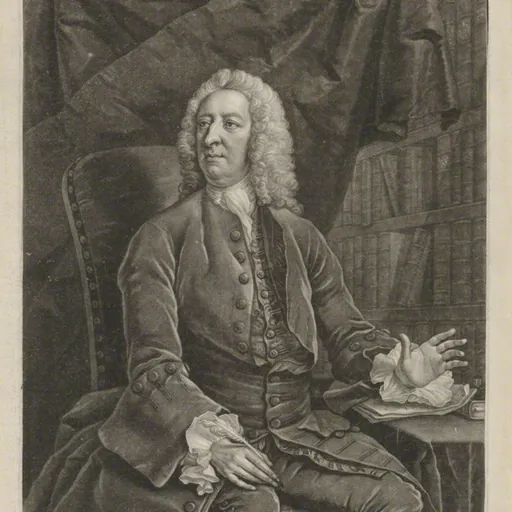
About William King
Lived 1685 – 1763 (aged 77–78). William King was a British writer.
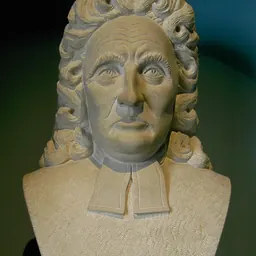
William King (16 March 1685 – 30 December 1763) was an English academic and writer, Principal of St Mary Hall, Oxford from 1719, He was known for strongly held Jacobite views, and as a satirist and poet. Early life Born at Stepney, Middlesex, on 16 March 1685, he was the son of the Rev. Peregrine King and Margaret, daughter of Sir William Smyth, bart., of Radclive, Buckinghamshire. After attending Salisbury grammar school he entered Balliol College, Oxford, on 9 July 1701, and graduated B.C.L. on 12 July 1709, D.C.L. on 8 July 1715. He was called to the bar at Gray's Inn in 1712,
Jacobite don King devoted his life to scholarship and literature, interested himself in politics, and was long recognised the head of the Jacobite party at Oxford. His views are now seen as directed to his contemporary dislikes, rather than being retrospective. He looked to gain attention to them by shock tactics.
For a time King acted as secretary to the Duke of Ormonde and the Earl of Arran, when they were Chancellor of the University of Oxford, and he was elected principal of St Mary Hall in 1719. He resigned his secretaryship in 1722, when he stood for the parliamentary representation of the university, but was easily defeated by George Clarke.
A lawsuit about an estate in Galway brought King to Ireland in 1727. Jonathan Swift thought well of him. In January 1739 Swift entrusted King with a copy of the verses on his own death, for publication in London. King, alarmed at the satire on Robert Walpole and Queen Caroline, omitted more than a hundred lines, "in deference", he said, "to the judgment of Pope and other friends of Swift's", but to Swift's annoyance. During the same year King met Nathaniel Hooke at Dr. George Cheyne's house at Bath, Somerset, and acted as his amanuensis while he was translating Andrew Michael Ramsay's Travels of Cyrus.
King was presented to the Stuart Pretender Charles Edward Stuart in September 1750. The Pretender was then paying a stealthy visit to England, and drank tea one evening at the doctor's lodgings at Oxford. They subsequently corresponded, but King came to dislike him. King took part in the contested election for Oxfordshire in 1754, and was in consequence vigorously libelled. He was accused of having defrauded subscribers for books never published to the extent of £1,500, was taunted with having offered himself to sale both in England and Ireland, and was accused of inspiring the Jacobite London Evening Post. In February 1755 King took Samuel Johnson his diploma of M.A., and found in him an admirer of his scholarship and politics. But one view is that the protest was no longer dynastic, being concerned with the Whig handling of the Church. The audience included key supporters of the Hanoverian heir Frederick, Prince of Wales, who found also some signs of the Tory ground shifting. Be that as it may, Jacobite propagandists lapped up King's themes, the invocation of Astraea in Virgil's terms of return, and the slogan "Redeat Magnus Ille Genius Britanniae" was adopted for use on the medallion marking the 1752 English covert visit of the Pretender.
On the Earl of Arran's death the Jacobite Earl of Westmoreland was elected chancellor of Oxford. At his installation on 7 July 1759 King made a speech, at which Johnson "clapped his hands till they were sore", according to Boswell's Life. Engraving by Thomas Worlidge of the Sheldonian Theatre on the occasion of the 1759 installation of the Chancellor of Oxford University.
At the Encænia of 1763 King, amid great applause, delivered an oration. Charles Churchill, who was present, later sneered at his "piebald Latin" in the Candidate. It was published at Dublin in 1732. Swift praised it, and The Toast was completed in four books, inscribed to him, and printed in London (1736), with a frontispiece by Hubert-François Gravelot (engraver Bernard Baron); it was reissued in 1747. In his old age King regretted many passages, and at his death the remaining copies were burnt. The poem was reissued without the annotations in John Almon's New Foundling Hospital of Wit. A key to the characters is given in William Davis's Second Journey round the Library of a Bibliomaniac (1825). In 1748 he ridiculed Edward Bentham, who had published a guide to intending students.
The Sheldonian oration was printed in 1749, and again in 1750. It gave rise to violent attacks. King was charged with barbarous Latin, Jacobitism, and propagation of sedition in the university. John Burton, cousin and patron of Edward Bentham, published some virulent Remarks on Dr. K——'s Speech, by "Phileleutherus Londinensis", 1750. King retorted savagely; this satire also attacks William Bowyer the younger, who had said something against King's latinity. King further translated all the abusive names which Burton had called him, and the complimentary phrases applied by Burton to himself, and printing the whole catalogue on a large sheet of the coarse paper then used as toilet paper, gave it to a scavenger to be cried about the streets of Oxford, Windsor, and Eton. He retaliated against authors of libels which had appeared in the Evening Advertiser, attacked a tract called A Defence of the Rector and Fellows of Exeter College, and spoke severely of a canon of Windsor named Richard Blacow. Blacow then printed a Letter to William King, LL.D., 1755, in which he sought to make King responsible for a Jacobite demonstration by some undergraduates in February 1747.
A collected edition of his writings was published as Opera Guilielmi King, London, 1760. King wrote also: an inscription for the collection of statues presented to the university in 1756 by the Countess Dowager of Pomfret; an Elogium in 1758 on Chevalier John Taylor the oculist, of which he printed copies for his friends; and an epitaph on Beau Nash. His posthumous Political and Literary Anecdotes of his own Times, London, 1818 (2nd edit. 1819), mostly written in his seventy-sixth year, was edited by Philip Bury Duncan.
Legacy Assisted by the contributions of old members of St Mary Hall, King rebuilt the east side of the quadrangle, and added a new room to the principal's lodgings.
Family King married his cousin Henrietta Maria Wither in 1709. Their son, Charles King, born about 1711, was M.A. of St Mary Hall, and in holy orders. Their daughter Dorothy married William Melmoth the younger (1710–1799).
Don’t just read it —
keep it.
Full-length biographies made to live with: read them, listen on the way to work, watch them tonight.
- E-book
- Audio
- Video
Instant download · yours to keep · every purchase keeps this site free
Important facts
People in William King's life
Named in this biography and alive at the same time





Related people
Same field, nearest in time



Contemporaries
People whose lives overlapped William King's


Frequently asked questions
Who was William King?
English academic and writer, Principal of St Mary Hall, Oxford
When was William King born?
William King was born on 16 March 1685 in Stepney.
When did William King die?
William King died in 1763.
What was William King's occupation?
William King was a writer.
What nationality was William King?
William King was British.
Sources & further reading
· DBpedia: William King (academic)
Cite this page
APA: Biography.guide. (2026). William King. https://biography.guide/william-king-writer-1685/
MLA: "William King." Biography.guide, https://biography.guide/william-king-writer-1685/.
Chicago: "William King." Biography.guide. https://biography.guide/william-king-writer-1685/.
Data last updated: 2026-09-21 · Spot an error? Report a correction.
Portrait: Wikimedia Commons · author & licence
Page generated 2026-09-27 04:59 UTC