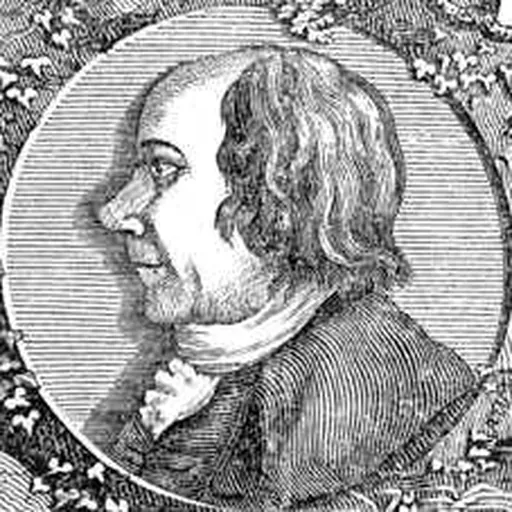
About William Jones
Lived 1726 – 1795 (aged 69). William Jones was a British and Welsh antiquarian seller and poet.
William Jones (christened 18 June 1726 – 20 August 1795) was a Welsh antiquary, poet, scholar and radical. Jones was an ardent supporter of both the American and French Revolutions – his strong support of the Patriot and Jacobin causes earned him the nicknames "the rural Voltaire", the "Welsh Voltaire", and accusations of being, "a rank Republican and a Leveller". Despite his vocal support for foreign revolutions, however, Jones never advocated a violent Welsh republican uprising against the House of Hanover and instead encouraged the Welsh people to emigrate en masse to "The Promised Land"; in the newly founded United States.
Like many subsequent Welsh nationalists, however, Jones also held very strong anti-English sentiments. He often expressed an intense hostility to the completely Anglicised Welsh nobility, their policies of rackrenting, and their employment of land agents whom he considered, "destitute of the principles of justice [and] moral honesty". Similarly to Saunders Lewis, Jones was equally enraged by the increasing language loss among lower class Welsh people, which led to one contemporary to describe Jones as "the hottest arsed" Welshman he had ever met.
Early history Jones was born in 1726 to William Sion Dafydd and his second wife Catherine. His father was a guard on the coach that ran between Machynlleth in Wales and Shrewsbury in England, though he also farmed at Dôl Hywel in Llangadfan in Montgomeryshire. Jones' mother, on the other hand, had been raised within the illegal and underground Catholic Church in Wales prior to the Titus Oates plot. Jones learned many works of Catholic oral poetry in the Welsh language, many of them rooted in the spirituality of the Celtic Church, from his mother and was later to write them down and preserve them for posterity. Despite his later preaching of the glory of emigration to the United States, Jones lived his whole life in Llangadfan. He was christened into the Anglican Communion at the parish church alleged to have been founded by Saint Cadfan on 18 June 1726, and the only formal education he received was at one of Griffith Jones' schools that existed for a time in the neighbourhood. He was mainly a self-taught autodidact, was raised as a Welsh speaker and learnt Welsh English only as a second language. His written English was said to be very good, though he spoke the language with great difficulty. He also learnt Latin, and translated verse by Horace and Ovid into Welsh poetry.
Jones was married to Ann, and they had a son and two daughters. His wife suffered terribly from pains of the body and was confined to her bed for the last 15 years of her life.
Antiquary Jones began to correspond with the Gwyneddigion Society, and with other contemporary men of letters, and began collecting and recording local folk songs and country dances for Edward Jones (Bardd y Brenin), the King's Bard. Jones spent much time conversing with the elderly members of his community as well as researching manuscripts and printed collections which provided Edward Jones with valuable material for his printed volumes. He describes many of the dances as having "sharp twists and turns rendering them fiendishly difficult to perform well", and stated that they were probably "too fatiguing for the bodies and minds of the present generation, and requiring much skill and activity in the performance".
He also collected Welsh oral poetry and made notes on their metrical rules for Owain Myfyr.
Radicalism
Through his research into Welsh history, Jones became more curious about his nation's past, and decided to rescue Welsh literature, history, and culture from the "neglect and condescension of well-meaning antiquarians and blinkered enthusiasts".
Jones also fought for a separate national identity for Wales, and in reaction to the Englishness of the British patriotic songs God save the King, The Roast Beef of Old England and Rule, Britannia!, he set about composing a national anthem for Wales. The song he hoped would be sung at meetings and societies across the country. The anthem, sung to the refrain, "Ac unwn lawen ganiad ar doriad teg y dydd" (And join in joyful song at the fair break of dawn), was designed to commemorate "our viscitudes (sic) of Fortune". Jones made great play of the treachery and pillage wrought by the Roman conquest, the "treacherous" Vortigern, "that tyrant" Edward I and "the usurper" Henry IV. It is believed that this is the first attempt to produce a national anthem for Wales in Modern history. When Jones heard in 1792 that Sir William Pulteney had purchased large tracts of land in New York, he wrote to him expressing his desire to see the creation of a Welsh colony on this estate. However, Jones did not endear himself to Pulteney by referring to the "insatiable avarice of the landowners", calling them "Egyptian taskmasters". Pulteney's very negative response to Jones countered that the farmers of Britain lived in the most "bounteous country in the world" and that if they improved their cultivation methods and became more industrious, then they would prosper.
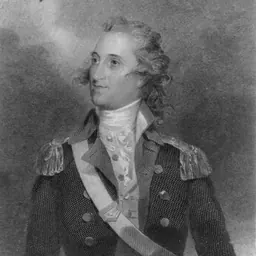
Undeterred, Jones then contacted Thomas Pinckney, the American ambassador in London, asking him to lend support in a plan to establish a joint-stock company to survey suitable land in Kentucky and Pennsylvania where a large number of Welsh settlers could establish a new state, whose affairs would be conducted in the Welsh language.
Later life and health Jones had long been a herbalist and had succeeded in curing himself of scrofula. He had planned to publish a book of household remedies; however, these plans, and his career as a healer, were cut short by the Medicine Duties Act 1785 (25 Geo. 3. c. 79), which obliged him to apply for a licence to operate as a doctor. The local absentee Anglican Vicar, Dr. Matthew Worthington, believing Jones to be a volatile radical, reportedly did all in his power to turn the local people against him. Jones died in 1795 at the age of 69. He was buried, at his own insistence, in unconsecrated ground in St Cadfan's parish churchyard.
Don’t just read it —
keep it.
Full-length biographies made to live with: read them, listen on the way to work, watch them tonight.
- E-book
- Audio
- Video
Instant download · yours to keep · every purchase keeps this site free
Important facts
People in William Jones's life
Named in this biography and alive at the same time


Related people
Same field, nearest in time




Contemporaries
People whose lives overlapped William Jones's




Frequently asked questions
Who was William Jones?
Welsh antiquary, poet, scholar and radical (1726–1795)
When was William Jones born?
William Jones was born on 1 June 1726 in Llangadfan.
When did William Jones die?
William Jones died on 20 August 1795 in Llangadfan.
What was William Jones's occupation?
William Jones was an antiquarian seller and poet.
What nationality was William Jones?
William Jones was British and Welsh.
Sources & further reading
· DBpedia: William Jones (Welsh radical)
Cite this page
APA: Biography.guide. (2026). William Jones. https://biography.guide/william-jones-antiquarian-seller/
MLA: "William Jones." Biography.guide, https://biography.guide/william-jones-antiquarian-seller/.
Chicago: "William Jones." Biography.guide. https://biography.guide/william-jones-antiquarian-seller/.
Data last updated: 2026-09-22 · Spot an error? Report a correction.
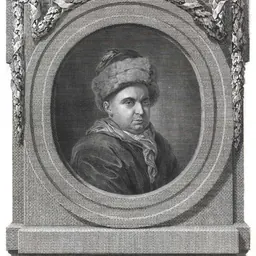
Portrait: Wikimedia Commons · author & licence
Page generated 2026-09-27 05:03 UTC