
About William Johnston
Lived 1829 – 1902 (aged 73). William Johnston was a British politician.
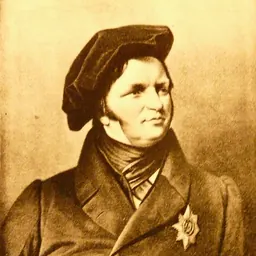
William Johnston (22 February 1829 – 17 July 1902) was an Irish Orangeman, unionist and Member of Parliament for Belfast, distinguished by his independent working-class following and commitment to reform. He first entered the United Kingdom Parliament as an Irish Conservative in 1868, celebrated for having broken a standing ban on Orange Order processions and as the nominee of an association of "Protestant Workers". At Westminster, Johnston supported the secret ballot; the accommodation of trade unions and strike action; land reform; and women's suffrage. He was succeeded in 1902 as the MP for South Belfast, by Thomas Sloan, similarly supported by loyalist workers in opposition to the conservative and unionist candidates favoured by their employers.
Orangeman Johnston was the eldest son of John Brett Johnston of Ballykilbeg, outside Downpatrick, County Down, and his wife Thomasina Anne Brunette Scott, daughter of Thomas Scott, communicants of the established Church of Ireland. He was educated at Trinity College Dublin being awarded B.A. in 1852 and M.A. in 1856. While in Dublin, he drew close to leading Church of Ireland evangelists, among them Edward Nangle, founder of the Achill Mission. In 1853, he inherited his father's small heavily encumbered estate.
His great-grandfather, William Johnston of Killough, is credited with being the founder in 1733 of the first Orange Society in Ireland, the Loyal Society of Blue and Orange. Johnston joined the Orange Order in May 1848, the same year he entered Trinity. He wrote ultra-Protestant tracts and evangelical-themed gothic novels, and for several years (1855-1862) ran a newspaper, the Downshire Protestant. and stood unsuccessfully for nomination to parliament at Downpatrick. In 1866,
Johnston asserted that Roman Catholicism ("Popery") was not merely a religion, but a "religio-political system for the enslavement of the body and soul of man". It could be countered only by "such a combination as the Orange Society based on religion and carrying over religion into the politics of the day".
His militancy placed him at odds with the aristocratic leadership of the Orange Order. On the Orange Twelfth 1867, he forced the issue by leading a large procession of Orangemen from Bangor to Newtownards in County Down. The contravention of the Party Procession Act earned him a two month prison sentence.
Parliamentary career
Candidate of the Protestant working man Following his release and triumphal reception in the Ulster Hall, Johnston was nominated by the United Protestant Workingmen’s Association (UPWA) as a Conservative candidate for Belfast in the 1868 parliamentary election, the first in which, thanks to the preceding Irish Reform Act, many of the town's skilled workingmen would exercise the vote. In the view of the Association, Johnston had been "betrayed and deserted by the aristocracy of Ulster on account of his thorough identification with the working classes of the province".
Conservative leaders refused to endorse his nomination and instead proposed the eminent architect Charles Lanyon and John Mulholland, the owner of the York Street Spinning Mill. Deserted by a large number of Orangemen, they still tried to break up the meetings of the Liberal candidate,Thomas McClure. But the Liberal editor of the Northern Whig, Thomas MacKnight, noted that "the Orange democracy on Mr. Johnston's side now gave those proceedings no countenance". An unprecedented understanding in the town's then two-member constituency between Johnston's camp and that of the largely Catholic-supported McClure, enabled Johnston to top the poll. Johnston's understanding with McClure included, addition to repeal of the Party Procession Act (achieved through a private member's bill in 1872), comprehensive land reform. In 1870, Johnston sided with the Liberal government of William Ewart Gladstone, and with the Irish Home Rule MPs, in voting for the first of the Irish Land Acts. Such was the disagreement, that Johnston briefly withdrew from the Order. These were the three F's (free sale, fixity of tenure, and fair rent), which were eventually conceded in the Land Law (Ireland) Act 1881 and by Gladstone's Tenure of Land (Ireland) Bill 1890, which Johnston supported.
In 1901, he did follow his party in voting against the principle of "compulsory purchase" (of compelling landlords to sell to their tenants) advanced with the support of both Catholic and Protestant farmers by the Independent Unionist, T. W. Russell. In his last appearance on election hustings, in February 1902 Johnston, on orders from Lord Arthur Hill and the Marquess of Londonderry,
Labour reform In May 1870, a procession of different trades marched through Belfast to the laying of the foundation stone of the Working Men's Institute. Strikingly, the demonstration included Catholic and Protestant bands. On the occasion, Johnston declared: For Johnston this was not a rejection of Orangeism, for whose demonstrations there was a "proper time". Rather, it was a challenge to those within the Order for whom religious belief and party creed were standing objections to recognition of a common working-class interest—those who regarded a labour politics as tantamount to religious and national ecumenism. but this was with the endorsement of a local party association reconstituted with a stipulation that two-thirds of voting members be working men. It was also the acceptance of a party at Westminster which, under the leadership of Benjamin Disraeli, in the Reform Act 1867 had already outbid the Liberals in pursuit of the working man's vote. The Conservative government that Johnston supported on Disraeli's return to office, engaged in an unprecedented "burst of social legislation": legalising and indemnifying trades unions, permitting peaceful picketing, limiting working hours, promoting slum clearance and establishing public health authorities.
Claiming, with the News Letter, that the limitations on working hours and on child labour "will ruin our trade and leave Belfast a forest of smokeless chimneys", Belfast mill owners sought exemption from the Factories (Health of Women, &c.) Act 1874. It was as spokesman "for the operatives of Belfast" and "in the interests of the working classes" that Johnston helped vote down their proposed amendments".
Woman's suffrage As early as May 1871, Johnston declared himself a woman's suffragist. He voted a second reading for a Women's Disability Bill which would have given women's access to the polls on the same term as men. In February 1871, he chaired the first meeting in Belfast of a woman's suffrage tour of Ireland undertaken by Isabella Tod, and attended the formation in Dublin of a committee (which he regularly attended with the Home Rule MP Maurice Brooks) from which emerged the Dublin Women's Suffrage Association.
In 1887, following extensive lobbying by the North of Ireland Women's Suffrage Society, which he had formed with Tod, Johnston piloted an amendment to the Municipal Corporations (Ireland) Act through Parliament. It ensured that the municipal franchise for the new "city" of Belfast conferred the rate-payer vote on persons rather than men. His republican and Land-League nemesis in the Commons, Michael Davitt, expressed his "cordial sympathy" for the motion, but appealed to Johnston "not to persevere with it to the extent of endangering this Bill". He "regretted very much that the citizens of Dublin had not a sufficiently progressive spirit" to follow "the example of Belfast". Two weeks before, Johnston had supported yet another effort to extend the parliamentary franchise.
Defence of the Union In March 1878, Johnston resigned from Parliament to take the position of Inspector of Fisheries in Ireland, an instance, according to the historian Paul Bew, of his being "bought off" by government patronage. In his absence, however, his supporters defied the Conservative "bigwigs": albeit without success, UPWA ran its own candidates to replace him in 1878 and again in 1880.
At the 1885 general election, Johnston was returned to parliament for the new South Belfast constituency as an Independent Conservative member, in time to vote against Gladstone's first Home Rule Bill. Back in the Commons, Johnston proposed that if the bill passed that the "Protestants of Ulster;" would resist "at the point of the bayonet", and that they would be led by Lord Wolseley, the Adjutant-General to the Forces, "and 1,000 other officers" who were ready to "throw up their commissions". That Johnston, himself, had been involved in some form of military preparation against the prospect of a Dublin parliament is suggested by his decision to "stop drilling for the present", recorded in his dairy three days after the measure's defeat in June 1886. But he made no concession to the goal itself. Some have credited him with coining the phrase that summarised blanket Orange resistance to the prospect of an Irish parliament: "Home Rule is Rome Rule".
Commemoration and legacy
Orange and nationalist tributes Johnston died at Ballykilbeg on 17 July 1902 after catching a "chill" at on Orange demonstration in Ballynahinch.
The Belfast nationalist organ, The Irish News, commented that "Fierce politician though he was at times, [Johnston] was always kind and courteous to his political opponents". It noted in particular his acknowledged friendship with Joseph Biggar. Biggar, with whom Johnston attended meetings of Tod's Suffrage Society in Belfast, was the obstructionist leader of the Irish Nationalists in the House of Commons, and a Presbyterian convert to Roman Catholicism.
Reaction to his children's apostasy Greater notice was given to Johnston's reaction to the conversion of his own daughter to the Roman Church. In April 1898, Miss Ada Johnston of Ballykilbeg, who had "been attending Catholic services for some time past", took her first Catholic communion at Patrick's Memorial Church, Downpatrick. Despite the expected embarrassment, her father was seen to regularly escort her to her chosen place of worship before proceeding to his own parish church. The elder Johnston described this as giving him "great pain". Johnston's eldest son, Lewis, who was to become Postmaster General of Hong Kong, did follow him into the Orange Order, but was also to express an interest in the esoteric and occult. Together they supported dock and linen-mill workers in the Belfast Lockout of 1907.
Family Johnston married firstly in 1853, Harriet Allen daughter of Robert Allen of Kilkenny. She was the author of Lays of the Lost One and Other Poems (Dublin 1858). He married secondly in 1861 Arminella Frances Drew, daughter of the Rev. Thomas Drew, D.D. These included Ada Johnston, the daughter who took Roman Catholic communion, and the writer and theosophist, Charles Johnston.
Papers and publications Protestant Work to be Done (1853) The Nunnery Question 1854 Narmo and Aimata, a tale of the Jesuits in Tahiti 1855 Nightshade 1857 The Boyne Book of Poetry and Song (editor) (1859 Popish Tyranny, and God-sent deliverance, or the days of William the Third, a lecture (1860) Speeches (1869) Under Which King? (originally serialised in Downshire Protestant) 1873
Don’t just read it —
keep it.
Full-length biographies made to live with: read them, listen on the way to work, watch them tonight.
- E-book
- Audio
- Video
Instant download · yours to keep · every purchase keeps this site free
Important facts
People in William Johnston's life
Named in this biography and alive at the same time


Related people
Same field, nearest in time




Contemporaries
People whose lives overlapped William Johnston's




Frequently asked questions
Who was William Johnston?
Irish politician (1829–1902)
When was William Johnston born?
William Johnston was born on 22 February 1829 in Downpatrick.
When did William Johnston die?
William Johnston died on 17 July 1902 in Co Down.
What was William Johnston's occupation?
William Johnston was a politician.
What nationality was William Johnston?
William Johnston was British.
Sources & further reading
· DBpedia: William Johnston (Irish politician)
Cite this page
APA: Biography.guide. (2026). William Johnston. https://biography.guide/william-johnston/
MLA: "William Johnston." Biography.guide, https://biography.guide/william-johnston/.
Chicago: "William Johnston." Biography.guide. https://biography.guide/william-johnston/.
Data last updated: 2026-09-20 · Spot an error? Report a correction.
Page generated 2026-09-27 04:57 UTC