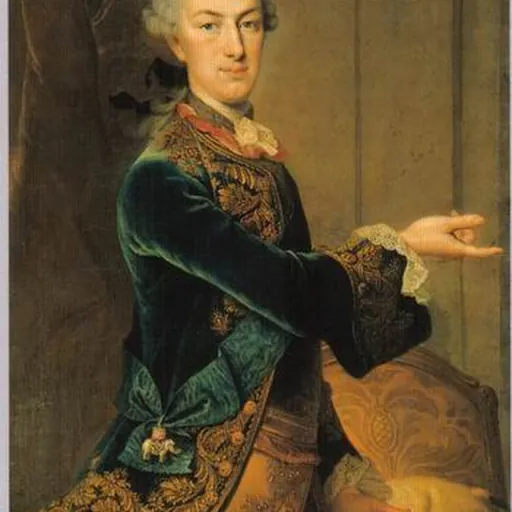
About William I, Elector of Hesse
Lived 1743 – 1821 (aged 77). William I, Elector of Hesse was a ruler and politician.
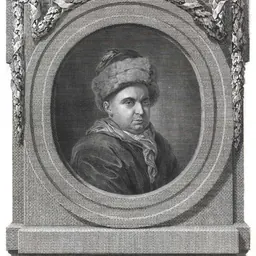
William I, Elector of Hesse (; 3 June 1743 – 27 February 1821) was the eldest surviving son of Frederick II, Landgrave of Hesse-Kassel (or Hesse-Cassel) and Princess Mary of Great Britain, the daughter of George II.
Biography
Early life
Prince William was born on 3 June 1743 in Kassel, capital of the Landgraviate of Hesse-Kassel in the Holy Roman Empire. Born into the House of Hesse, he was the second but eldest surviving son of Prince Frederick of Hesse-Kassel (the future Landgrave Frederick II) and his wife, Princess Mary of Great Britain. A former heir to the landgraviate, also named William, had died in infancy in 1742; therefore, hopes were high for the future of the new heir apparent. He had two younger brothers: Prince Charles and Prince Frederick.
His father's marriage with the British princess was not a happy one, and Frederick abandoned the family in 1747 and converted to Catholicism in 1749. In 1755 he formally annulled his marriage. William's grandfather, Landgrave William, granted the newly acquired county of Hanau to his daughter-in-law and grandsons. Technically, young William became the reigning prince of Hanau, while under his mother's regency. The young prince William, together with his two younger brothers, lived with their mother, the landgravine Mary. From 1747 they were supported by Protestant relatives and moved to Denmark. There they lived with Mary's sister, Louise of Great Britain, and her family; Louise died in 1751.
Marriage
On 1 September 1764, William married his first cousin, Wilhelmina Caroline of Denmark and Norway (1747–1820), who was the second surviving daughter of Frederick V of Denmark and Norway. They married at Christiansborg Palace and resided for two decades mostly in Denmark.
In 1785 they moved to Kassel when William succeeded to the landgraviate. During the lifetime of his father, William had already received the Principality of Hanau, south of the Hessian territories near Frankfurt, as successor of its newly extinct princes. The Hanau people did not want to have a Catholic ruler.
William's younger brother Charles in 1766 married another of their Danish first cousins, Princess Louise of Denmark.
Reign Upon the death of his father on 31 October 1785, he became William IX, Landgrave of Hesse-Kassel. He was said to have inherited one of the largest fortunes in Europe at the time.
William looked for help in managing his estate. He hired Mayer Amschel Rothschild as "Hoffaktor" in 1769, to supervise the operation of his properties and tax-gathering. The wealth of William's estate provided a good living for Rothschild and the men had a strong relationship; he founded the Rothschild family dynasty, which became important in financing and banking in Europe. Although they had been acquainted since 1775, William IX did not formally designate Rothschild as his overseer until 1801.
The early fortunes of the Rothschild family were made through a conjunction of financial intelligence and the wealth of Prince William. During the Napoleonic Wars, William used the Frankfurt Rothschilds to hide his fortune from Napoleon. This money then saw its way through to Nathan Mayer, (N.M.) in London, where it helped fund the British movements through Portugal and Spain. The interest made from this venture was reaped by the budding banker barons, who used it to swiftly develop their fortune and prestige in Europe and Britain. It was not long before their riches outweighed those of their benefactor, William of Hesse-Kassel.
In 1803, Landgrave William was created His Royal and Serene Highness The Prince-Elector of Hesse. In 1807 his electorate was annexed by the Kingdom of Westphalia, ruled by Jérôme Bonaparte, Napoleon's brother. William escaped to Denmark with his family and lived there in exile until the French were expelled from Germany. Following the defeat of the Napoleonic armies in the Battle of Leipzig, William was restored in 1813.
Several other prince-electors of the Holy Roman Empire had been recognized as kings at the Congress of Vienna (1815), and William attempted to join them by declaring himself King of the Chatti. However, the European powers refused to recognize this title at the Congress of Aix-la-Chapelle (1818) and instead granted him the grand ducal style of "Royal Highness." Deeming the title of Prince-Elector to be superior in dignity to that of Grand Duke, William chose to remain an Elector, even though there was no longer a Holy Roman Emperor to elect.
Don’t just read it —
keep it.
Full-length biographies made to live with: read them, listen on the way to work, watch them tonight.
- E-book
- Audio
- Video
Instant download · yours to keep · every purchase keeps this site free
Important facts
Family & relationships
People in William I, Elector of Hesse's life
Named in this biography and alive at the same time

Related people
Same field, nearest in time



Contemporaries
People whose lives overlapped William I, Elector of Hesse's





Frequently asked questions
Who was William I, Elector of Hesse?
Landgrave of Hesse-Kassel 1785 – 1821
When was William I, Elector of Hesse born?
William I, Elector of Hesse was born on 3 June 1743 in Kassel.
When did William I, Elector of Hesse die?
William I, Elector of Hesse died on 27 February 1821 in Kassel.
What was William I, Elector of Hesse's occupation?
William I, Elector of Hesse was a ruler and politician.
What nationality was William I, Elector of Hesse?
William I, Elector of Hesse's recorded nationality: Electorate of Hesse.
Sources & further reading
· Wikipedia: William I, Elector of Hesse
· DBpedia: William I, Elector of Hesse
Cite this page
APA: Biography.guide. (2026). William I, Elector of Hesse. https://biography.guide/william-i-elector-of-hesse/
MLA: "William I, Elector of Hesse." Biography.guide, https://biography.guide/william-i-elector-of-hesse/.
Chicago: "William I, Elector of Hesse." Biography.guide. https://biography.guide/william-i-elector-of-hesse/.
Data last updated: 2026-09-21 · Spot an error? Report a correction.
Portrait: Wikimedia Commons · author & licence
Page generated 2026-09-27 05:00 UTC