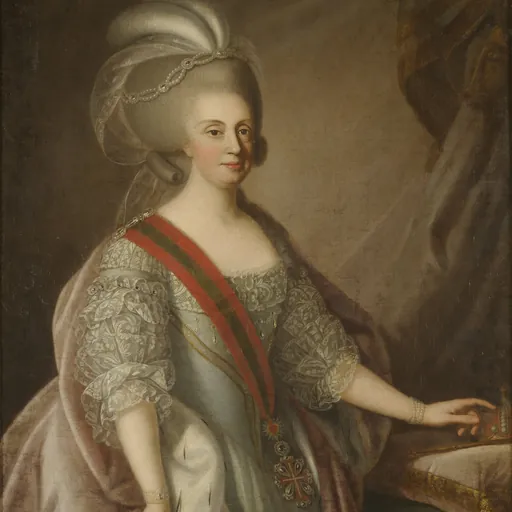
About Maria I of Portugal
Lived 1734 – 1816 (aged 81). Maria I of Portugal was a ruler.
Dona Maria I (Maria Francisca Isabel Josefa Antónia Gertrudes Rita Joana; 17 December 1734 – 20 March 1816), also known as Maria the Pious in Portugal and Maria the Mad in Brazil, was Queen of Portugal from 24 February 1777 until her death in 1816. Maria was the first undisputed queen regnant of Portugal and the first monarch of Brazil.
Maria was the eldest daughter of King Joseph I of Portugal and Queen Mariana Victoria. As the heir to the throne, she held the titles of Princess of Brazil and Duchess of Braganza. She married her uncle Infante Peter in 1760. They had six children, of whom three survived infancy: José, John, and Mariana Vitória. The death of King Joseph in 1777 placed Maria, then 42 years old, on the throne. Her husband Peter was nominally king alongside her as Peter III.
Upon ascending the throne, Maria dismissed her father's powerful chief minister, Sebastião José de Carvalho e Melo, 1st Marquis of Pombal. The early part of Maria's reign witnessed growth in Portugal's economy. Maria had a number of national buildings constructed and renovated, leading to the completion of the Palace of Queluz and the inauguration of the Palace of Ajuda and other new monuments. The death of her husband in 1786, followed by the deaths in 1788 of her eldest son, José, and her confessor Inácio de São Caetano, caused the queen to develop clinical depression. Her second son, John, then served as prince regent. With Napoleon's European conquests, Maria and her court moved to the Portuguese colony of Brazil in 1807. After Brazil was elevated to a kingdom in 1815, Maria became Queen of the United Kingdom of Portugal, Brazil and the Algarves. Upon her death in 1816, she was succeeded by her son Dom John VI.
Early life D. Maria Francisca, Princess of Beira, Duchess of Barcelos; Pavona; 1739. Maria was born on 17 December 1734 at the Ribeira Palace in Lisbon, the eldest of four daughters of Dom Joseph, Prince of Brazil, and Infanta Mariana Victoria of Spain. Her father was the eldest surviving son of King John V of Portugal, while her mother was the eldest daughter of King Philip V of Spain. Maria was baptized Maria Francisca Isabel Josefa Antónia Gertrudes Rita Joana and received the title Princess of Beira.
Maria was educated alongside her sisters at the royal court. Under the instruction of Jesuit tutors, her education focused primarily on religion and theology rather than affairs of state, although she became proficient in French and Latin. The sisters also received instruction in painting from Domingos Sequeira and in singing and instrumental music from David Perez.
Maria's grandfather died on 31 July 1750. Her father, Prince Joseph, then succeeded to the throne as Joseph I. As Joseph's eldest child, Maria became his heir presumptive and was given the traditional titles of Princess of Brazil and Duchess of Braganza. On 10 August 1750, Maria made her first official appearance as crown princess during a traditional hand-kissing ceremony.
In June 1753, Maria fell gravely ill and was bled six times. At her mother's request, a wooden statue of Jesus known as Senhor dos Passos was placed in her bedroom. Maria recovered by 8 July and thereafter attributed her survival to Senhor dos Passos, strengthening her religious convictions.
Influence of the Marquis of Pombal Maria Francisca Isabel, Princess of Brazil. Portrait by Vieira Lusitano, 1753 Maria's father was ill-prepared for kingship and showed little interest in government, preferring opera and hunting. He soon came under the dominant influence of Sebastião José de Carvalho e Melo, 1st Marquis of Pombal.
The 1755 Lisbon earthquake devastated the capital and killed thousands. The Ribeira Palace was destroyed, and Maria and her family lived in tents at Belém for several months. Uneasy about living in stone buildings after the disaster, King Joseph declined to move the royal family to Belém Palace and instead ordered the construction of a wooden residence at Ajuda. The residence became known as the Real Barraca de Ajuda (Royal Hut at Ajuda).
Pombal's effective response to the earthquake further consolidated his power. After the Jesuits criticized his policies and spread the claim that the earthquake was divine retribution, Pombal grew suspicious of conspiracies and ordered all Jesuit confessors to be dismissed from the Real Barraca, including Maria's respected confessor, Timóteo de Oliveira.
On 3 September 1758, King Joseph was wounded in an attempted assassination. Pombal used the attack to prosecute members of the high nobility, including the Távora family and the Duke of Aveiro, who were accused of involvement in the conspiracy. Many of the accused were tortured into confessing before several nobles, including the Duke of Aveiro, were brutally executed in January 1759. Maria knew several of the accused aristocrats and allegedly pleaded with her father on their behalf. In 1761, the Jesuit priest Gabriel Malagrida was convicted of heresy and executed. Maria was deeply disturbed by the executions and by Pombal's wider persecution of Jesuits.
Marriage By her 25th birthday, Maria remained unmarried, which was unusual for a princess of her time. As the Laws of Lamego barred her from inheriting the throne if she married a foreign prince, a marriage to her paternal uncle Peter had been proposed as early as 1749. The marriage was initially met with opposition but gradually gained support because Peter was considered politically unambitious.
Maria and Peter married in a private ceremony on 6 June 1760. Peter was 18 years her senior, but the couple shared a strong religious devotion. Maria was pleased with the marriage. The couple had six children, three of whom survived to adulthood: José, John, and Mariana Victoria. Maria also had two late miscarriages.
Fearing that Maria would reverse his secularizing policies, Pombal sought to bypass her in the succession and have the liberally educated Prince José succeed Joseph I. José de Seabra da Silva, Pombal's second-in-command, disclosed the plan to Queen Mariana in January 1774, who informed Maria. Believing that she had been spared by God to inherit the throne and restore the influence of the Church, Maria appealed to her father, who abandoned the proposal. Seabra da Silva was subsequently dismissed by Pombal.
Reign
Part of the Charter of Queen Maria, which prohibited factories and manufactures in Brazil in 1785.
After years of ill health, King Joseph died on 24 February 1777. Maria, aged 42, succeeded him as the first undisputed queen regnant of Portugal. On 28 February, Maria pardoned more than eight hundred prisoners. She moved swiftly to dismantle the influence of the Marquis of Pombal, ordering him not to return to the palace before formally dismissing him in early March. After recovering from a bout of measles that had delayed the formalities of her accession, Maria met with her ministers on 27 April. They confirmed that her husband would reign nominally as King Peter III, while sovereign authority remained vested solely in Maria as the crown's lineal heir. Maria was formally acclaimed on 13 May in the Praça do Comércio.
Maria's accession marked the beginning of the Viradeira ("turnabout"), a period characterized by the partial reversal of the policies pursued under the Marquis of Pombal. Maria's first cabinet included both former Pombaline ministers and moderate opponents of the marquis, preserving much of the administrative system established during the previous reign. An inquiry into Pombal's administration later found him guilty of abuses of power, but Maria pardoned him because of his age and ill health. She was also reluctant to impose a harsher sentence because it would have reflected adversely on the legacy of her father, under whose authority Pombal had exercised power. A separate investigation exonerated the Távora family, though their confiscated estates and titles were not restored. While signing the edict confirming their pardon on 9 October 1780, Maria suffered her first major mental breakdown.
Maria is considered to have been a good ruler in the period prior to her madness. Noteworthy events of this period include Portugal's membership in the League of Armed Neutrality (July 1782) and the 1781 cession of Delagoa Bay from Austria to Portugal. However, the queen suffering from melancholia and declining mental health (perhaps due to porphyria) made her incapable of handling state affairs after 1792.
On 5 January 1785 the queen issued a charter imposing heavy restrictions on industrial activity in Brazil; how, for example, it prohibited the manufacture of fabrics and other products, extinguishing all textile manufactures in the colony, except the industry of coarse cloth for the use of slaves and workers; since the Portuguese colonial administration did not look favorably on the development of industrial activities in Brazil for fear of economic and, perhaps, political independence. During her reign, the trial, conviction and execution of ensign Joaquim José da Silva Xavier, known as Tiradentes, took place in 1789.
Mental deterioration
Maria's madness was first officially noticed in 1786, when she had to be carried back to her apartments in a state of delirium. Afterwards, the queen's mental state became progressively worse. On 25 May 1786, her husband died; Maria was devastated and forbade any court entertainments. According to a contemporary account, state festivities began to resemble religious ceremonies. The queen's eldest son and heir, Prince Dom José, died aged 27 from smallpox on 11 September 1788, and that same year, on November 2, her daughter Mariana Vitória died a few days after giving birth to her third child from the same illness as her brother at just 19. The queen's confessor, Inácio de São Caetano, Titular Archbishop of Salonica, died almost four weeks later. These deaths may have resulted in Queen Maria developing major depressive disorder.
In February 1792, Maria was deemed insane and was treated by Francis Willis, the same physician who attended the British king George III. Willis wanted to take her to England, but the plan was refused by the Portuguese court. Potentially as a result of Willis' more advisory role in Maria's care, rather than the hands-on care of King George III, Willis deemed the queen incurable. title=Ancestors of Maria I of Portugal boxstyle_1=background-color: #fcc; boxstyle_2=background-color: #fb9; boxstyle_3=background-color: #ffc; boxstyle_4=background-color: #bfc; boxstyle_5=background-color: #9fe; 1= 1. Maria I of Portugal 2= 2. Joseph I of Portugal 3= 3. Mariana Victoria of Spain 4= 4. John V of Portugal 5= 5. Maria Anna of Austria 6= 6. Philip V of Spain 7= 7. Elisabeth Farnese 8= 8. Peter II of Portugal 9= 9. Maria Sophia of Neuburg 10= 10. Leopold I, Holy Roman Emperor 11= 11. Eleonore Magdalene of Neuburg 12= 12. Louis, Dauphin of France 13= 13. Maria Anna Victoria of Bavaria 14= 14. Odoardo Farnese, Hereditary Prince of Parma 15= 15. Dorothea Sophie of Neuburg
Don’t just read it —
keep it.
Full-length biographies made to live with: read them, listen on the way to work, watch them tonight.
- E-book
- Audio
- Video
Instant download · yours to keep · every purchase keeps this site free
Important facts
Family & relationships
People in Maria I of Portugal's life
Named in this biography and alive at the same time
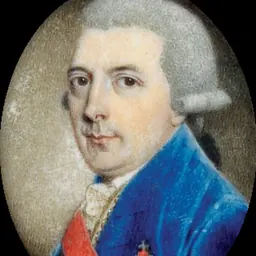
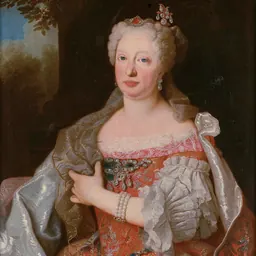
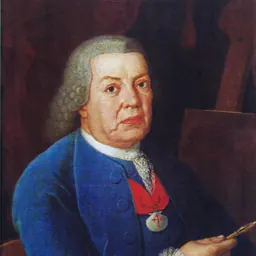
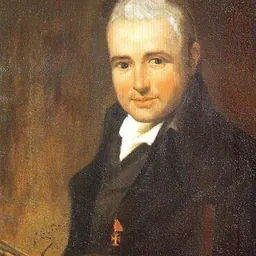
Related people
Same field, nearest in time

Contemporaries
People whose lives overlapped Maria I of Portugal's




Frequently asked questions
Who was Maria I of Portugal?
Portuguese monarch from 1777 to 1816 (1734-1816)
When was Maria I of Portugal born?
Maria I of Portugal was born on 17 December 1734 in Lisbon.
When did Maria I of Portugal die?
Maria I of Portugal died on 20 March 1816 in Rio de Janeiro.
What was Maria I of Portugal's occupation?
Maria I of Portugal was a ruler.
What nationality was Maria I of Portugal?
Maria I of Portugal's recorded nationality: Kingdom of Portugal.
Sources & further reading
· Wikipedia: Maria I of Portugal
· DBpedia: Maria I of Portugal
Cite this page
APA: Biography.guide. (2026). Maria I of Portugal. https://biography.guide/maria-i-of-portugal/
MLA: "Maria I of Portugal." Biography.guide, https://biography.guide/maria-i-of-portugal/.
Chicago: "Maria I of Portugal." Biography.guide. https://biography.guide/maria-i-of-portugal/.
Data last updated: 2026-09-26 · Spot an error? Report a correction.
Portrait: Wikimedia Commons · author & licence
Page generated 2026-10-04 10:55 UTC