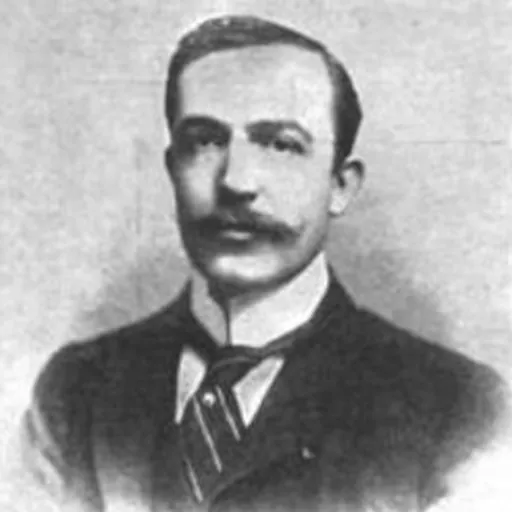
William Henry Wilkins
English writer, best known as a royal biographer and campaigner for immigration controls
About William Henry Wilkins
Lived 1860 – 1905 (aged 44). William Henry Wilkins was a British biographer and writer.
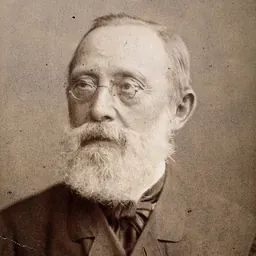
William Henry Wilkins (1860–1905) was an English writer, best known as a royal biographer and campaigner for immigration controls. He used the pseudonym W. H. de Winton.
Life Born at Compton Martin, Somerset, on 23 December 1860, he was son of Charles Wilkins, farmer, of Gurney Court, Somerset, and later of Mann's farm, Mortimer, Berkshire, where Wilkins passed much of his youth. His mother was Mary Ann Keel. After private education, he was employed in a bank at Brighton. Entering Clare College, Cambridge in 1884, he graduated B.A. in 1887, and proceeded M.A. in 1899.
Initially considering holy orders, at the university Wilkins developed literary tastes and interested himself in politics. A Conservative, he spoke frequently at the Cambridge Union, of which he was vice-president in 1886. White and Dunraven had been active against immigration from at least 1886, and had hoped for parliamentary action. There was an "anti-alien" campaign by the London Evening News, and support from local MPs, and clergy including George Sale Reaney in Stepney. There lacked any serious local support in the parts of east London most affected, and the public at large was indifferent. APIDA ceased to function in 1892.
Wilkins then made a literary career in London. He died unmarried on 22 December 1905 at 3 Queen Street, Mayfair, London, and was buried in Kensal Green cemetery. He also did some field work in the East End of London, observing hiring practices for recent immigrants in Goulston Street (Aldgate, covered by the Whitechapel area). Proposals of the Earl of Dunraven for restricting immigration were written up by Wilkins in The Alien Invasion (1892), with introduction by Robert Billing, in the "Social Questions of Today" series by Methuen & Co. The recommendations in the book bore some relation to later measures in the Aliens Act 1905. He also took up the issue of sweated labour, finding contemporary caricatures of Jewish exploiters apt. The contribution of The Alien Invasion to the immigration debate of the period, with the warnings Wilkins gave of the impact on British working class opinion, the spread of nationalities in view, and the appeal to rich British Jews to limit Jewish immigration in particular, is considered significant. Dunraven wrote an article "The invasion of destitute aliens" in The Nineteenth Century for June 1892.
That year the Trades Union Congress had come down in favour of restricting Jewish immigration, and the book listed labour organisations favouring immigration controls. An earlier work was The Traffic in Italian Children, and Wilkins contributed a paper "The Italian Aspect" to Arnold White's The Destitute Alien in Great Britain (1892). In 1893 Wilkins wrote a pamphlet for the Women's Emancipation Union on sweated labour in the garment trade, particularly in the East End of London.
Novelist In 1892, Wilkins edited, with Hubert Crackanthorpe whom he knew from Cambridge, a short-lived monthly periodical, The Albemarle (9 nos.). He published four novels (two in collaboration) under the pseudonym of De Winton. St. Michael's Eve (1892, 2nd edition 1894) was a seriously intended society novel. Then followed The Forbidden Sacrifice (1893), set partly in Germany, partly in East London, John Ellicombe's Temptation (1894, with the Hon. Julia Chetwynd), and The Holy Estate: a study in morals (with Captain Francis Alexander Thatcher). With another Cambridge friend, Herbert Vivian, he wrote under his own name The Green Bay Tree (1894), which satirised the Cambridge and political life of the time and went through five editions. (1898), and Wanderings in Three Continents (1901). Burton's appendix on the Damascus affair of 1840 was omitted.
Biographer At Lund University in Sweden Wilkins discovered in 1897 the unpublished correspondence between Sophia Dorothea of Celle, the consort of George I, and her lover, Count Philip Christopher Königsmarck. This research, backed up from the archives of Hanover and elsewhere, led to The Love of an Uncrowned Queen, Queen Sophie Dorothea, Consort of George I, which appeared in 2 vols. in 1900 (revised edit. 1903). His Caroline the Illustrious, Queen Consort of George II (2 vols. 1901; new edit. 1904), had less claim to originality. A Queen of Tears (2 vols. 1904), a biography of Caroline Matilda of Great Britain, Queen of Denmark and sister of George III of Great Britain, used research at Copenhagen and superseded the previous biography by Frederic Charles Lascelles Wraxall. For his last work, Mrs. Fitzherbert and George IV (1905, 2 vols.), Wilkins had access, by Edward VII's permission, for the first time to the Fitzherbert papers at Windsor Castle, besides papers belonging to Maria Fitzherbert's family. Wilkins argued for the marriage with George IV.
In 1901 Wilkins edited South Africa a Century ago, letters of Lady Anne Barnard written 1797–1801 at the Cape of Good Hope. Wilkins also published Our King and Queen, the Story of their Life, (1903, 2 vols.), a popular illustrated book on Edward VII and Queen Alexandra, and he wrote occasionally for periodicals.
Don’t just read it —
keep it.
Full-length biographies made to live with: read them, listen on the way to work, watch them tonight.
- E-book
- Audio
- Video
Instant download · yours to keep · every purchase keeps this site free
Important facts
People in William Henry Wilkins's life
Named in this biography and alive at the same time


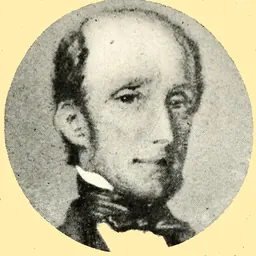


Related people
Same field, nearest in time

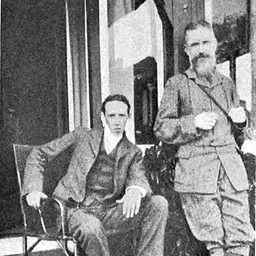
Contemporaries
People whose lives overlapped William Henry Wilkins's
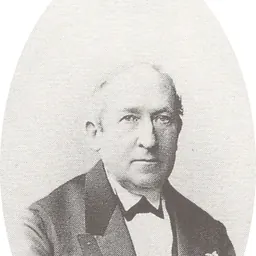

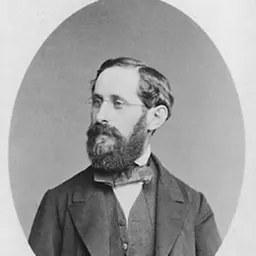

Frequently asked questions
Who was William Henry Wilkins?
English writer, best known as a royal biographer and campaigner for immigration controls (1860-1905)
When was William Henry Wilkins born?
William Henry Wilkins was born on 23 December 1860 in Compton Martin.
When did William Henry Wilkins die?
William Henry Wilkins died on 22 December 1905 in London.
What was William Henry Wilkins's occupation?
William Henry Wilkins was a biographer and writer.
What nationality was William Henry Wilkins?
William Henry Wilkins was British.
Sources & further reading
· Wikipedia: William Henry Wilkins
· DBpedia: William Henry Wilkins
Cite this page
APA: Biography.guide. (2026). William Henry Wilkins. https://biography.guide/william-henry-wilkins/
MLA: "William Henry Wilkins." Biography.guide, https://biography.guide/william-henry-wilkins/.
Chicago: "William Henry Wilkins." Biography.guide. https://biography.guide/william-henry-wilkins/.
Data last updated: 2026-09-20 · Spot an error? Report a correction.
Page generated 2026-09-27 05:09 UTC