
William Henry Channing
American Unitarian clergyman, writer and philosopher
About William Henry Channing
Lived 1810 – 1884 (aged 74). William Henry Channing was an American linguist, translator, writer, preacher and author.
William Henry Channing (May 25, 1810 – December 23, 1884) was an American Unitarian clergyman, writer and philosopher.
Early life William Henry Channing was born in Boston, Massachusetts. Channing's father, Francis Dana Channing, died when he was an infant, and responsibility for the young man's education was assumed by his uncle, William Ellery Channing, the pre-eminent Unitarian theologian of the early nineteenth century. His other uncles included physician and Harvard professor Walter Channing, and Harvard professor of rhetoric Edward Tyrrel Channing. His grandfather was William Channing, Attorney General of Rhode Island.
Channing graduated from Harvard College in 1829 and from Harvard Divinity School in 1833.
Career Channing was ordained and installed over the Unitarian church in Cincinnati in 1835. He became warmly interested in the schemes of Charles Fourier and others for social reorganization. He moved to Boston about 1847, afterward to Rochester, New York and to New York City, where, both as preacher and editor, he became a leader in a movement of Christian socialism. As an early supporter of the socialistic movement in the United States, he was editor of the Present, the Spirit of the Age and the Harbinger. In 1848 he presided over The Religious Union of Associationists in Boston, a socialist group which included many members of the Brook Farm commune.
Channing took active part in the early years of the woman’s rights movement. He signed the call for and attended the first National Woman's Rights Convention in 1850, where he was appointed to the National Women’s Rights Central Committee. Channing wrote the call for and played a leading role in the Women's Rights Convention that Anthony organized in Rochester in 1853. The convention launched a petition campaign for equal legal and voting rights for women, for which Channing wrote the petitions and, with Ernestine Rose, addressed a select committee of the New York Senate in February 1854.
Between 1854-1857, Channing was minister at Renshaw Street Unitarian Chapel in Liverpool, England. In 1857, he succeeded James Martineau as minister of the Hope Street Unitarian Chapel, Liverpool, England. At the commencement of the American Civil War, he returned (1862) and took charge of the Unitarian church in Washington, D. C. William Henry Channing, along with the younger Ellery Channing, was a Transcendentalist. He was a prolific writer, contributing to the North American Review, the Dial, the Christian Examiner, and other serials, a member of the Transcendental Club, a close friend of Henry David Thoreau and corresponded with Ralph Waldo Emerson.
Among his inspirational writings, one piece, his "Symphony", is well-known:
To live content with small means; to seek elegance rather than luxury, and refinement rather than fashion; to be worthy, not respectable, and wealthy, not rich; to listen to stars and birds, babes and sages, with open heart; to study hard; to think quietly, act frankly, talk gently, await occasions, hurry never; in a word, to let the spiritual, unbidden and unconscious, grow up through the common — this is my symphony.
Channing was, in 1863 and 1864, the Chaplain of the United States House of Representatives. He died in London.
Personal life Channing was married to Julia Maria Allen. Their children include the author and poet, Blanche Mary Channing, and Francis Channing, 1st Baron Channing of Wellingborough. He died in London.
Larger works A translation of Jouffroy's Ethics (1840) Memoir of [his uncle] William Ellery Channing (three volumes, 1848) Memoir of [his cousin] the Rev. James H. Perkins (1851) Memoir of Margaret Fuller Ossoli (in conjunction with Emerson and J. F. Clarke (1852)
Literature For his Life consult O. B. Frothingham (Boston, 1886)
Don’t just read it —
keep it.
Full-length biographies made to live with: read them, listen on the way to work, watch them tonight.
- E-book
- Audio
- Video
Instant download · yours to keep · every purchase keeps this site free
Important facts
People in William Henry Channing's life
Named in this biography and alive at the same time
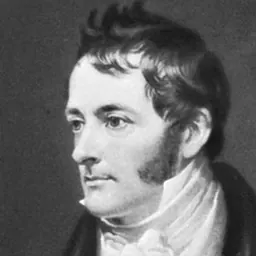

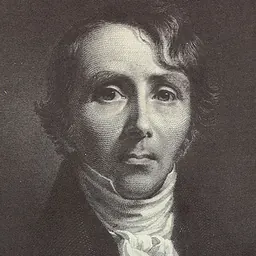
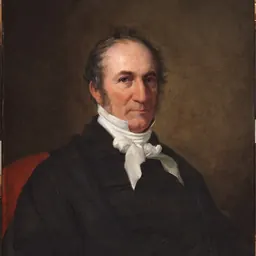
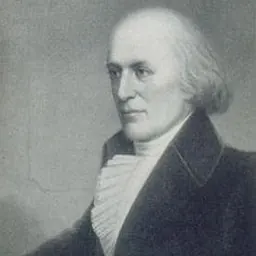

Related people
Same field, nearest in time

Contemporaries
People whose lives overlapped William Henry Channing's






Frequently asked questions
Who was William Henry Channing?
American Unitarian clergyman, writer and philosopher (1810–1884)
When was William Henry Channing born?
William Henry Channing was born on 25 May 1810 in Boston.
When did William Henry Channing die?
William Henry Channing died on 23 December 1884 in London.
What was William Henry Channing's occupation?
William Henry Channing was a linguist, translator, writer, preacher and author.
What nationality was William Henry Channing?
William Henry Channing was American.
Sources & further reading
· Wikipedia: William Henry Channing
· DBpedia: William Henry Channing
Cite this page
APA: Biography.guide. (2026). William Henry Channing. https://biography.guide/william-henry-channing/
MLA: "William Henry Channing." Biography.guide, https://biography.guide/william-henry-channing/.
Chicago: "William Henry Channing." Biography.guide. https://biography.guide/william-henry-channing/.
Data last updated: 2026-09-20 · Spot an error? Report a correction.
Page generated 2026-09-27 05:34 UTC