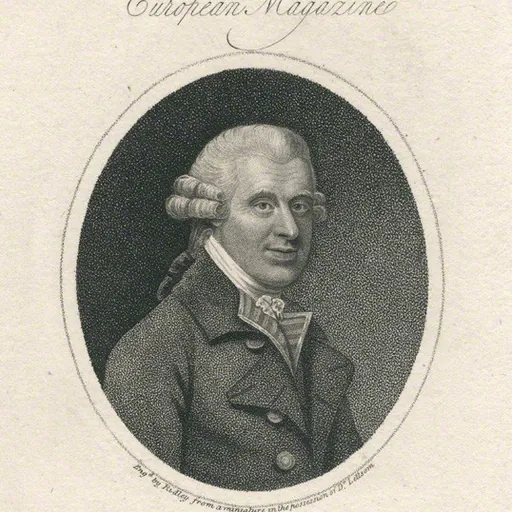
About William Hawes
Lived 1736 – 1808 (aged 72). William Hawes was a British physician.
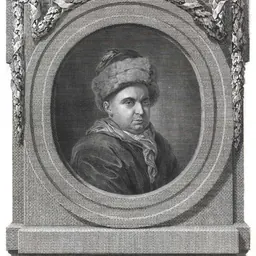
William Hawes (28 November 1736 – 5 December 1808) was an English physician and philanthropist, and one of the founders of the Royal Humane Society. He worked to spread the practice of resuscitation, and to relieve poverty in East London. Life William Hawes was born in Islington, London, on 28 November 1736, and was first educated at John Shield's academy, and afterwards at St Paul's School, London.
Around 1773, Hawes became well known as a campaigner for the possibility of resuscitating persons apparently dead from drowning, or other causes of asphyxia. For a year he offered a reward to anyone who brought to him, or his supporters, the body of a person who had been taken out of the River Thames unconscious, within a reasonable time after immersion. The reward was paid whether the attempt to resuscitate proved successful or not. Thomas Cogan, who translated in 1773 an account of an Amsterdam society for the resuscitation of the apparently drowned, thought that Hawes should not pay all the rewards, and it was arranged in 1774 that he and Cogan should each bring 15 friends to the Chapter Coffeehouse on Paternoster Row to consider further operations.
Works Hawes authored the following works: An Examination of the Rev. John Wesley's Primitive Physic, 1776; 3rd ed. 1780. An Address on Premature Death and Premature Interment, 1777. An Address to the Public on the Dangerous Custom of laying out persons as soon as Respiration ceases, with a Reply by W. Renwick, and Observations on that Reply, 1778. An Address to the Legislature on the importance of a Humane Society, 1781. An Address to the King and Parliament of Great Britain on the important subject of preserving the Lives of its Inhabitants, 1782; 3rd ed., with Observations on the General Bills of Mortality, 1783. The Transactions of the Royal Humane Society from 1774 to 1784, with an Appendix of Miscellaneous Observations on Suspended Animation to the year 1794.
Family Hawes married Sarah Fox (1740–1814) in 1759; they had nine children, including: Harriot (bap. 1760) Their daughter Sophia Russell Scott married her first cousin John Edward Taylor, son of Mary Scott and founder of the Manchester Guardian; and her brother Russell (1810–1880) was father of C. P. Scott, editor of The Guardian. The eldest son, Thomas (bap. 1765, died 1849), a magistrate, was partner with his brother Benjamin in the soapworks at the New Barge House, Lambeth. Maria, or Mary Ann (bap. 1767, died 1849), married in 1797 John Gurney. Sarah (b. 1773) William (b. 1774) Benjamin (1770–1861), the father of Benjamin Hawes (1797–1862) and William Hawes (1805–1885).
Don’t just read it —
keep it.
Full-length biographies made to live with: read them, listen on the way to work, watch them tonight.
- E-book
- Audio
- Video
Instant download · yours to keep · every purchase keeps this site free
Important facts
People in William Hawes's life
Named in this biography and alive at the same time






Related people
Same field, nearest in time


Contemporaries
People whose lives overlapped William Hawes's





Frequently asked questions
Who was William Hawes?
English physician (1736-1808)
When was William Hawes born?
William Hawes was born on 28 November 1736 in Islington.
When did William Hawes die?
William Hawes died on 5 December 1808 in London.
What was William Hawes's occupation?
William Hawes was a physician.
What nationality was William Hawes?
William Hawes was British.
Sources & further reading
· DBpedia: William Hawes (physician)
Cite this page
APA: Biography.guide. (2026). William Hawes. https://biography.guide/william-hawes-physician/
MLA: "William Hawes." Biography.guide, https://biography.guide/william-hawes-physician/.
Chicago: "William Hawes." Biography.guide. https://biography.guide/william-hawes-physician/.
Data last updated: 2026-09-23 · Spot an error? Report a correction.
Portrait: Wikimedia Commons · author & licence
Page generated 2026-09-27 05:06 UTC